
 Lauge Risom Koch
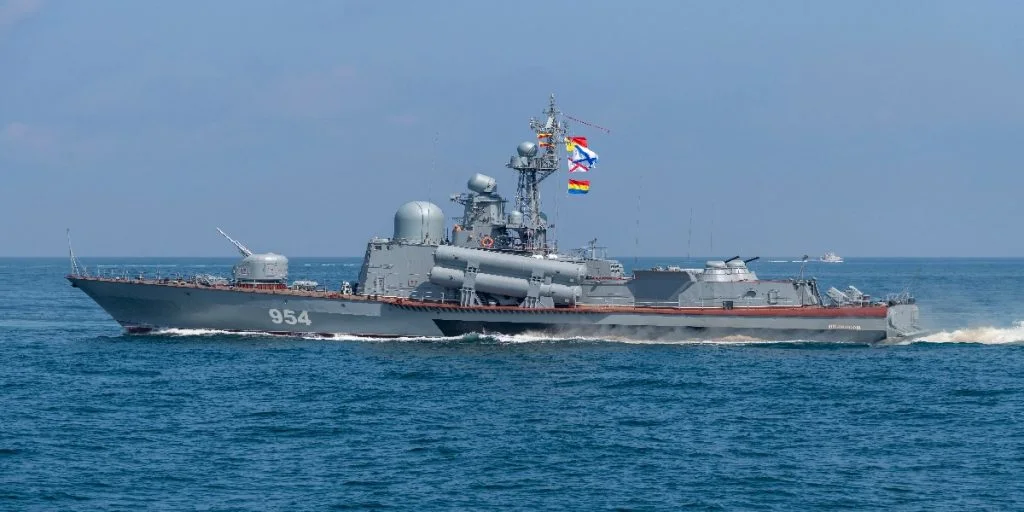
Russia deployed four missile-armed warships near Japan shortly after President Vladimir Putin visited the disputed Kuril Islands.


Russian naval forces recently deployed four heavily armed missile warships near the northern Japanese island of Hokkaido. This aggressive maritime maneuver occurred just one day after President Vladimir Putin visited the highly contested Kuril Islands. The provocative military deployment further escalates the decades-long territorial dispute between Moscow and Tokyo.
Tracking the naval deployment
Japanese military officials closely monitored the unexpected arrival of the Russian naval vessels off Cape Soya. According to a report by United24 Media, a maritime patrol aircraft from the Japanese defense forces tracked the ships. Authorities confirmed that the heavily armed corvettes remained outside of Japan’s official territorial waters during their transit.
The identified vessels belong to the Russian Pacific Fleet and are classified as Molniya-1 missile corvettes. As detailed by United24 Media, NATO designates this specific class of Soviet-designed warships as Tarantul III. These ships were initially detected northwest of Rebun Island before sailing east through the strategic Soya Strait.
The warships eventually reversed their course and were observed heading back west just days later. This return passage closely coincided with the highly controversial visit by the Russian leader to Iturup. The coordinated timing of these events immediately prompted a formal diplomatic protest from the Japanese government.


Escalating a historic dispute
The territorial conflict over the Kuril Islands has strained diplomatic relations since the end of World War II. As noted by United24 Media, Soviet forces originally seized the strategic island chain during the final days of the conflict. This unresolved historical grievance has prevented the two neighboring nations from ever signing a formal peace treaty.
Japan officially considers Iturup and the surrounding landmasses to be an integral part of its Northern Territories. Conversely, Moscow views the entire archipelago as a strategically vital asset for its regional military operations. The Russian military currently maintains significant infrastructure across the islands to project power throughout the Pacific.
The recent naval maneuvers were accompanied by increasingly hostile rhetoric from top Russian political figures. According to United24 Media, Deputy Chairman of Russia’s Security Council Dmitry Medvedev issued a stark warning to Tokyo. He threatened Japan with monstrous consequences after Japanese officials reiterated their historical claims to the disputed islands.
Projecting regional naval power
The deployed Molniya-1 corvettes are specifically designed to engage enemy surface targets in coastal waters. These agile vessels can reach impressive speeds of up to 41 knots during active combat operations. Each warship operates with a dedicated crew of approximately forty sailors to manage its complex weapon systems.
These Russian warships carry a formidable arsenal intended to deter any regional military interventions. The primary armament includes four Moskit supersonic anti-ship missiles capable of devastating nearby maritime targets. Additionally, the corvettes are equipped with a naval gun and close-in weapon systems for defensive purposes.
To defend against aerial threats, the ships also carry specialized surface-to-air missile systems on board. The four specific vessels identified during this operation were originally commissioned between 1990 and 2003. Their ongoing presence near Japanese shores serves as a stark reminder of Russia’s formidable regional naval capabilities.



