
 Jens Asbjørn Bøgen
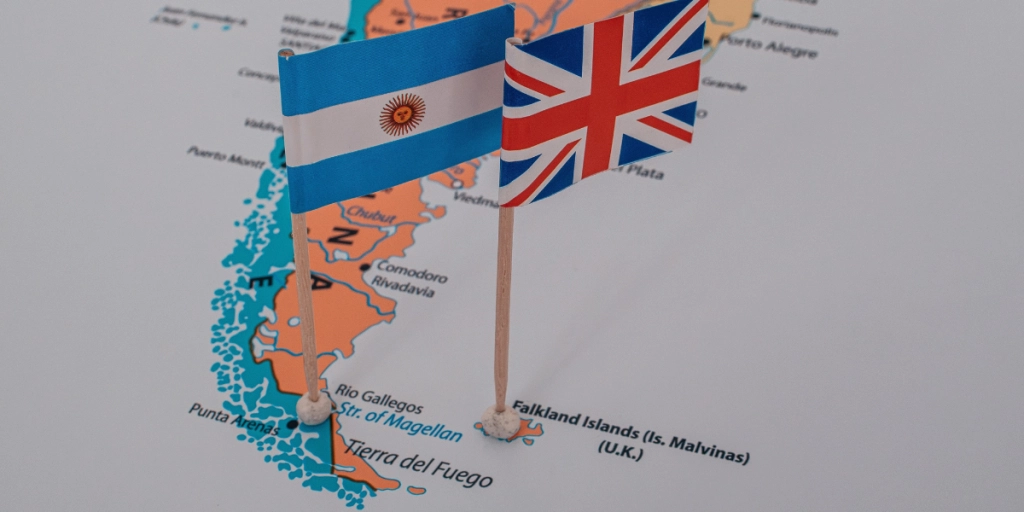
The Argentine president has reiterated his country’s claim to the islands.


In a late-night address to the nation, Argentinian President Javier Milei, forcefully reasserted his country’s claim to the Falkland Islands.
He insisted there was “no other path” than recovering the territory, which Argentina calls Las Malvinas.
Milei pointed to shifting global politics to back his stance. He claimed “winds of change favorable” to Argentina were “blowing around the world”, citing recent hints from Washington.
Click to display external content from t.co,
- You can always enable and disable third-party content.

You agree to display external third-party content. Personal data may be sent to the provider of the content and other third-party services.


The speech has sparked renewed fear of a conflict between the UK and Argentina over the islands, and when you take a closer look at the geopolitical climate in the early 1980s, you find some noticeable similarities to the world of today.
Economic turmoil
The military junta controlling Argentina in the early 1980s was struggling with a severe economic crisis at home, as well as widespread public unrest.
Historians suggest the landing on the Falkland Islands was an attempt to unite the population against a common enemy.
Javier Milei is currently facing slipping approval ratings and economic turmoil, and his political opponents suspect he’s trying to rally the nation to gather support ahead of the general election in October 2027.
“He wants to use the legitimate sovereignty claim over the Malvinas Islands to regain ground ahead of the election year and serve US interests in its dispute with Britain,” Nicolás del Caño, a leftist opposition lawmaker, said, according to NPR.
Geopolitical changes
When the military junta launched the landing on the Falkland Islands in 1982, it expected the UK not to launch a costly defense of the islands 8,000 miles from the UK mainland. Furthermore, the junta expected the US to remain neutral, maybe even supportive of Argentina.
What actually happened was that the UK sent a task force to drive the Argentine forces from the islands, and while the US maintained public neutrality, trying to find a diplomatic solution to the conflict, it subsequently provided the UK with extensive logistical and military support.
In the present day, the Trump administration has sown doubt over whether the US would come to the aid of the UK if a conflict over the islands were to break out again, possibly prompting Milei to count on the US staying neutral if the situation escalates.
During an interview with GB News, US President Donald Trump was asked if the US would come to the aid of UK in the event of a conflict over the Falkland Islands. Donald Trump did not answer directly, but instead started talking about how the UK has not been there for the US during the war in Iran.
Escalating rhetoric
Leading up to the April 1982 Argentine landing on the Falkland Islands, the military junta gradually escalated its rhetoric regarding the islands, eventually leading to landing forces on the islands.
Milei has threatened severe legal action against companies involved in oil projects near the islands and has pledged to increase funding for naval bases and telecommunications.
Two very important differences
While Milei is announcing sanctions and economic action against the UK, there are no signs of an imminent military invasion.
This is a key difference from how the military junta acted during the build-up to the war in 1982.
While the Argentinian landing on the Falkland Islands did come as a surprise to the UK, Argentine newspapers openly speculated on how the military could cut off supplies to the islands before launching military action.
Nothing similar is happening now.
Additionally, Javier Milei, has previously openly expressed admiration for the British Prime Minister during the Falklands War, Margaret Thatcher – a stark contrast to Milei’s hard-line rhetoric during the speech to the nation.
Furthermore, Milei is a democratically elected president, whereas the military junta took control of the country after overthrowing the constitutional president, Isabel Martínez de Perón (who was elected as vice president and then became president when the president and her husband, Juan Perón, passed away in 1974).



