
 Kenneth Glad

The coalition remains tied to loyalty, grievance and institutional distrust. But newer reporting suggests some young Republicans now believe the president has not gone far enough.

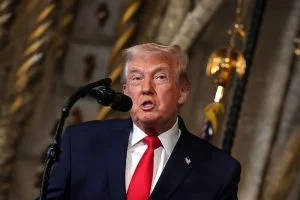
Donald Trump remains the dominant force in Republican politics because many MAGA supporters do not see him mainly as a conventional party leader. They see him as a fighter against institutions they believe have become hostile to their values, faith, families and communities.
That support is still strong, but it is not fixed. Seperate articles in Time and The Atlantic points to tension among young MAGA Republicans and conservative activists who once saw Trump as the clearest vehicle for an “America First” agenda.
Their frustration rarely sounds like a turn toward moderation. In many cases, they want a Republican Party that is more aggressive on immigration, more restrained abroad and more openly shaped by conservative religious politics.
Trump is seen as protection
A 2021 NPR interview with Johns Hopkins University political scientist Lilliana Mason helps explain why Trump’s appeal has endured.


Mason discussed research published in the American Political Science Review that tracked survey data from 2011 to 2018. The study found that hostility toward Democratic-linked minority groups, including African Americans and Muslims, predicted later support for Trump.
In the interview, Mason said Trump became “a lightning rod for animus.” The study’s point was not that he created those resentments from nothing. It was that he gave existing attitudes a powerful political home.
That research connects to the current backlash from the young right. The activists now criticizing Trump are often not rejecting the anger, distrust or cultural grievance that helped build MAGA. They are arguing that Trump has failed to fully use power on behalf of that worldview.
Core values shape loyalty
A separate Johns Hopkins project offers another lens. The 2026 report Faith, Freedom, Family, Place from the SNF Agora Institute at Johns Hopkins University and ReD Associates, used a small qualitative ethnographic sample in Wyoming, Michigan and South Carolina.
Researchers found that many conservative participants judged public life through faith, family, freedom and place. They often believed democratic institutions had drifted away from those foundations.
One participant, Reggie, described faith as the only foundation that would stand when politics failed.
Others expressed deep respect for the Constitution while supporting actions critics would describe as democratic norm-breaking when they believed those actions defended deeper founding principles.
This protector logic helps explain why Trump’s personal flaws do not automatically rupture his bond with core supporters. If he is viewed as defending borders, churches, families and local communities, character concerns can become secondary to political function.
Young MAGA Republicans are restless
The newer tension comes from younger voters who grew up with MAGA as a political identity rather than as a sudden break from older Republican politics.
According to Time, Ronald Reagan Institute polling found that 39 percent of Republican voters under 30 do not identify with MAGA, compared with 25 percent of Republicans overall. The Reagan Institute says its 2026 survey included an oversample of 331 self-identified MAGA Republicans under 30, with a five-point margin of error for that subgroup.
The same reporting said young MAGA Republicans are less uniformly aligned with older supporters on foreign policy. Many still favor “America First,” but they are more conflicted about America’s role abroad and more open to certain international institutions than older MAGA voters.
That matters for the Republican Party’s future. Young voters are not the largest part of Trump’s coalition, but they are essential to any movement that hopes to survive him. If they conclude that Trump’s successors are too cautious or too establishment, the party could face a succession fight from its own right flank.
Foreign policy became a flashpoint
The article in The Atlantic shows how that frustration sounds among campus conservatives.
One young Republican activist called Trump’s strike on Iran a “stab in the back,” while another activist described the conflict as “another sand war in the Middle East.”
For activists drawn to Trump’s promise of fewer foreign entanglements, Iran looked like a broken pledge. Immigration has produced a similar reaction, with some activists telling The Atlantic that the administration has fallen short of Trump’s deportation promises.
The disagreement is not simply over policy details. It is over what “America First” is supposed to mean in power.
To these critics, Trump’s appeal was not only that he opposed Democrats. It was that he promised to break with a Republican establishment they viewed as too willing to fund wars, protect business interests and compromise on immigration.
The next phase remains unsettled
The emerging split is not MAGA versus anti-MAGA. It is also a fight over what MAGA should become after Trump.
Some young conservatives still support him. Others believe he exposed the right enemies but has not delivered enough change. A smaller but visible faction is looking toward more openly nationalist or religious figures who they believe would push the movement further.
That leaves future Republican contenders with a difficult inheritance. Trump’s endorsement may still be powerful, but it may not satisfy activists who want fewer compromises and a more uncompromising version of the agenda.
For now, MAGA still backs Trump because he represents protection, retaliation and disruption. The question is whether the next generation of supporters will accept his version of the movement, or demand one that moves beyond him.
Sources: NPR, APSR, Time, The Atlantic, Ronald Reagan Institute, SNF Agora Institute/ReD Associates.



