
 Jens Asbjørn Bøgen
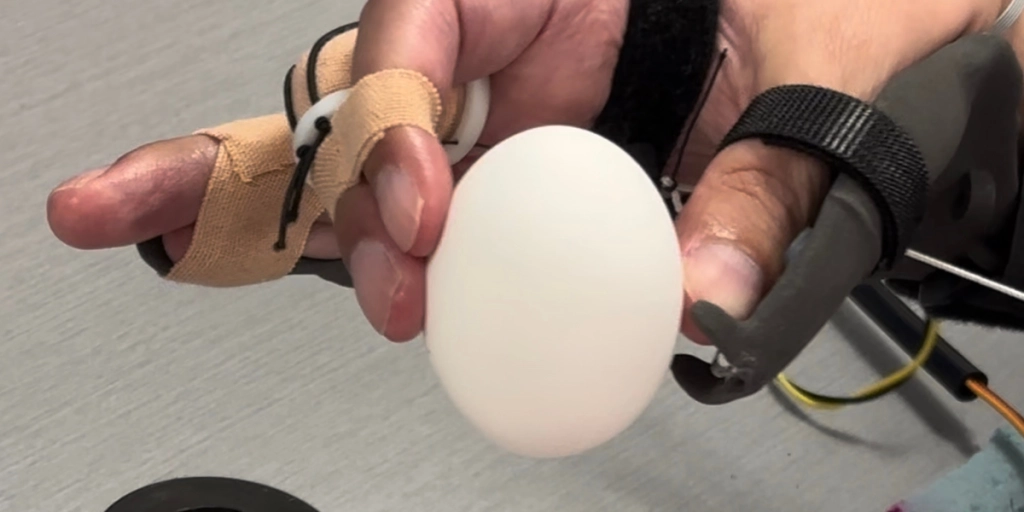
He is now able to eat and drink without help.


A sudden accident can steal away life in an instant.
For years, science offered very little hope when severe injuries severed the critical connection between brain and body.
Now, technology is changing that forever.
A quiet revolution
When Keith Thomas suffered a severe diving accident, his life changed in a moment. The injury left him completely paralyzed from the chest down, unable to move his hands or feel a simple touch.


That reality began to shift when he joined a clinical trial at The Feinstein Institutes for Medical Research. Scientists developed a system called a double neural bypass, which bridges the gap between brain and body using artificial intelligence and microchips.
The system decodes brain signals, sending electrical pulses straight to muscles and the spinal cord.
Suddenly, Mr. Thomas was moving his own hand again.
Building new connections
The system relies on five microchip arrays surgically implanted inside the brain. Advanced algorithms process movement thoughts with roughly 85 percent accuracy, allowing for surprisingly delicate physical control.
In laboratory tests, Mr. Thomas picked up fragile eggshells without cracking them 87 percent of the time. He could even carry on a normal conversation while doing it.
Over 35 weeks of treatment, his right arm strength surged by 86 percent, while his left arm strength grew by 62 percent. Soon, he could wipe his own face independently.
The system also restored physical sensations on his skin. By stimulating sensory regions in the brain alongside the wrist, researchers helped him regain touch in areas that had been completely numb.
Lasting recovery
Unlike traditional medical devices that stop working once turned off, this setup helps the nervous system build permanent new pathways. The medical team reported that physical gains remained strong years after active testing ended.
“Remarkably, in a recent follow up, it was found these gains were still present after more than two years. This is incredibly encouraging,” said Dr. Chad Bouton, the study’s corresponding author at the Feinstein Institutes.
Across the globe, roughly 15 million people live with spinal cord injuries. This milestone offers them real hope for independence. Researchers are now expanding clinical trials to test if the technology can help stroke survivors as well.



