
 Jens Asbjørn Bøgen
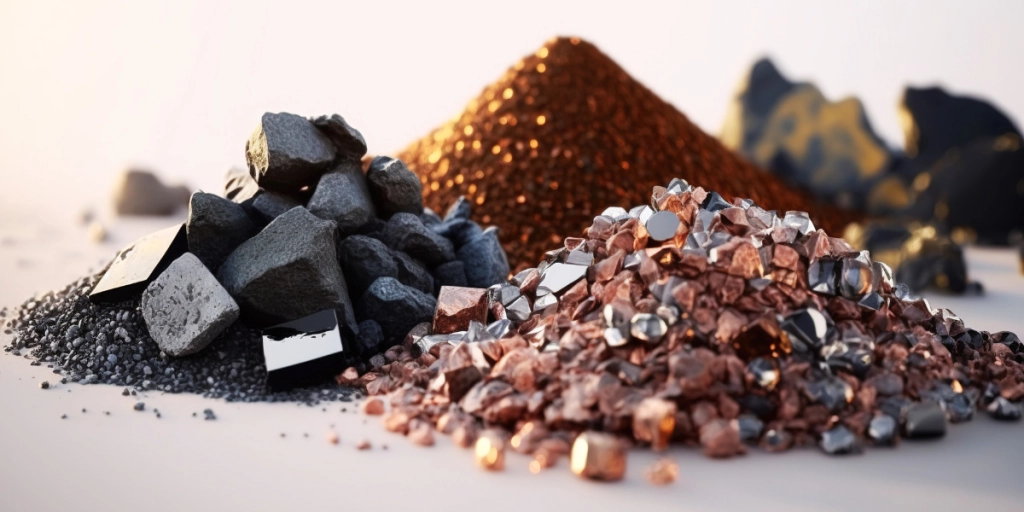
Rare earth elements are actually not that rare.


Every modern gadget depends on invisible materials buried deep inside the Earth.
Getting those crucial ingredients out of the ground usually means dealing with messy supply chains and heavy environmental costs.
Now, scientists are testing a completely new approach.
A dirty business
Smartphones and electric cars rely on rare earth elements. Most come from China, where mining standards differ sharply from European rules.


Extracting these metals requires harsh chemicals and unearths radioactive materials. Uppsala University professor Martin Sahlberg points out the danger.
“It’s a geopolitical problem,” Sahlberg said in November 2025. “In the last year with the trade war and the US tariffs, we’ve seen that China halted exports of rare earth elements. We can also mention Trump’s move on Greenland and the Ukraine-United States Mineral Resources Agreement as other examples of geopolitical conflicts.”
The current extraction process creates widespread pollution. Sahlberg adds plainly, “It’s rather a dirty business today.”
What’s in the fridge
Despite the name, these elements are not rare in nature. The real challenge is finding heavy concentrations that make digging financially worth it.
Sweden, which is the newest member of the NATO alliance, sits on major mineral deposits across Kiruna, Bergslagen, and Norra Kärr.
“In Sweden, our possibilities for extracting REE, even when compared internationally, are relatively good,” Sahlberg says. “Today, China basically has a world monopoly, but we not only have deposits but also good access to water and relatively cheap energy. There is also an interest in leading the green transition here in Sweden.”
Rather than hunting for single metals like copper, researchers are mapping every available element underground. Sahlberg compares this to checking kitchen supplies.
“It’s a bit like the TV show What’s in Your Fridge,” Sahlberg explains. “Historically, we have mined for a specific metal — iron, copper or maybe gold. We’re taking a broader approach here to find out what elements there are in the deposits and in what proportions. We make an inventory of ‘what’s in the fridge’ so that we can use all these elements in the most efficient way possible. We’re creating new ‘magnet recipes’ based on the elements we have available.”
A cleaner recipe
By matching magnet formulas directly to local rocks, scientists hope to cut toxic refining steps and lower environmental impact. Geologists, physicists, and engineers are pooling their skills to build a local supply chain.
This effort could break foreign monopolies while keeping clean technology green. As Sahlberg notes, “What we are doing is basic research but in an area that is technologically incredibly important.”



