
 Asger Risom

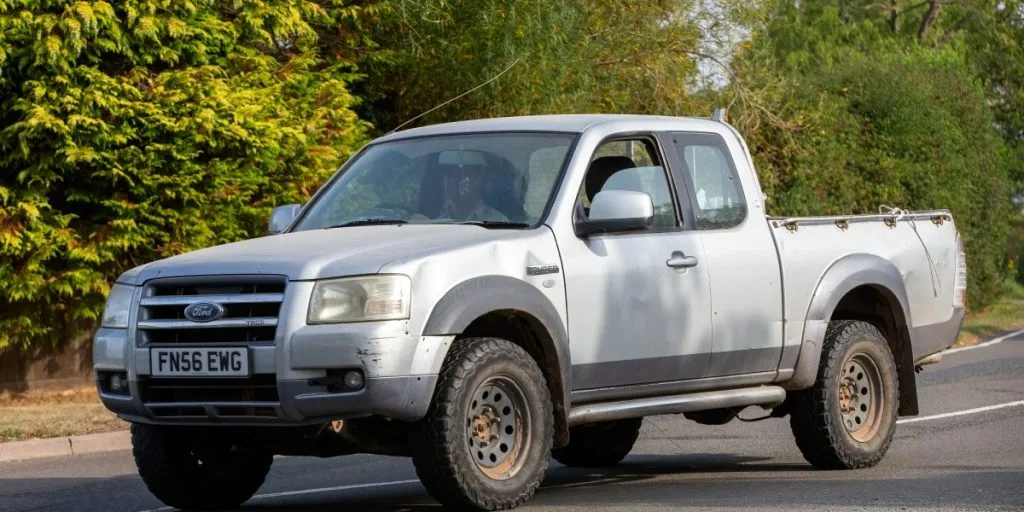
In 1964, the United States slapped a 25 percent retaliatory tariff on imported light trucks during a forgotten Cold War trade spat over European poultry duties. Known as the Chicken Tax, the levy permanently shielded American automakers from foreign competition, spawning bizarre engineering loopholes like rear-facing plastic jump seats and shredded delivery van interiors. Decades later, that single trade dispute explains why Detroit abandoned compact sedans and turned the modern pickup truck into a high-margin, suburban status symbol.

American roads are crowded with towering, leather-lined pickup trucks that easily cost as much as luxury German sedans. While buyers love to credit rugged outdoor culture, the real reason Detroit abandoned small cars to build giant trucks comes down to international trade policy. A bizarre Cold War squabble over cheap factory-farmed poultry permanently distorted how global automakers build and sell vehicles in the United States.
The Cold War squabble over factory-farmed poultry
In the late 1950s, American industrial agriculture figured out how to raise chickens at scale with ruthless efficiency. Factory-farmed, flash-frozen American broilers flooded European grocery shelves at prices local family farms could not match. Alarmed by the collapse of their domestic poultry markets, France and West Germany slapped heavy import tariffs on American chicken.
American poultry farmers were furious and lobbied Washington to retaliate immediately. President Lyndon B. Johnson was also facing pressure from United Auto Workers chief Walter Reuther, who was worried about foreign automakers cutting into domestic factory jobs. Johnson saw an opportunity to solve two political problems with a single stroke of the pen.
In 1964, the White House issued an executive proclamation creating a retaliatory 25 percent tax on four specific European imports: potato starch, dextrin, brandy, and light trucks. The truck tariff took direct aim at the popular Volkswagen Type 2 Transporter vans that were arriving in American ports by the boatload. While the other agricultural duties eventually faded away, the automotive levy stuck.


A 25 percent wall around American truck beds
To understand how punitive the new duty was, you only have to look at ordinary passenger cars. Foreign sedans imported into the United States faced an import duty of just 2.5 percent, a negligible bump easily absorbed by carmakers. A 25 percent tariff on light commercial vehicles, however, made imported work trucks virtually impossible to price competitively.
As economist Michael Hammock pointed out in an analysis for Econlib, the policy quickly generated massive distortions across the automotive sector. Foreign brands could design lighter, more fuel-efficient haulers, but the tariff erased their price advantage before the ships even docked. American automakers suddenly had a legal fortress protecting their utility vehicle business from international competition.
With the threat of cheap European and Japanese commercial vans neutralized, domestic builders gained a captive market. The tariff guaranteed that any foreign rival attempting to sell a work vehicle had to spend millions building a domestic assembly plant first. Detroit had officially been handed a monopoly on utility.
Plastic seats, shredders, and border loopholes
Rather than giving up on the American market, foreign manufacturers spent decades inventing absurd mechanical loopholes to outsmart customs inspectors. In the late 1970s, Subaru introduced the BRAT, an all-wheel-drive small pickup built in Japan. To sidestep the 25 percent tariff, Subaru bolted two rear-facing plastic bucket seats with handgrips into the open truck bed, allowing customs officials to clear it as a four-passenger car at the lower 2.5 percent rate.
Even domestic brands turned to bizarre logistical tricks to navigate their own country’s tax code. Ford spent years building its compact Transit Connect vans in Turkey with rear windows, rear bench seats, and seatbelts installed. Once the vans cleared customs in Baltimore as passenger vehicles, workers wheeled them into a warehouse, unbolted the seats, shredded them on site, and installed solid metal floor panels.
Other Japanese manufacturers took a modular approach by shipping incomplete vehicles across the Pacific. Companies like Toyota and Datsun imported chassis cabs—fully assembled trucks missing only their rear cargo boxes—which qualified for a lower tariff rate. Workers at American port facilities then bolted domestic-made steel truck beds onto the chassis before loading the completed vehicles onto transport trucks.
How Detroit got hooked on giant trucks
Over the decades, that regulatory shield fundamentally reshaped Detroit’s business model. While foreign competition pushed passenger car margins down to razor-thin percentages, the protected truck market remained an enormous profit engine. American automakers realized they could build a full-size pickup on a simple ladder frame and sell it for luxury car money.
As profits concentrated in light trucks, Detroit gradually stopped caring about manufacturing compact hatchbacks or budget sedans. Instead, engineering budgets shifted toward turning bare-bones utility trucks into three-ton status symbols equipped with leather interiors, massaging seats, and massive digital touchscreens. The light truck category expanded to engulf full-size SUVs, which share the same underlying platforms and tariff protections.
Today, the poultry squabble that started the feud is ancient history, but the Chicken Tax remains firmly in the federal register. What began as a temporary diplomatic spat over frozen meat ended up altering the physical geometry of American streets. Next time you see a suburban driveway dominated by a massive pickup truck, remember it owes its existence to an argument over chickens.



