
 Christine Drews Sieger
The russian journalist Daria Shipacheva worked as a medical journalist for several years, before a private transfer to family in Ukraine changed her life.

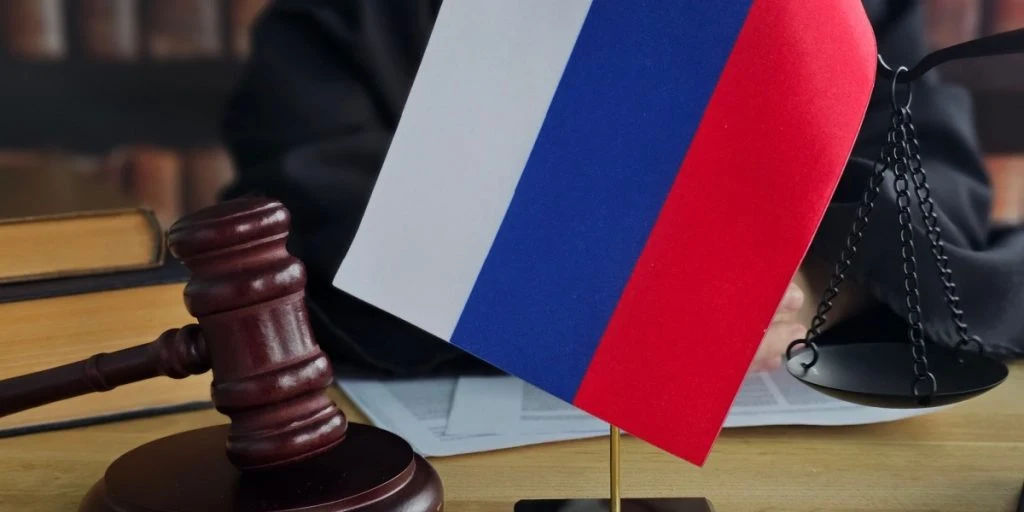
A financial transfer intended as help for a family member has resulted in a devastating sentence. On Wednesday, Russian journalist Daria Shipacheva was sentenced to 12 years in prison for high treason after sending money to a civilian family member in Ukraine.
The Moscow City Court handed down the verdict in a closed trial lasting just 90 minutes, reports Mediazona, cited by The Moscow Times. Investigators focused their entire legal case on a single bank transfer.
According to the science outlet T-Invariant, five sources close to the Ukrainian-born reporter confirmed that the prosecution reinterpreted the purpose of her private transfer. Shipacheva has been held in pre-trial detention since her arrest in April 2025.
Authorities transferred her from a detention center to Moscow’s infamous Lefortovo prison shortly before her conviction.


A close acquaintance told T-Invariant: “As far as we know, the investigators took a transfer she made to a civilian family member, reinterpreted its purpose, and built the entire high treason charge around it,” reports The Moscow Times.
Closed doors in the courtroom
The silence surrounding the legal proceedings was a deliberate choice by the journalist and her defense counsel.
A friend explained to T-Invariant that Shipacheva initially avoided public attention to avoid a harsher sentence, “but recently she asked us to invite journalists to the sentencing.” Video footage published by the independent outlet Sotavision captured her visibly shocked reaction as the judge read out the severe sentence.
The defense lawyers had requested leniency, pointing out that Shipacheva cooperated with the police and pleaded guilty, according to The Moscow Times.
Between 2019 and 2025, Shipacheva worked as a freelance medical journalist for outlets such as Forbes Russia, RBC, and Takie Dela.
T-Invariant reported that she had previously been subjected to online harassment from the banned ultranationalist group “Male State” because of her feminist views, according to The Moscow Times.
Increase in convictions
Her harsh sentence highlights a broader legal crackdown across the country. Data collected by the exiled news outlet Vyorstka shows that Russian courts convicted a record 312 people for high treason, espionage, and illegal foreign cooperation in the first half of 2026 alone, reports The Moscow Times.
Human rights groups warn that routine actions involving Ukrainian contacts are increasingly treated as threats to national security.
For Shipacheva, appealing the decision remains the last legal recourse, although similar cases rarely see convictions overturned.
Russian journalists work under growing scrutiny
The conviction serves as a stark warning to other reporters working under tightened state security laws.
The sentence against Daria Shipacheva comes at a time when working conditions for independent journalists in Russia have severely deteriorated.
According to the press freedom organization Reporters Without Borders (RSF), Russia ranks among the worst-placed countries in the world for press freedom, sitting at number 172 out of 180 countries in the organization’s 2026 World Press Freedom Index.
RSF notes that since the invasion of Ukraine, almost all independent Russian media outlets have been either banned, blocked, or labeled as “foreign agents” or “undesirable organizations.”
As a result, many journalists have left the country, while those remaining work under extensive censorship and legal pressure.



