
 Kenneth Glad
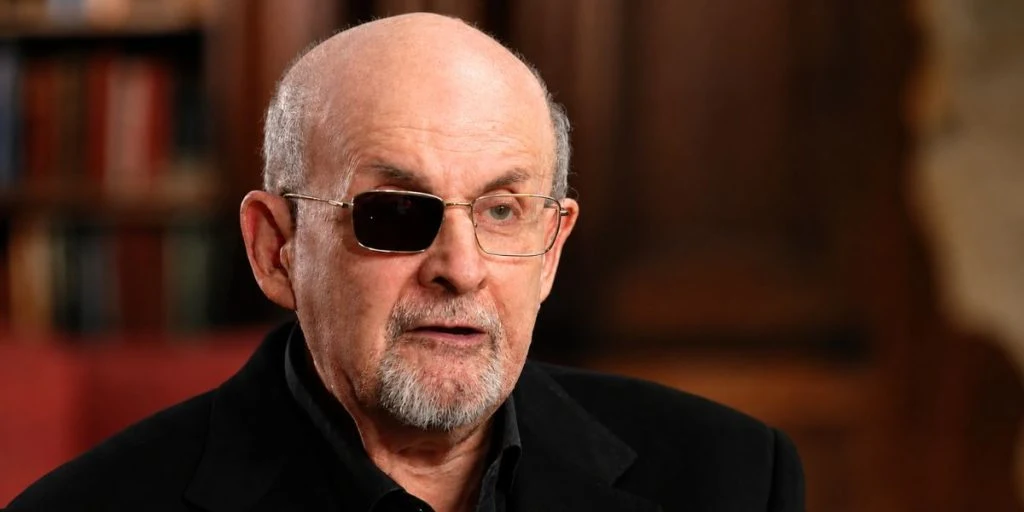
The case centered on events at a public literary gathering in western New York. Sentencing will follow after the conclusion of the trial.

A federal jury convicted Hadi Matar on three terrorism-related charges Wednesday in connection with the 2022 stabbing of author Salman Rushdie at the Chautauqua Institution in Western New York.
The Justice Department said the jury convicted him of trying to support Hizbollah, carrying out terrorism across national borders, and providing support to terrorists. The 28-year-old could now be sentenced to life in federal prison.
The jury returned guilty verdicts on all three federal charges after a brief deliberation, according to the Associated Press.
Matar is already serving a 25-year New York state prison sentence for attempting to murder Rushdie. He received a concurrent seven-year term for assaulting Henry Reese, who was onstage with the novelist during the attack.


The two prosecutions concerned different criminal offenses. The state case addressed the attempted murder of Rushdie and the assault on Reese. The federal prosecution focused on terrorism and material-support allegations, including the government’s claim that Matar intended the attack to benefit Hizbollah.
Prosecutors said Matar had researched Rushdie’s whereabouts from 2020 and later obtained a ticket for the author’s scheduled appearance at Chautauqua on August 12, 2022. They relied on his writings, internet activity and discussions of the 1989 call for Rushdie’s death while presenting their case to the jury.
Prosecutors cited alleged Hizbollah support
Prosecutors argued that Matar carried out the attack to support Hizbollah and acted in the organization’s name.
Defense attorney Nathaniel Barone rejected that claim, saying the writings and other evidence did not prove a legal connection between Matar, the attack and Hizbollah.
The Justice Department did not allege that Hizbollah or Iranian officials personally ordered the stabbing.
Rushdie was preparing to discuss the protection of writers when Matar rushed onto the stage.
The Indian-born British novelist suffered 15 stab wounds, lost sight in his right eye and sustained injuries to his liver and hand.
Henry Reese, co-founder of City of Asylum, was also injured before Matar was restrained and arrested.
The attack drew global attention because Rushdie had faced threats since the 1988 publication of The Satanic Verses.
Iran’s then-supreme leader, Ayatollah Ruhollah Khomeini, called for his death in 1989 after the novel was condemned as blasphemous by some Muslim leaders.
Prosecutors cited the 1989 fatwa
Federal authorities presented the fatwa as evidence of Matar’s alleged motivation.
When announcing the charges in 2024, the Justice Department said he had tried to carry out the order in the name of Hizbollah, which the United States designates as a foreign terrorist organization aligned with Iran.
Prosecutors also cited online messages and writings that they said showed support for Hizbollah and interest in the longstanding threat against Rushdie.
Iran denied involvement in the 2022 attack, and federal authorities did not publicly accuse Iranian officials of directly ordering it.
The federal verdict followed Matar’s earlier conviction in New York state court, where jurors saw video of the stabbing and heard testimony about the injuries suffered by Rushdie and Reese.
Matar received 25 years for attempted murder and a concurrent seven-year term for assaulting Reese.
A federal judge will determine his sentence on the terrorism-related convictions and how it will interact with the state term. No sentencing date was listed in the Justice Department’s announcement.
Sources: U.S. Department of Justice, Associated Press



