
 Nicolai Haugsted
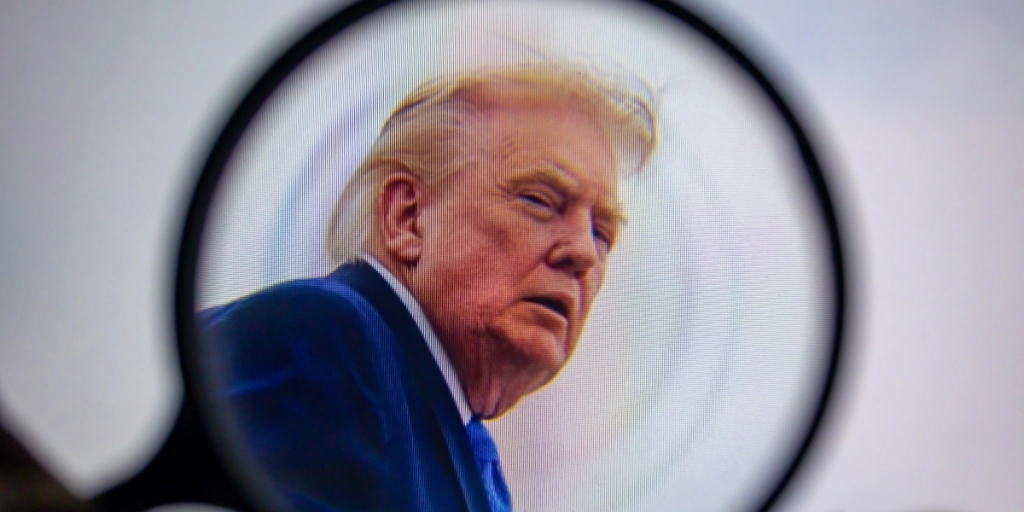
Trump’s $100,000-a-month information service triggers explosive court battle.


Donald Trump’s use of social media as a presidential megaphone has triggered a fresh legal challenge, with two media organizations questioning whether official announcements can effectively reach paying customers before everyone else.
According to Reuters, The Intercept and the Freedom of the Press Foundation sued Trump and other White House officials in Manhattan federal court on Wednesday over Truth API, a subscription service connected to Truth Social.
At stake is a feed that can cost subscribers as much as $100,000 per month and provides rapid access to posts from Trump and several other prominent administration figures. Trump’s messages have repeatedly contained policy announcements capable of affecting financial markets.
Truth API was launched by Trump Media & Technology Group on August 1. Subscribers receive posts from 10 selected Truth Social accounts, including those belonging to Trump, Vice President JD Vance and the White House.


Access also covers accounts associated with Health and Human Services Secretary Robert F. Kennedy Jr. and FBI Director Kash Patel, according to the lawsuit.
Trump Media interim CEO Kevin McGurn told investors this week that customers using the service could receive information “fractionally faster” than other users.
Speed matters particularly because Trump has frequently announced consequential developments on Truth Social. Tariff decisions and developments involving conflicts in the Middle East are among the subjects addressed through his account, sometimes before corresponding information has appeared through traditional White House channels.
According to the plaintiffs, thousands of Trump’s posts and reposts during his second term have not subsequently been accompanied by official White House statements.
Media groups challenge the arrangement
Wednesday’s lawsuit asks a federal court to prevent the White House from making official government announcements exclusively through Truth Social while the paid service remains in operation.
Lawyers for the two organizations argue that providing privileged access to presidential information creates constitutional problems and gives Trump a financial interest in subscriptions.
Their complaint describes the arrangement as “profoundly corrupt,” arguing that presidential announcements should be equally accessible rather than reaching private paying customers first.
First Amendment concerns also form part of the challenge. The plaintiffs contend that the government has no legitimate reason to provide subscribers with preferential access to official presidential communications while Trump potentially benefits financially from the arrangement.
Trump Media is not named as a defendant in the case, although the company strongly rejected the allegations.
A spokesperson argued that numerous media organizations and digital platforms already charge customers for subscription-based information services.
“Now, left-wing activists are trying to wrongfully weaponize the courts to censor him,” the spokesperson said, while also accusing the plaintiffs of seeking to damage Trump Media shareholders.
Political scrutiny had already arrived before Truth API formally launched. Democratic Senators Elizabeth Warren and Adam Schiff called on the Securities and Exchange Commission in late July to investigate whether the service could threaten market integrity while providing an advantage to wealthy investors and other subscribers.
Trump retains major financial stake
Questions surrounding the service are complicated by Trump’s continuing financial connection to the company behind Truth Social.
Trump remains Trump Media’s largest shareholder through the Donald J. Trump Revocable Trust. His 41.3 percent stake is worth approximately $950 million, according to Reuters data.
Donald Trump Jr., the president’s eldest son, serves as a director of Trump Media and oversees the trust holding his father’s shares.
No immediate response to the lawsuit came from the White House. The legal challenge will now test whether the administration’s use of Truth Social for official communications can coexist with a commercial service offering paying customers faster access to those same presidential messages.



