
 Kenneth Glad
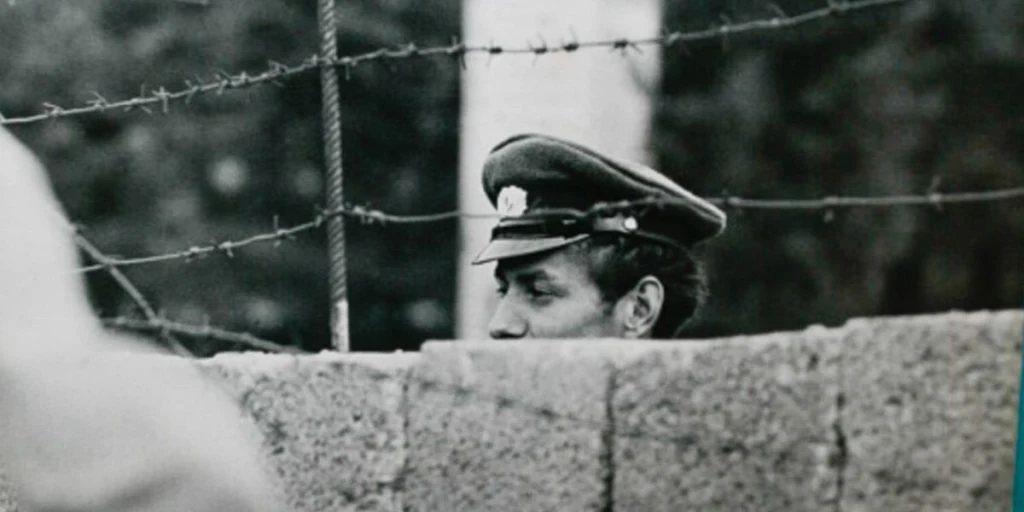
One morning in August 1961, thousands of Berliners found that the routes they used every day had disappeared. Streets were blocked, crossings were guarded and families were divided.

By the summer of 1961, East Germany had spent years trying to stop a population exodus. Around 2.7 million people had left since the state was founded in 1949, Historienet writes, with many taking advantage of Berlin’s unusual position to reach the West.
Many of those leaving East Germany were people the country could not afford to lose, including doctors, engineers and skilled tradesmen. By the summer of 1961, about 30,000 people were reportedly leaving each month. U.S. diplomatic records from the time show, according to the National Museum of American Diplomacy, that American officials saw the exodus as a growing economic problem for East Germany and a blow to the prestige of the socialist bloc.
East German leader Walter Ulbricht had repeatedly sought Soviet permission to restrict movement through the city. Nikita Khrushchev had rejected earlier requests, but his position changed as tensions over West Berlin intensified. By August, the East German authorities were permitted to act.
The crossing points disappeared
The operation began during the early hours of August 13. Tram connections were cut, underground services were interrupted and troops moved into position. The Berlin Wall Foundation records that East German authorities began closing the boundary around West Berlin that day using barbed wire and other obstacles. More substantial walls followed.


A U.S. diplomatic account from the period described the new measures as effectively preventing residents of East Berlin and the surrounding Soviet-controlled zone from entering West Berlin. What had been an accessible escape route had suddenly become a guarded frontier.
Teacher Ingrid Taegner saw the disruption from close range. In Historienet‘s account, she looked from her home near the Landwehr Canal and watched soldiers trying to control the waterfront while people attempted to reach the western bank.
Taegner remained in East Berlin. Later, when teachers at her school were encouraged to sign a declaration supporting the new restrictions, she refused. The Stasi searched her home and interrogated her, and she subsequently lost her teaching position.
The physical defenses were still incomplete. Only part of the inner-city line initially consisted of masonry, while other stretches relied on wire, fencing and improvised barriers. The later fortified complex had not yet taken shape.
Escape became an operation
Reinhard Spiller had lived in East Berlin while studying engineering in West Berlin. Once movement across the sector boundary was blocked, he could no longer reach his university.
He eventually escaped and settled in the western part of the city. His attention soon turned to his parents, who remained behind. Historienet recounts how Spiller acquired Austrian diplomatic passports, altered them with his parents’ photographs, produced false stamps and prepared counterfeit licence plates.
He also bought an old Cadillac that could plausibly resemble an embassy vehicle. In May 1962, he drove into East Berlin, collected his parents and approached Checkpoint Charlie while posing as a diplomatic driver. A guard briefly checked the documents and waved the car through.
Spiller did not stop after getting his family out. He continued helping others cross, usually working independently rather than relying on the larger student networks active in the city. By 1963, he had assisted about 50 people. Illness and exhaustion eventually forced him to abandon the work and concentrate on his studies.
The barrier grewmore dangerous
Over the following years, wire and basic obstacles were replaced or supplemented by concrete walls, patrol areas, watchtowers, guard dogs, alarms and cleared strips of ground designed to expose footprints.
Research by Professor Leo Schmidt, mentioned by Historienet, examined the system from the perspective of the border troops. Young conscripts received political instruction and were expected to stop unauthorized crossings. When someone escaped successfully, the consequences could travel down the military chain of command.
Former conscript Richard Hebstreit was one of the guards stationed along the frontier. His account to Historienet describes long periods of routine patrol and monotonous hours in basic watchtowers. During quieter shifts, he secretly listened to Western music on a small radio hidden inside his field flask. He never had to fire at a person attempting to escape.
By 1989, the government responsible for maintaining those defenses was under mounting pressure. Public demonstrations were growing, while increasing numbers of East Germans were seeking routes out through other countries.
On November 9, a confused announcement about new travel regulations sent crowds toward the checkpoints. The Berlin Wall Foundation record that guards at Bornholmer Strasse eventually allowed people through that evening, with other crossings following.
After more than 28 years, the physical division imposed in August 1961 had begun to collapse not through a planned dismantling, but as thousands of people arrived at the gates and the authorities could no longer hold them back.
Sources: Historienet; Berlin Wall Foundation; U.S. Department of State Office of the Historian, National Museum of American Diplomacy



