
 Kenneth Glad
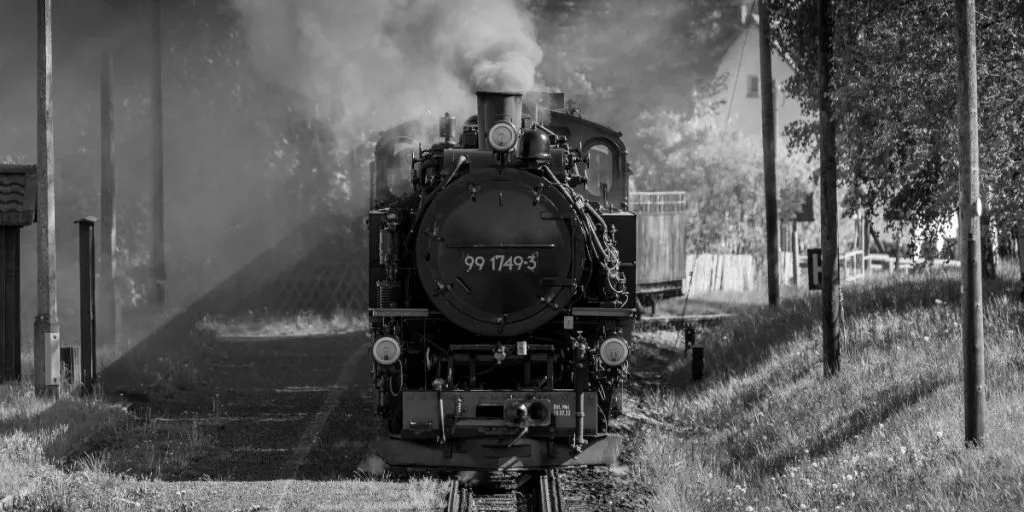
One of early cinema’s most familiar episodes has survived for more than a century. Records from the period suggest the story became more dramatic as it was retold.


In the familiar story, spectators watching a Lumière film see a locomotive grow larger on the screen, believe it is coming towards them, so they rush for safety. What historians have struggled to find is contemporary evidence that this scene ever happened.
French film pioneers Auguste and Louis Lumière had already demonstrated their Cinématographe repeatedly during 1895. On March 22, Louis presented the device to a small audience in Paris, projecting Workers Leaving the Lumière Factory.
Eleven further demonstrations followed that year in France and Belgium before the brothers began their regular commercial operation. The Institut Lumière says 33 paying customers attended the landmark program at Paris’s Grand Café on December 28. The La Ciotat train film was not part of it.
The machine itself helps explain why the invention attracted so much attention. Weighing less than five kilograms, the Cinématographe combined the functions of camera, film printer and projector. An operator turned a hand crank, normally advancing the film at roughly 16 frames per second. Its portability later made it practical for Lumière operators to travel with the equipment.


The Catalogue Lumière lists three train films from La Ciotat. One uncatalogued version dates to early 1896, while the commercial version, No. 653, was filmed in summer 1897.
How the panic story emerged
German film historian Martin Loiperdinger investigated the supposed panic in a 2004 study published by The Moving Image. He examined contemporary press material, Paris Police Prefect records and published correspondence involving the Lumière brothers, finding no account of spectators stampeding from a showing.
Loiperdinger argued that later writers blurred an important distinction. Early descriptions concentrated on the illusion created by the image: As the locomotive approached the camera, it increased rapidly in size and seemed to move into the audience’s space. Subsequent retellings increasingly described frightened spectators rather than the striking visual effect itself.
The frightening reputation also became useful advertising. Loiperdinger recounts a New York promotion in which medical personnel and a stretcher were placed outside, making the possibility of terrified customers part of the spectacle.
Some viewers may have flinched, moved back or expressed surprise. There is simply no surviving evidence for the much more dramatic image that entered film folklore of an audience collectively fleeing from the Lumière train.
Sources: The Moving Image; Catalogue Lumière, Institut Lumière



