
 Kenneth Glad
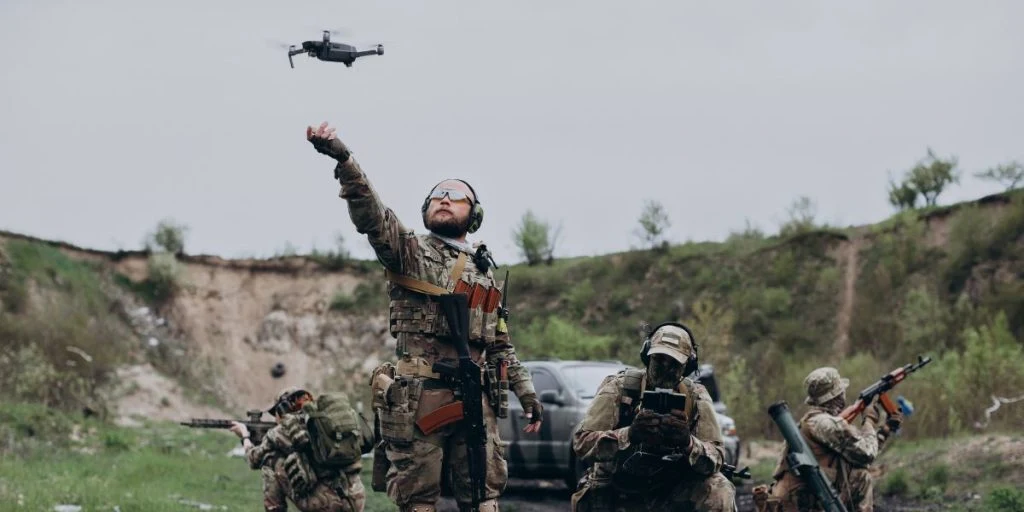
Combat recordings now serve purposes far beyond documenting events on the front. Their circulation has become part of the struggle over fear, perception and public resolve.


Battlefield drone footage is being used by a Ukrainian military unit not only to document strikes but also to intimidate Russian troops and strengthen confidence at home.
According to The Guardian, the recordings come from Robert Brovdi’s 414th aviation strike brigade. Brovdi, whose call sign is Magyar, founded the force known as Magyar’s Birds and now commands Ukraine’s unmanned systems forces.
A military editor using the call sign Catman selects material captured by first-person-view, or FPV, drones and turns it into short online compilations. The videos usually end before the moment of death.
Fear becomes a weapon
Catman told The Guardian that Russians considering military service are among the intended viewers. “My goal is to show Russians that if they mobilise in Ukraine they will be killed, that it’s a one-way ticket and death is waiting for them,” he said.


The editing frequently emphasizes failed attempts to evade approaching drones, reinforcing an image of Russian troops as vulnerable. Catman said ridicule also serves Ukrainian morale.
“We have a phrase: Laughter kills fear. Our main task is to laugh at these enemies and to depict them as helpless. This boosts the morale of our forces,” he said.
Many of the Russians shown in the footage were not taking part in assaults but carrying fuel, supplies or communication cables towards frontline positions, writes the British newspaper. Brigade members said some appeared to have little idea how vulnerable they were to drones.
The videos divide audiences
The brigade has amassed about 3,600 recordings, according to The Guardian. Brovdi defended publishing material that some viewers may regard as degrading, arguing that Ukrainians living through the invasion see the issue from a different perspective.
The online battle is not one-sided. Pro-war Russian channels also circulate images of dead Ukrainian soldiers, while AI-generated videos have falsely portrayed Ukrainian personnel criticising their military leadership.
Catman said people in Russia searching for missing servicemen sometimes examine the Ukrainian footage and save screenshots, which can contribute to families fearing that something has happened to a relative.
Ukrainian volunteer Anatolii Loza, who was captured and imprisoned by Russia before being exchanged, told The Guardian he did not object to such footage involving uniformed enemy combatants.
His wife, Olena, said Ukrainian attitudes hardened after civilian killings in Bucha and Mariupol in 2022. For Catman, the videos remain part of demonstrating that Ukrainian forces are still capable of fighting back.
Sources: The Guardian



