
 Kenneth Glad
New tools gradually changed how institutions understood and reached ordinary people. Their development also raised lasting questions about responsibility, judgment and public oversight.


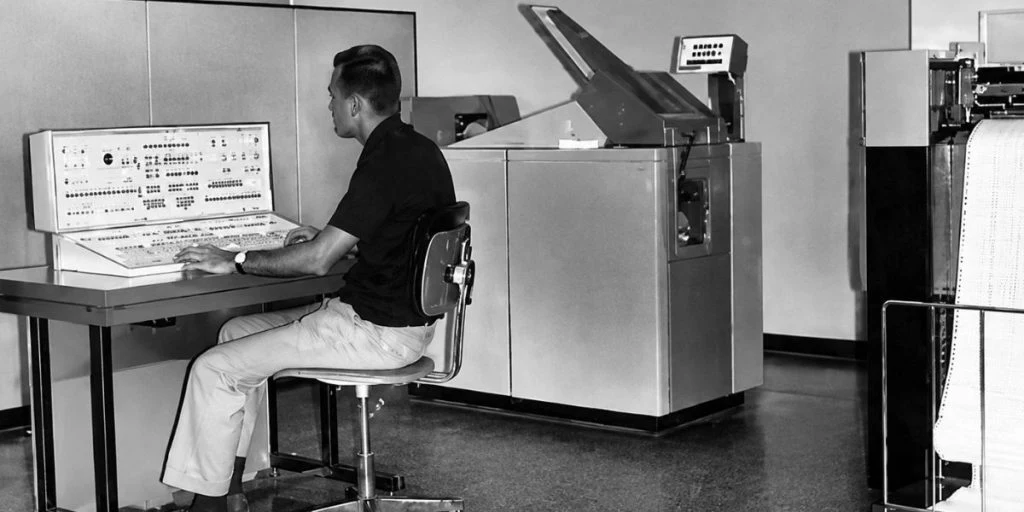
Political campaigns were testing computerized voter analysis long before online targeting existed. Founded in 1959, Simulmatics Corporation processed election results, polling and demographic records in an effort to model voter behavior. Harvard Data Science Review notes that the company did not own its computers and instead relied on IBM service-center machines.
Its computing resources were limited by modern standards, but Simulmatics embodied an idea that later became central to political technology: Preferences and behavior could be converted into data and subjected to computerized analysis.
Early efforts faced practical limits. Records were scattered, processing was expensive and information about individuals was far less detailed than the data routinely generated today. Those constraints weakened as governments and businesses stored increasing amounts of activity electronically.
Banks, retailers, communications companies and public institutions accumulated records that could be compared and classified. Prediction improved not only because processors became faster, but because the material available for analysis grew richer.


Networks changed public information
JCR Licklider, an American psychologist and computing researcher, outlined an early vision of globally connected computers in 1962. The Internet Society describes his concept of users gaining rapid access to programs and data from different locations, an idea that anticipated some of the social possibilities of later networking.
Networks also raised questions about who would control new channels of communication. Political scientist Ithiel de Sola Pool spent much of his later work examining the relationship between technological change, communications policy and freedom of expression. His 1983 book Technologies of Freedom focused on how formerly separate types of media were beginning to converge as communications became electronic.
That convergence changed the practical meaning of access. Material that once reached a broad audience through newspapers or broadcasting could increasingly be stored, retrieved and distributed through electronic systems.
Personalization changed the experience again. The Congressional Research Service notes that recommendation systems can use previous engagement and other collected data to decide how content is sorted, ranked and shown.
That means two people using the same platform may be shown very different stories, videos or political posts. Previous clicks, viewing habits and other signals can influence what appears next.
The result is a network that connects large audiences without necessarily giving them the same view of events. Platforms do not decide what people think, but they can affect which information is easiest to see and which is pushed further out of view.
Judgment faced new limits
MIT computer scientist Joseph Weizenbaum questioned whether growing technical capability was enough to justify greater automation. His 1976 book Computer Power and Human Reason: From Judgment to Calculation examined the boundary between tasks computers could perform and responsibilities that should remain with people.
His argument was not a rejection of computing. It concerned the consequences of treating efficiency as sufficient reason to transfer decisions involving interpretation, accountability or human relationships to machines.
Modern digital services make that distinction increasingly visible. Search engines rank results, automated systems filter material and recommendation tools select which items appear most prominently. A system can influence the setting in which decisions are made without issuing an explicit instruction.
Commercial incentives added another layer. In 2024, the Federal Trade Commission reported that many major social media and video-streaming companies it examined had business models that encouraged extensive collection of user information, particularly for targeted advertising.
Greater engagement and larger stores of data gave companies additional opportunities to personalize advertising and other material. Ranking, visibility and data collection consequently became commercial questions alongside technical ones.
Commercial platforms changed the character of the internet. Early research networks had largely been built around communication and collaboration, but as online services became part of everyday life, business considerations began to shape how they worked.
Advertising, revenue and competition increasingly influenced decisions about what users saw, how long they stayed and how much data companies collected.
Law shaped digital growth
Online services also developed inside legal systems that determined some of their responsibilities and protections.
Section 230, enacted as part of the Communications Decency Act in 1996, provides limited federal protections in specified circumstances involving content supplied by third parties. The Congressional Research Service notes that federal courts have historically interpreted those protections broadly, while the law also contains important exceptions.
Section 230 was only one part of the legal framework that shaped the early internet economy. Court rulings and legislation also influenced how online companies operated, what risks they faced and how quickly they were able to expand.
Prediction, expanding databases, networked communications, personalization and commercial incentives accumulated across decades. Policy choices operated alongside them, influencing what responsibilities companies carried as their services became more central to communication and public life.
Artificial intelligence extends many of the same questions into another generation of technology. Systems can now generate text, summarize documents, recommend actions and automate tasks that previously demanded much more direct human involvement.
The recurring question is not simply what computers are capable of doing. It is how much authority institutions are prepared to delegate to systems that classify people, organize information and shape the choices placed before them.
Some of the most consequential decisions surrounding a new technology are made while its effects still appear limited.
By the time a system becomes ordinary, the rules around it may already be deeply embedded.
Sources:
Federal Trade Commission
Harvard Data Science Review
Internet Society
Ithiel de Sola Pool, Technologies of Freedom
Joseph Weizenbaum, Computer Power and Human Reason: From Judgment to Calculation
Congressional Research Service



