
 Jens Asbjørn Bøgen

And that is not the only social media blunder of the week from the Trump administration…


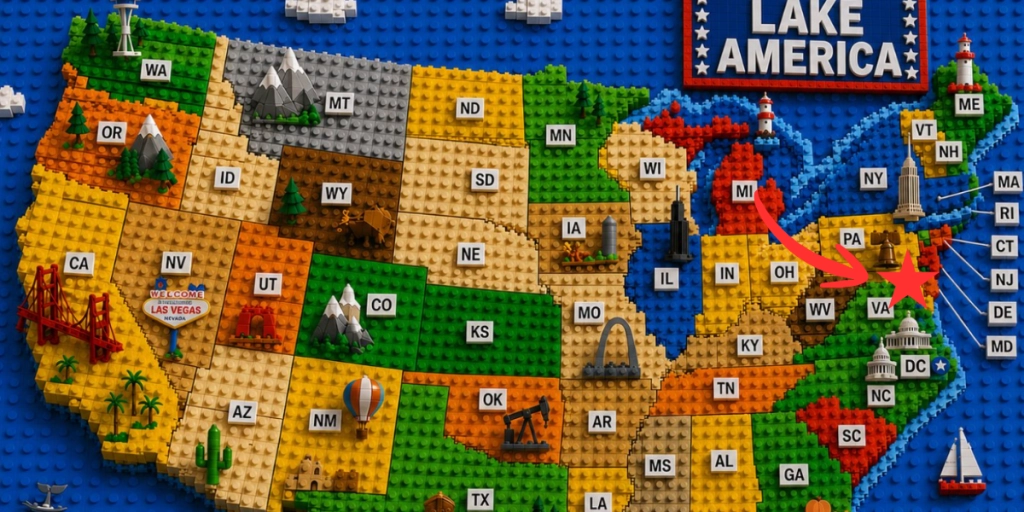
The White House stirred controversy this week after releasing an official map that renamed Lake Ontario as “Lake America.”
The graphic was intended to send a firm political message following a breakdown in trade negotiations. However, internet users quickly noticed that the graphic placed Washington, D.C., inside North Carolina.
The nation’s capital actually sits roughly 200 miles north, nestled between Maryland and Virginia.
Article continues below.


Click to display external content from t.co,
- You can always enable and disable third-party content.

You agree to display external third-party content. Personal data may be sent to the provider of the content and other third-party services.
Two huge blunders in a day
All in all, this week has not been good for the Trump administration when it comes to social media posts.
In a now-deleted post, the US Department of Education shared a clip on X featuring a line spoken by Winston Churchill in the movie Darkest Hour.
In the movie, actor Gary Oldman says, “You cannot reason with a tiger when your head is in its mouth,” before the video cuts to clips of President Donald Trump.
The agency captioned the video, “No one does it like us.” But online viewers quickly noticed a glaring historical problem.
The tiger Churchill referenced was Nazi leader Adolf Hitler. By linking the quote to Trump, the department accidentally compared the president to Hitler.
An Education Department spokesperson told the Daily Beast that officials deleted the post across all platforms. “The video, based on a trending sound on TikTok, was created and posted by an ED staffer who did not understand the context of the video,” the spokesperson said.
Article continues below.
Click to display external content from t.co,
- You can always enable and disable third-party content.
You agree to display external third-party content. Personal data may be sent to the provider of the content and other third-party services.
Click to display external content from t.co,
- You can always enable and disable third-party content.
You agree to display external third-party content. Personal data may be sent to the provider of the content and other third-party services.
Escalating trade battles
The Lego-map follows a rapid deterioration in bilateral relations.
After a breakdown in trade negotiations, Washington hit Canadian imports with a 50 percent tariff on approximately $20 billion worth of products, targeting everyday items like wine, plywood, and hockey sticks.
Future levies were also threatened for Canadian automotive exports.
Canadian Prime Minister Mark Carney responded by placing matching 50 percent retaliatory tariffs on hundreds of American goods.
Recent polling suggests Canadian public sentiment toward the United States has dropped significantly, leading many consumers to actively boycott American products.



