
 Jens Asbjørn Bøgen
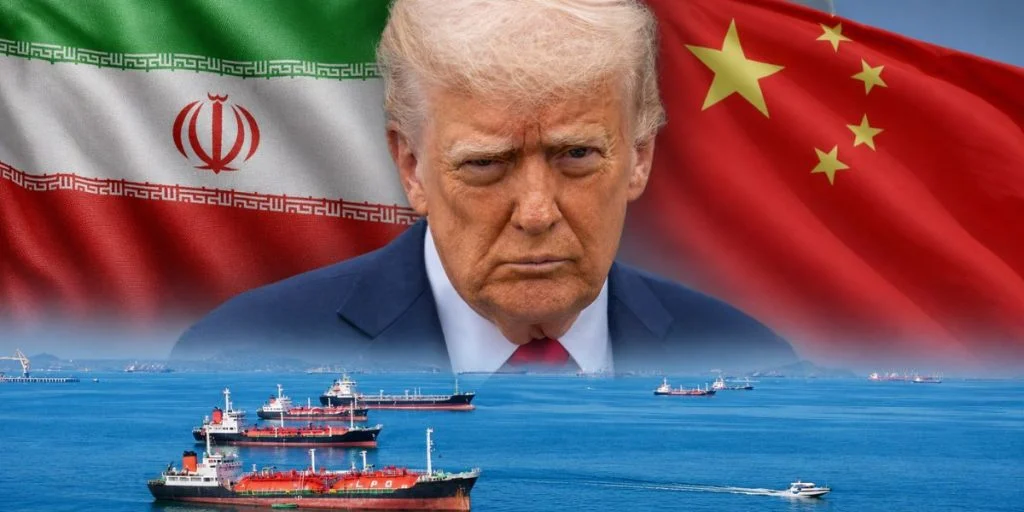
China, for example, has shown no interest of stopping its trade with Iran.


Washington has promised a massive financial crackdown on Iran, with American officials saying they wanted to cut off funding and finally end the grinding war.
US Treasury Secretary Scott Bessent compared the financial offensive to the historic 1944 D-Day landings, warning of secondary sanctions.
Yet key trading partners are simply carrying on. According to new reports from Bloomberg, allied nations are largely ignoring the serious warnings.
Passenger flights still link Tehran with neighbors like Türkiye, Russia, and Azerbaijan. Meanwhile, Pakistan stated it has no duty to follow American rules and kept its overland trade routes open.


Weak financial blows
Money continues to flow. Iranian banks, including Bank Melli, are keeping their branch doors open in the United Arab Emirates.
Washington did strike back with one specific move. The United States announced plans to restrict UAE branches of Egypt’s Banque Misr, accusing the institution of helping the Iranian regime.
Analysts see this move as a mere drop in the bucket. Former US Treasury official Alex Zerden told Bloomberg that reality falls short.
“As the war passes the six-month mark, the public actions taken by the Treasury Department this week do not match the hype,” Zerden said.
The biggest roadblock
The path to squeezing Tehran inevitably crashes into Beijing. Right now, China absorbs roughly 90 percent of all Iranian oil exports.
Chinese officials have already pushed back hard against Washington’s demands. Beijing shows absolutely no interest in shrinking its trade networks.
Going after Chinese banks could trigger massive retaliation, and that might shake the entire global financial system.
Leland Miller, CEO of China Beige Book, explained the dilemma to Bloomberg. “You can’t unleash meaningful economic warfare on Iran while ignoring the one country that absorbs 90% of its oil exports,” Miller said.
War draining US coffers
Since the war between Israel, the US and Iran broke out in late February this year, the Trump administration has faced harsh criticism over the cost of the war.
In July, Defense Secretary Pete Hegseth told Congress that the war had already cost $37.5bn at the time, The Guardian reported at the time.
During the hearing, he asked for an additional $88bn to continue the operation.
The fighting has sent global trade into turmoil, as Iran responded to the attack by closing off the Strait of Hormuz. Usually, this narrow path of water is a key transit for roughly 20% of the world’s crude oil trade.
The closure, and the subsequent uncertainty about whether the strait is open or not, have made oil prices skyrocket.



