
 Kenneth Glad
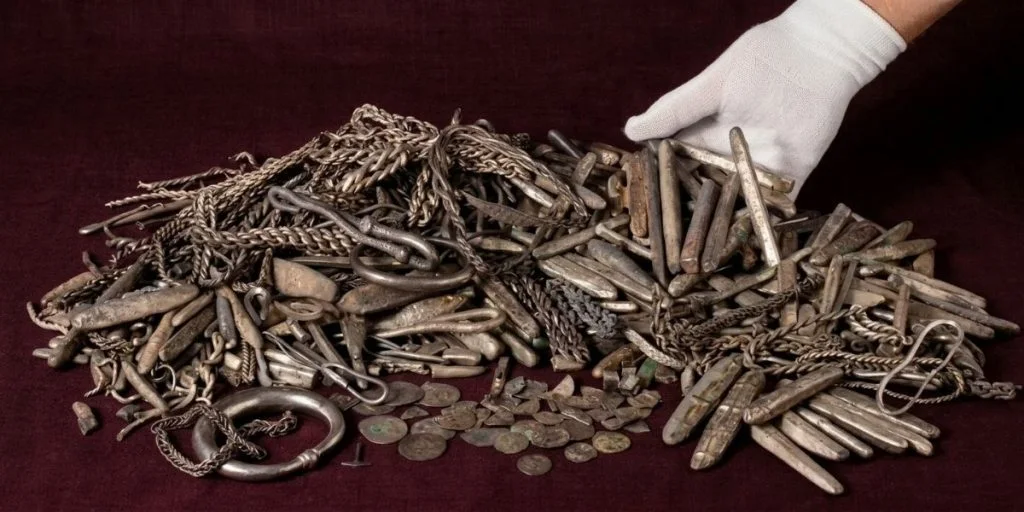
Routine garden work led to the discovery of hundreds of objects buried more than a thousand years ago. The collection is now being examined for what it can reveal about Viking-era economic practices.

A homeowner preparing a patio in Rebild, northern Denmark, uncovered about 18.5 kilograms of Viking Age silver, TV 2 reports.
The hoard contains roughly 700 objects and fragments. About 320 were recovered from a clay vessel, while the remainder were found in the surrounding soil.
Silver bars, jewellery, deliberately cut silver, 47 coins or coin fragments and a small Thor’s hammer are among the finds. The anonymous homeowner initially believed the material might be discarded metal.
Silver valued by weight
According to TV 2, archaeologists at Northern Jutland Museums say the large amount of bars and fragmented silver is particularly significant because Viking Age silver could be valued according to weight.


That meant an object’s worth did not necessarily depend on whether it was a coin, ornament or bar. Pieces of silver could form part of a structured payment system based on the amount of metal.
Several bars carry markings, including crosses, Thor’s hammer symbols and runes that may read “hutu.” TV 2 reports that museum archaeologists believe the inscription could relate to a name, ownership or another identifying mark.
The museum also links the combination of Christian and Norse symbols to a period when the two religious traditions existed alongside one another.
Coins narrow the date
The hoard includes Arabic and Anglo-Saxon coins, reflecting connections between Scandinavia, England, the Baltic region and the Islamic world.
Two silver pennies date from the reign of Edward the Elder, who ruled England from 899 to 924. Their presence helps archaeologists determine when the hoard may have been buried.
The new discovery is almost three times heavier than the roughly 6.5-kilogram Terslev hoard. Another substantial silver collection was found near Rebild in 1971.
The newly discovered objects are considered danefæ, Denmark’s designation for certain historically significant finds that must be submitted to the National Museum for assessment. Northern Jutland Museums is also working toward a permanent exhibition at the Fyrkat Viking Museum in the town of Hobro.
Sources: TV 2



