
 Kenneth Glad
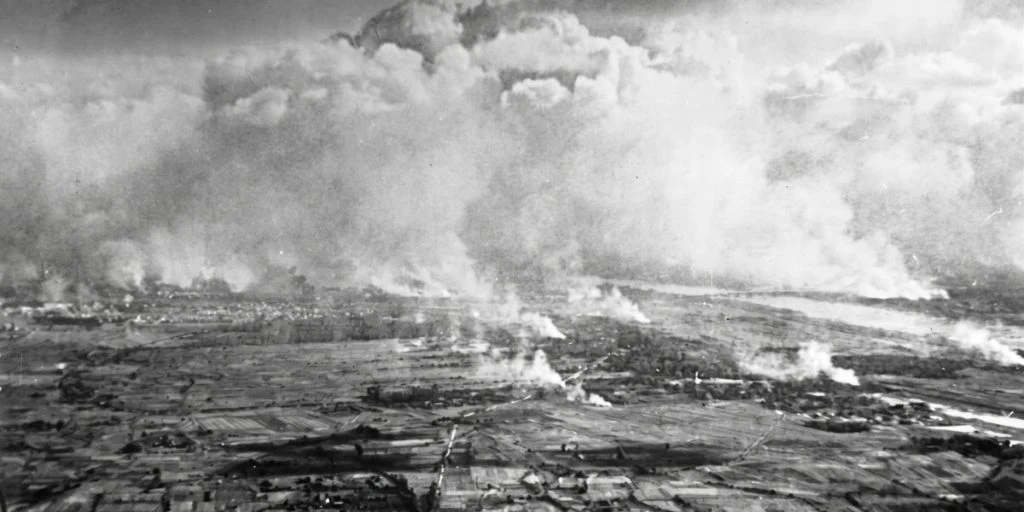
An entire country was transformed within weeks. Personal recollections show how civilians and servicemen experienced the same catastrophe from very different positions.


Before dawn on September 1, 1939, Wladyslaw Szpilman heard explosions around Warsaw without immediately realizing Germany had invaded Poland. The pianist, whose wartime experiences later inspired the film The Pianist, initially suspected another military exercise and considered returning to his usual morning routine. The uncertainty ended when his visibly shaken mother came to his room and told him that war had begun.
On his way to work at the Polish national radio, Szpilman found notices announcing the outbreak of hostilities already posted around the city. Crowds gathered to read them and exchange increasingly anxious reactions. One elderly Warsaw resident, according to eyewitness accounts, got furious as he absorbed the news, protesting to those nearby that Poland had been attacked without warning.
Szpilman continued toward the radio station, where broadcasts carried on even as conditions in the capital grew steadily more dangerous.
HistorieNet recounts the first weeks of the invasion of Poland through Szpilman, Polish pilot Franciszek Kornicki, lieutenant Hans von Luck, General Heinz Guderian and others who experienced the fighting firsthand.


Von Luck crossed near the German-Polish frontier expecting to encounter defenders almost immediately. Instead, his reconnaissance troops initially moved through countryside that appeared undisturbed. At one checkpoint, a lone Polish customs officer opened the border barrier for the advancing Germans. The deceptive calm ended farther inside Poland when machine-gun and mortar fire struck von Luck’s unit.
Kornicki had little chance of matching the German fighters on speed alone. His PZL P.7 could manage about 330 kilometers per hour, while the Messerschmitt Bf 109 was capable of nearly twice that.
On one sortie, however, he managed to get into position behind a German aircraft. Then his harness gave way while his fighter was upside down. Kornicki fell out of the cockpit and only survived because his parachute opened.
Fighting reaches Warsaw
Guderian’s advance was fast, but it was not always orderly. Early in the campaign, artillery fire forced his driver to swerve, sending their armored vehicle into a ditch and leaving it wrecked. He soon returned to the front and found another problem at the Brda River, where German units had stalled instead of pressing across as ordered.
At one crossing, Polish bicycle infantry were defending a bridge. Guderian stopped German tanks from firing aimlessly and ordered them forward. After a brief fight, the Polish defenders surrendered and the advance resumed.
Farther south, Hans von Luck was seeing the cost of that progress firsthand. After his reconnaissance troops ran into heavy Polish fire, German artillery and armored vehicles bombarded the opposing positions through the night. By morning, the defenders had gone, leaving dead soldiers, horses and burning houses behind.
Warsaw was meanwhile preparing for the fighting to reach the capital. Szpilman joined thousands of volunteers digging trenches and anti-tank obstacles on the outskirts of the city while German artillery landed nearby.
As the siege tightened, the damage became harder to contain. German attacks destroyed Warsaw’s waterworks, leaving residents with little water to fight fires spreading through already battered neighborhoods.
News that Britain and France had declared war on Germany on September 3 gave many in Warsaw reason to hope. Szpilman remembered the reaction at home, where the announcement was met with intense emotion. For a time, it seemed possible that outside help might change the course of the fighting.
That hope faded though as German forces kept closing in. Szpilman continued making his way to the radio station while shells fell around the city. HistorieNet says he was eventually asked to play Chopin during one broadcast as explosions drew nearer. It became the last live music aired before the station was silenced.
Poland faces two armies
Soviet forces entered eastern Poland on September 17, acting on territorial arrangements secretly agreed with Nazi Germany weeks earlier. For Polish troops already retreating from the Germans, the new attack closed off much of the country’s remaining escape route.
Kornicki was among those trying to get out. He had originally hoped to fly to Romania, but another pilot took his aircraft, leaving him to continue by road instead. The journey became increasingly chaotic as military vehicles crowded the roads toward the southeastern border.
Near Zaleszczyki, the column ran into traffic coming the other way. HistorieNet recounts how people warned that Red Army units were only a few kilometers away. Kornicki’s group turned back and headed instead toward the crossing at Kuty, where exhausted soldiers waited in a long queue through the night before finally reaching Romania.
The German advance was also beginning to meet Soviet forces directly. At Brest, Guderian was told that the city his troops had fought to capture would have to be handed over to the Red Army. A few days later, he met Soviet General Semyon Krivoshein to arrange the transfer and secure extra time to remove damaged German equipment.
Warsaw surrendered on September 27. Szpilman, the Polish pianist, who had remained in the capital throughout the siege, finally ventured back into the streets. He found barricades still blocking roads, buildings smoldering and hungry residents searching desperately for food. Bodies remained among the rubble.
Elsewhere, Polish units kept fighting until October 6. Many soldiers who escaped the country did not lay down their arms for long. HistorieNet says large numbers made their way through Romania and eventually reached France and Britain, where they joined the fight against Germany again. Polish pilots were later among those who flew in the Battle of Britain.
Sources: HistorieNet



