
 Kenneth Glad
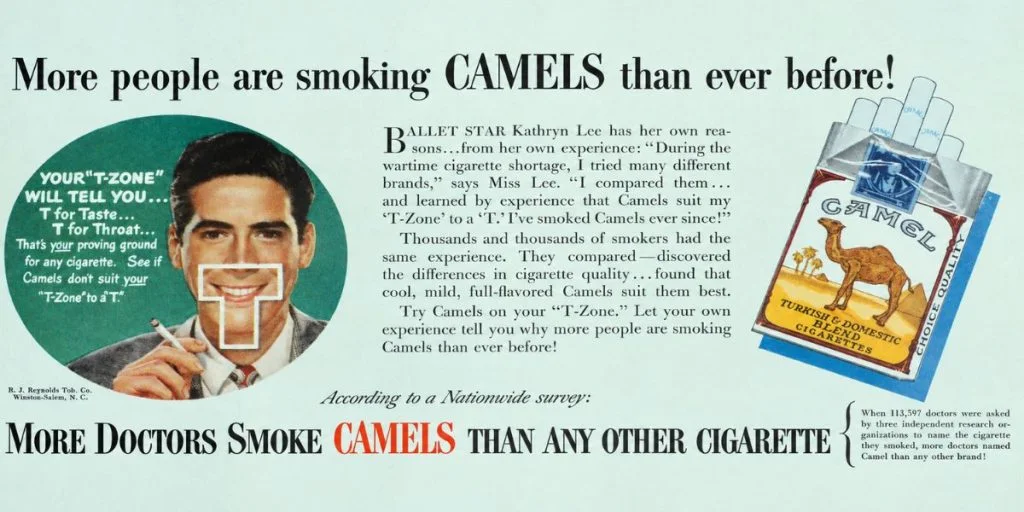
Once a widely accepted habit, smoking gradually came under mounting scientific scrutiny. Public policy and social attitudes shifted across generations as evidence accumulated.


When Europeans encountered tobacco in the Americas during the sixteenth century, they did not initially treat it simply as a recreational product.
Indigenous communities had long used the plant in ceremonial and medicinal settings, and European physicians soon assigned it their own therapeutic uses.
Tobacco appeared in treatments for wounds, coughing, respiratory complaints and intestinal illnesses. HistorieNet documents just how broad those supposed medical applications became.
During the 1600s, sailors, adventurers and military personnel helped popularize pipe smoking in Europe. By the end of the century, some rulers who had tried to suppress tobacco were instead benefiting from taxes imposed on it.


By the nineteenth century, smoking had also acquired social meaning. Some educated women used it to challenge conventions, and later advertisers linked cigarettes with independence, fashion and weight control.
War added another powerful association. Cigarettes became common among soldiers during World War I and increasingly carried connotations of masculinity, service and freedom.
Smoking was becoming part of how people presented themselves, which gave advertisers plenty to work with.
Advertising sold an identity
By the middle of the twentieth century, cigarette brands often had few obvious differences for consumers. Advertising therefore focused heavily on the people and lifestyles surrounding each product.
Collections documented by Yale University Library Online Exhibitions show cigarettes beside fashionable women, young couples, celebrities, athletes, soldiers and successful professionals.
A brand could suggest sophistication in one campaign and outdoor independence in another. Celebrity endorsements became common, while supposedly ordinary smokers in advertisements were usually young, slim and attractive.
Marlboro illustrates how radically an image could be repositioned. Once promoted toward women, the brand was redesigned for a masculine audience in 1954. Rugged outdoor figures soon replaced its earlier identity, and by the early 1960s the cowboy had become the dominant symbol.
Advertising aimed at women evolved just as deliberately. HistorieNet notes how Lucky Strike connected cigarettes with weight control in the late 1920s, encouraging female consumers to choose tobacco instead of sweets.
Advertisers could make cigarettes stand for almost anything, from glamour and independence to patriotism and masculinity.
Doctors gave cigarettes credibility
When questions about health became harder to ignore, tobacco companies found another source of reassurance: Medicine.
A peer-reviewed historical study published in the American Journal of Public Health reports that smoking was common among American physicians during the 1930s and 1940s even as public concern about its health effects was increasing.
Tobacco companies placed advertisements in medical journals, cultivated professional relationships and pointed doctors toward research supposedly showing advantages for particular brands.
RJ Reynolds even created a Medical Relations Division. Historical research shows, according to the National Library of Medicine, that it was connected to the William Esty advertising company rather than operating as an independent scientific body.
It cultivated researchers, circulated scientific material and provided material that could support claims in Camel advertising.
Consumers saw the result in a much simpler form. Advertisements featured physicians, throat examinations and claims about doctors’ brand preferences.
Sky News highlights a 1930 Lucky Strike campaign that invoked responses from more than twenty thousand physicians.
A film star could give smoking glamour. A physician could make unanswered health questions feel less urgent.
When the medical image began to collapse
By the early 1950s, the smoking doctor was becoming difficult to use as a symbol of reassurance.
In 1953, the Journal of the American Medical Association (JAMA) stopped accepting cigarette advertisements, while the American Medical Association banned cigarette companies from exhibiting their products at its conventions.
The following year, JAMA condemned a campaign that had invoked doctors and an AMA convention while promoting Kent filter cigarettes.
The shift reflected a stronger scientific case. In 1950, Ernst Wynder and Evarts Graham published major American research connecting smoking with lung cancer, while Richard Doll and Austin Bradford Hill reported similar findings in Britain.
These studies strengthened epidemiological evidence by examining patterns of smoking and disease across larger groups.
The industry’s physician surveys also looked less persuasive under scrutiny. Research published in the American Journal of Public Health found that the advertising agency behind a major Camel survey questioned doctors at conferences and offices, with many apparently receiving complimentary cartons before being asked about brand preference.
As doctor-centered advertising lost credibility, filters became more prominent. Filtered cigarettes rose from around 2 percent of the American market in 1950 to roughly half by 1960.
Science moved into public policy
Doctors did not abandon smoking overnight, but behavior within the profession began to shift. One Massachusetts study found that nearly 52 percent of physicians reported being regular smokers in 1954. Five years later, the figure had fallen to 39 percent.
The larger political turning point came in 1964 with the United States Surgeon General’s report on smoking and health.
According to the Centers for Disease Control and Prevention, its advisory committee drew on more than 7,000 biomedical articles concerning smoking and disease.
The report firmly connected cigarette use with serious health risks and strengthened the scientific basis for government intervention.
Health warnings appeared on cigarette packages in the United States in 1965. Congress passed legislation in 1969 prohibiting cigarette advertising on radio and television, with the ban taking effect in January 1971.
Public health organizations also intensified their campaigns. Groups including the American Cancer Society and American Lung Association promoted research, awareness of secondhand smoke and restrictions in workplaces and public spaces.
By the 1990s, activists were parodying familiar tobacco imagery and using graphic depictions of smoking-related disease.
The fight moved beyond traditional cigarettes
Legal pressure eventually extended far beyond warning labels. In 1998, four major American tobacco companies entered the Master Settlement Agreement with forty-six states.
The agreement restricted tobacco marketing and required the companies to make large payments to the states following lawsuits over the healthcare costs associated with smoking. More than $206 billion was expected to be paid during the first twenty-five years.
Smoking cessation meanwhile became a major field. Nicorette gum was approved in the United States in 1984, while nicotine patches followed in 1991.
Quitlines, counseling and self-help programs expanded as tobacco dependence was increasingly treated as something that could require sustained support.
Electronic cigarettes later complicated the picture. Yale University Library Online Exhibitions records both arguments that such products could offer an alternative to conventional smoking and concerns about their appeal to younger consumers.
Today, an advertisement showing a doctor with a cigarette can look almost absurd. In the 1930s and 1940s, it wasn’t unusual at all.
Many doctors smoked, the health risks were still being debated and tobacco companies knew that a physician could make a brand appear more reassuring.
The message worked because people trusted the doctor, not because the cigarette had become any safer.
Sources:
- HistorieNet
- Sky News
- Yale University Library Online Exhibitions
- American Journal of Public Health
- Centers for Disease Control and Prevention
- National Library of Medicine
- Journal of the American Medical Association



