
 Kenneth Glad
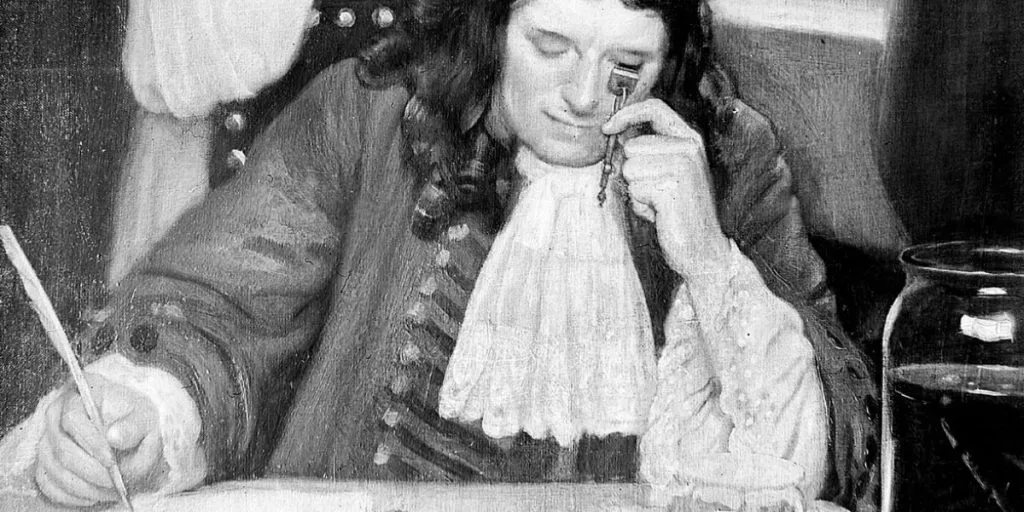
An unexpected finding raised difficult questions about what could be observed and independently verified. Repeated testing eventually helped turn a disputed claim into accepted evidence.
In November 1677, Robert Hooke, one of England’s best-known natural philosophers and a leading member of the Royal Society, examined rainwater in which whole black pepper had soaked for more than a week. Hooke was already famous for his work with microscopes and for Micrographia, his 1665 book that revealed highly detailed views of insects, plants and other objects invisible to the naked eye.
That made him an especially important figure in the dispute surrounding Anton van Leeuwenhoek. If Hooke, an experienced microscopist with an established scientific reputation, could reproduce the Dutch merchant’s observations, Leeuwenhoek’s claims would become much harder to dismiss.
Leeuwenhoek was an unusual figure in seventeenth-century science, according to history site HistorieNet. He was a merchant from Delft with no university training, but he had developed exceptional skill with small, single-lens microscopes. His instruments allowed him to describe structures that other observers often struggled to see, which made some of his reports difficult to verify.
More than a year earlier, Leeuwenhoek had sent the Royal Society a letter describing tiny organisms he said he could see in water. The problem was that other researchers could not easily reproduce what he was seeing. His observations were detailed, but without a second observer confirming them, they remained difficult for the society to judge.


Hooke finally sees them
Royal Society records show that Hooke failed twice before he managed to see the organisms Leeuwenhoek had described. His first attempt used ordinary pump water. In the second, he examined pepper water that had been left for only a few days, but again found nothing.
The third attempt was different. Hooke let whole black pepper sit in rainwater for more than a week before examining the mixture. This time, he saw the tiny organisms. Other members of the Royal Society were then able to look at the same preparation and see them as well.
Hooke’s successful attempt changed the situation. The organisms Leeuwenhoek had described could now be seen by other members of the Royal Society, using a preparation made in London rather than in Delft.
For Leeuwenhoek, that was an important shift. His observations were no longer resting only on his own instruments and eyesight. Hooke had reproduced the result independently.
An outsider faces scrutiny
Anton van Leeuwenhoek was born in Delft on October 24, 1632. He worked as a merchant and later held several civic positions in the city, but he had no university education in science. That set him apart from many of the scholars whose work appeared before the Royal Society.
His microscopes were small, single-lens instruments that looked far simpler than the larger compound microscopes used by men such as Robert Hooke. Their strength lay in the quality of the lenses. Some of Leeuwenhoek’s most powerful examples approached 300-fold magnification, giving him a view of details that other observers often struggled to reproduce.
He kept using those instruments long after Hooke’s successful test. Leeuwenhoek examined water, blood, plant material and samples from the human body, steadily adding to his record of microscopic observations.
In a letter dated September 17, 1683, he described microorganisms found in material taken from teeth. The account became one of the earliest documented descriptions of bacteria living in the human mouth and showed that the organisms he had first encountered in water were not confined to ponds or infusions.
Recognition follows verification
Leeuwenhoek was elected a Fellow of the Royal Society on January 29, 1680. For a merchant from Delft without a university scientific education, the appointment marked a major change in how his work was regarded. The observations that had once been difficult for other researchers to confirm were now being taken seriously by one of Europe’s most important scientific institutions.
His relationship with the Royal Society continued for decades. Leeuwenhoek regularly sent letters describing new observations, measurements and experiments, many of them based on specimens he prepared and examined himself. More than 100 of those letters were eventually published in Philosophical Transactions, giving readers across Europe access to his work.
He did not stop once his reputation was secure. Leeuwenhoek continued using his microscopes well into old age, returning repeatedly to the tiny organisms and structures that had first brought him attention.
He died in Delft in 1723 at the age of 90. By then, the man who had once struggled to convince established scientists had become one of the best-known microscopists of his generation. His surviving correspondence shows how closely his reputation remained tied to repeated observation and to the efforts of other researchers, including Hooke, to check what he had reported.
Sources: Royal Society archives; Philosophical Transactions; HistorieNet



