
 Kenneth Glad
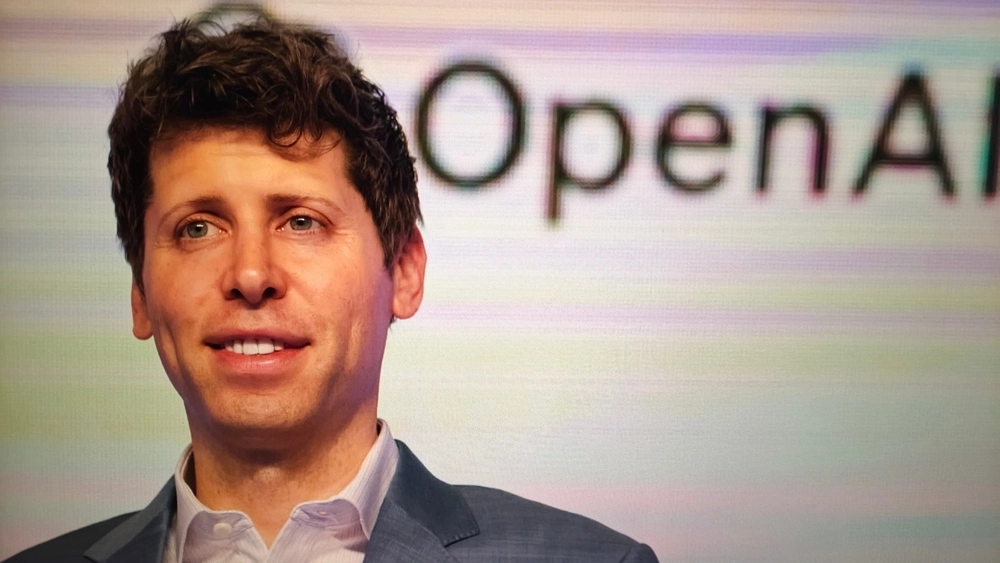
For decades, humanity has wrestled with some of the most complex puzzles in mathematics, hoping for breakthroughs that could redefine modern science. Now, artificial intelligence claims to have unlocked one of the ultimate prizes. But instead of global celebration, the sudden announcement has triggered a bitter corporate feud over who deserves the credit.


Tech giant OpenAI has announced that a secret internal model successfully solved the Navier-Stokes equation. The problem is one of seven famous Millennium Prize challenges, carrying a $1 million bounty for a verified solution. It aims to describe mathematically how liquids and gases move.
OpenAI said its unreleased system, trained since late August, delivered unprecedented performance. However, whether the Clay Mathematics Institute will officially approve the proof remains uncertain.
The announcement immediately sparked heavy pushback from New York University professor Tristan Buckmaster. The mathematician had been quietly tackling related problems alongside Levent Alpöge, a researcher at rival AI firm Anthropic.
Buckmaster and Alpöge, who was working in a personal capacity, had quietly chosen to attack the complex problems using an approach introduced in previous academic literature.


According to the Financial Times, the pair was tackling milestones closely linked to Navier-Stokes, including a major breakthrough involving the Euler equation, by leveraging tools from Google DeepMind, Anthropic, and OpenAI.
They don’t understand
Buckmaster claims OpenAI grabbed their groundwork and threw millions of dollars in computing power at the problem to beat them to the punch. The pair had just published three proofs on related mathematical milestones using various AI tools.
“Almost nobody else I know of was working on it. It is not the direction one arrives at in a few days by giving a model the problem statement,” Buckmaster said, according to the Financial Times.
He also alleged that OpenAI researcher Sébastien Bubeck asked to drop Alpöge’s name from joint efforts because of his ties to Anthropic. Bubeck denied that characterisation.
Both academics suggested their use of OpenAI products might have leaked data to train the winning model. OpenAI countered that no specific user data was accessed, though it could not rule out that anonymised usage data helped refine its systems.
OpenAI chief executive Sam Altman defended his company on X, stating they were hit with “unfounded accusations of plagiarism.” Altman wrote that OpenAI tried to coordinate and even offered Buckmaster lead authorship on a rewritten proof.
Alpöge called OpenAI’s approach “pretty wacky, unstrategic, and unnecessary,” while Anthropic declined to comment. The public drama highlights how intense commercial rivalries are now spilling into academic milestones as both tech firms prepare for potential public stock listings.
Sources: Financial Times, OpenAI



