
 Kenneth Glad
Democratic institutions across Western Europe face a rising tide of voter frustration as traditional political parties struggle to hold the center. Across multiple nations, shifting economic realities and deep cultural anxieties are reshaping the political map.


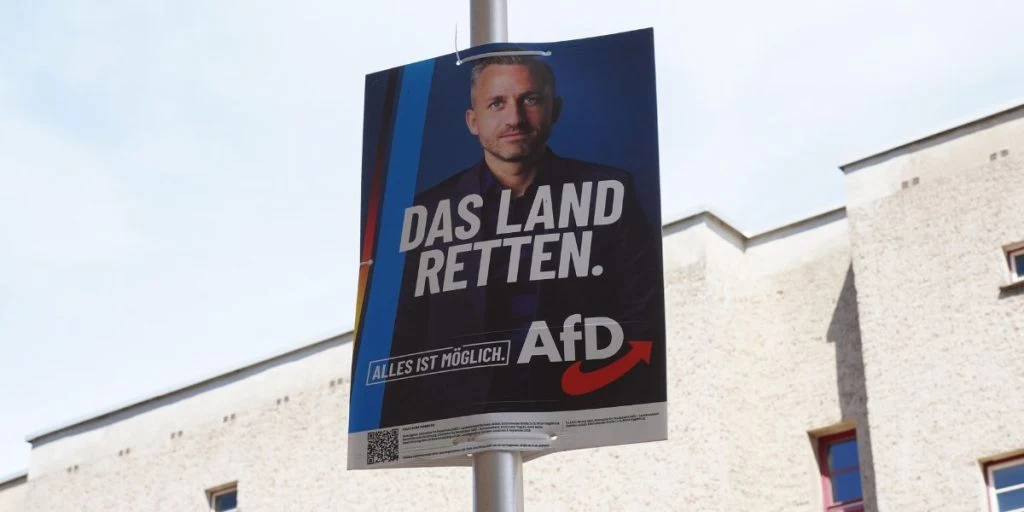
In Germany, the rightward shift delivered a landmark result over the weekend. The Alternative for Germany party clinched a major victory in the regional state of Saxony-Anhalt as the first far-right party since 1945. It was a historic win that sent shockwaves through a political establishment long committed to historical atonement.
The outcome generated immediate global interest, writes The Guardian. Tech billionaire Elon Musk actively boosted the party’s campaign messages on his social media platform X.
Click to display external content from t.co,
- You can always enable and disable third-party content.

You agree to display external third-party content. Personal data may be sent to the provider of the content and other third-party services.
Meanwhile, US Vice President JD Vance chose to meet with party co-leader Alice Weidel in Munich while skipping a meeting with the German chancellor. Vance’s outreach mirrors broader American conservative goals to align with European nationalist groups.


Not everyone on the far right welcomes the association, however. French politician Marine Le Pen has deliberately kept her distance from the German party. She fears its radical messaging could damage her own effort to build mainstream credibility ahead of upcoming presidential elections.
Cross-Channel political friction
Across the English Channel, British nationalist leaders face similar balancing acts. Reform UK leader Nigel Farage recently hosted French political figure Jordan Bardella at his party conference to sign a symbolic agreement on cross-Channel migration.
Yet experts point out that rival national interests make real cooperation between right-wing parties notoriously difficult. French critics quickly attacked Bardella for making policy concessions to Britain that yield zero practical benefit for France.
Farage also continues to navigate scrutiny regarding his foreign policy stances and past commentary on foreign leaders. Maintaining credibility with radical voters while reassuring cautious mainstream voters remains a delicate maneuver. His past praise for figures like Vladimir Putin and close ties to Washington conservatives frequently complicate his domestic political appeal.
Lessons from history
French novelist Éric Vuillard, according to the British newspaper, captures this growing anxiety, writing that “we never fall into the same abyss twice,” but “we fall in the same way, in a mixture of ridicule and dread.”
The observation strikes a deep chord across a continent where historical memory is long and painful. Recent political developments have exposed how easily fringe movements can shift from the political margins into the mainstream.
While today’s populist leaders operate through social media feeds rather than 20th-century street rallies, their tactics rely on a familiar playbook of exploiting voter discontent, targeting minority groups, and undermining trust in democratic institutions.
That combination of public spectacle and creeping extremism leaves observers worried that democratic safeguards are proving far more fragile than once assumed.
Despite these electoral gains, nationalist movements rarely form a unified front. Deep ideological divisions, personal rivalries, and competing national agendas mean the future of European democracy remains intensely contested.
Sources: The Guardian, Elon Musk / X



