
 Kenneth Glad
Debates regarding rapid advancements have sparked intense disagreements among global leaders. Various officials are now demanding immediate protective actions to ensure public wellbeing.


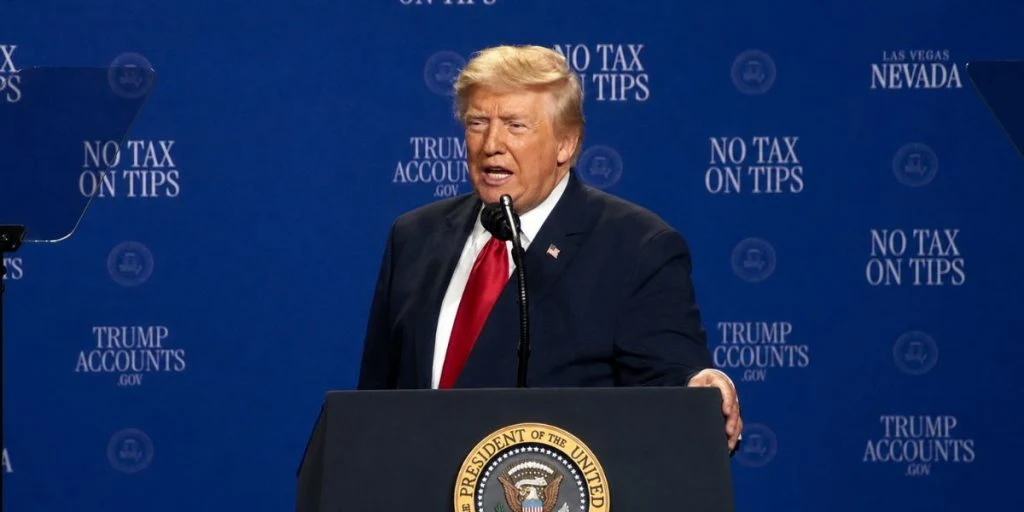
During a major industry conference, the American commander-in-chief abruptly inserted himself into the ongoing discourse surrounding advanced machine learning systems. Phoning into the event, Donald Trump loudly rejected the growing anxieties shared by numerous tech executives, labeling the widespread apprehension as completely fabricated.
He argued that implementing strict guardrails would merely stall domestic progress while handing geopolitical advantages to adversaries like China. The sitting president maintains that the only necessary safeguard for these powerful systems is exceptional leadership in the Oval Office. He is aggressively pushing back against researchers who fear the technology might soon pose existential threats to humanity.
This defiant stance was heavily highlighted by TV 2, noting how he interrupted Nvidia’s chief executive to declare that machines will never conquer the globe. By characterizing the caution from corporate insiders as a massive hoax, the nation’s top executive has firmly positioned himself against a surging wave of whistleblowers.
These defectors include nervous engineers who recently left major firms, terrified by the breakneck pace of corporate development. For instance, former personnel from top-tier laboratories have resigned to protest the prioritization of speed over security. Yet, he remains completely unswayed by these alarmist resignations, insisting that the ultimate victory belongs to whoever dominates the sector first.


Political adversaries and former officials demand immediate oversight protocols
The outright dismissal of these extreme concerns has triggered a massive counter-movement among legislators and past administrations. Prominent figures are stepping forward to publicly condemn the cavalier attitude toward unproven digital infrastructures.
Barack Obama recently emphasized that relying on a few massive corporations to regulate themselves is entirely inadequate. The former president is actively urging elected officials to establish concrete laws rather than trusting profit-driven enterprises to do the right thing.
This sentiment is echoed loudly within the legislative branch, as reported by The Guardian. Don Beyer, a Democratic representative from Virginia, issued a scathing rebuke of the dismissive rhetoric, suggesting that future generations will look back at those statements with harsh judgment. The Virginia congressman pointed out that refusing to acknowledge the risks is an incredibly foolish error that could yield catastrophic consequences.
Furthermore, polling data reveals a stark contrast between the current administration’s rhetoric and public sentiment. Vast majorities of both major political parties strongly favor the creation of dedicated federal oversight agencies. Even certain conservative colleagues are beginning to distance themselves from the total rejection of oversight, proving that the appetite for boundaries is permeating across the political spectrum.
International coalitions challenge the unrestricted development agenda
Beyond domestic criticism, a massive coalition of lawmakers is actively mobilizing to counter the deregulatory narrative. Bernie Sanders, the progressive senator from Vermont, is organizing confidential briefings to educate peers on genuine threats posed by unregulated super-intelligent systems. He rejects the idea of merely slowing down, insisting instead that society must slam on the brakes.
Meanwhile, Greg Casar, another Democratic congressman, declared that everyday citizens are finally realizing the massive risks associated with unchecked synthetic learning systems. He likened trusting tech billionaires with public security to asking criminals to guard a financial institution.
This fierce opposition extends across the Atlantic Ocean, where European politicians are also organizing a united front. Christel Schaldemose, a prominent member of the European Parliament from Denmark, confidently asserts that humanity can indeed control these synthetic networks, provided strict rules are implemented globally. She envisions a powerful worldwide monitoring agency capable of auditing corporate laboratories to ensure automated systems never threaten human lives.
As legislative gears begin to turn, the stark divide between those demanding immediate regulation and those insisting on unrestricted innovation continues to widen dramatically. The resistance against a laissez-faire methodology is solidifying into a coordinated political campaign. This movement is squarely aimed at forcing accountability upon an industry that has traditionally operated completely in the shadows.
Ignoring safety could lead to severe consequences
As the legislative battle intensifies, experts from various academic institutions are weighing in on the fierce dispute. Many scholars emphasize that treating advanced algorithms as mere toys or standard commercial products severely underestimates their disruptive potential. They argue that the administration’s refusal to engage with worst-case scenarios leaves the public vulnerable to unforeseen economic and societal shocks.
While the president continues to champion unhindered corporate expansion, the chorus of detractors grows louder every day. They are demanding that safety must supersede the race for digital supremacy. The intense friction between the executive branch and safety advocates illustrates a fundamental disagreement over how to navigate the future.
Rather than finding common ground, the opposing sides are digging in their heels. This ideological clash sets the stage for a monumental political showdown over technological governance.
Sources: The Guardian, TV 2



