
 Kenneth Glad
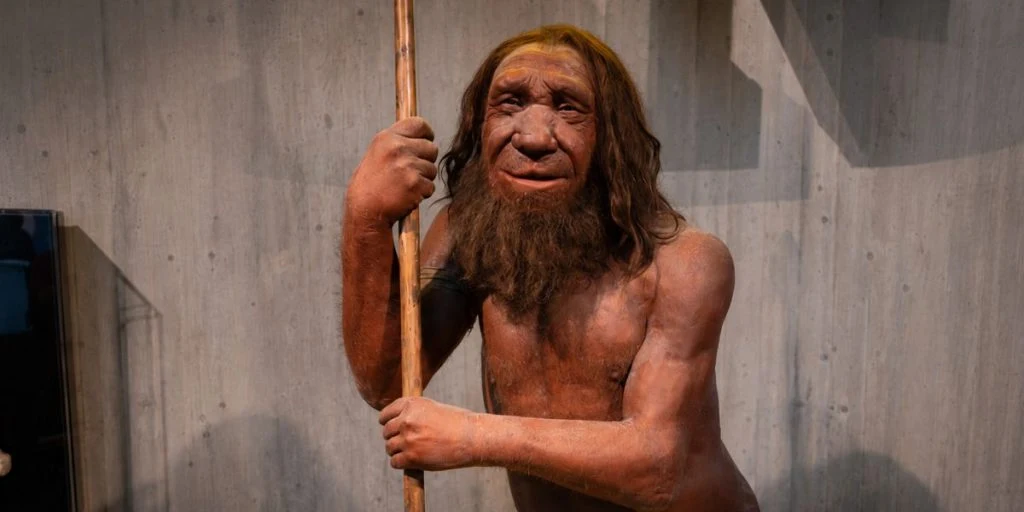
When we look back tens of thousands of years, it is easy to assume that ancient humans simply vanished under the weight of freezing temperatures. For decades, experts believed severe weather forced our closest evolutionary relatives into tiny, isolated pockets until they died out. Modern research suggests their story actually played out quite differently.

A massive study published in Communications Earth & Environment tracked how our ancient relatives lived across Eurasia over nearly 100,000 years. Researchers mapped nearly seven hundred archaeological sites against complex historical climate data, including rainfall and winter temperatures.
Rather than struggling in rigid environments, the findings show these early humans were surprisingly adaptable. They settled in nineteen distinct habitats ranging from dry scrublands to dense evergreen forests.
While they preferred milder winters and forested zones, they knew how to survive in varied landscapes. Crucially, their living areas were not breaking apart into tiny pockets right before they vanished. Open corridors spanning thousands of miles still linked different groups together.
A complicated arrival
The fresh data reveals that severe climate shifts were not the main driver behind the extinction of our evolutionary relatives. Instead, their steady decline directly coincided with the gradual arrival of modern humans moving across Europe and Asia.


“Our results do not support the idea that the disappearance of Neanderthals was caused by changes in climate and habitat that forced them to isolate in groups,” researcher Trine Kellberg Nielsen from Moesgaard Museum in Denmark told HistorieNet.
Rather than a sudden, catastrophic die-off triggered by freezing temperatures, the two distinct species repeatedly encountered one another and shared similar living spaces over thousands of years.
As populations of modern humans expanded across new Eurasian territories, both groups ended up competing for the exact same key food sources and prime living grounds, especially as populations of large game animals became increasingly scarce. This ecological overlap put immense pressure on existing local communities, forcing them into a slow struggle for vital resources.
Living on today
Yet, this takeover was not necessarily a story of brutal warfare. The interaction between the two species was far more complex, often involving peaceful coexistence, trade, and shared spaces across Eurasia. Over thousands of years, as modern humans moved into traditional Neanderthal territories, their populations gradually merged into a single community.
“We know that they interbred, and that we carry Neanderthal DNA inside us today,” Kellberg Nielsen said to HistorieNet. “In that sense, they are not 100 percent extinct. We mixed so much that we became one.”
This genetic overlap suggests that our ancestors did not simply replace their evolutionary cousins through force or out-hunting them. Instead, constant social contact and interbreeding over five millennia slowly blurred the lines between the two groups.
As the numbers of Homo sapiens grew exponentially, the distinct physical and genetic markers of Neanderthals were absorbed into the broader human gene pool, leaving a lasting mark on modern biology.
Sources: HistorieNet, Communications Earth & Environment



