
 Lauge Risom Koch
Ukrainian forces successfully downed a Russian jet-powered Shahed drone using a newly developed domestic interceptor system.


Ukrainian forces have successfully downed a Russian jet-powered drone using a domestically produced aerial interceptor. According to United24 Media, Ukrainian President Volodymyr Zelenskyy reported this significant milestone following a direct trial update from Commander-in-Chief Mykhailo Drapatyi. This successful operation marks a major achievement in countering advanced aerial threats deployed during Russia’s ongoing full-scale invasion.
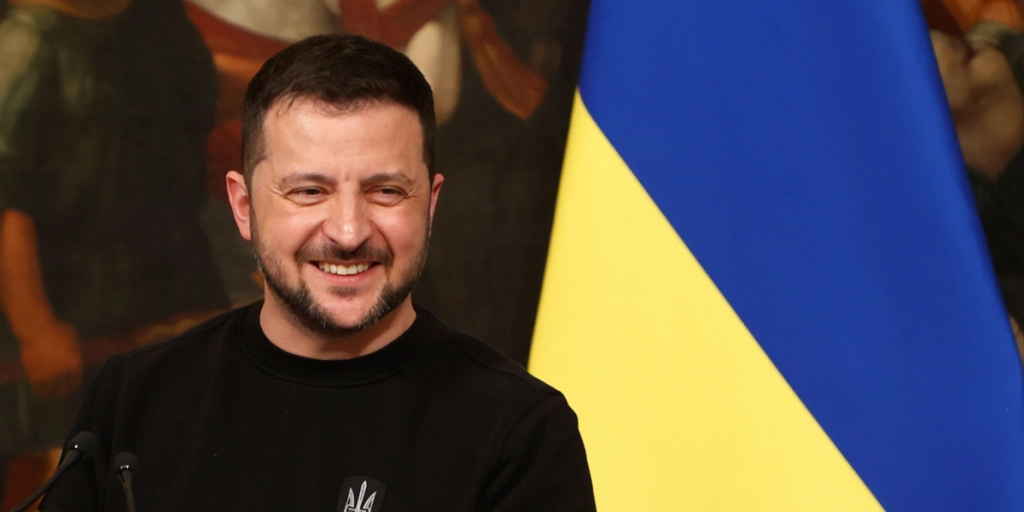
The president enthusiastically shared the operational details from military leadership regarding the newest defense technology testing. As reported by United24 Media, Zelenskyy stated that there was another positive result from testing these new interceptors against reactive drones. He publicly expressed his immense gratitude on social media, writing, “I thank all the developers and our warriors.”
Ukrainian leadership immediately confirmed their intention to expand the production of these effective domestic interceptor models. According to United24 Media, Zelenskyy explicitly declared that the nation will aggressively “scale up” the manufacturing process for these defensive weapons. This latest successful operational test directly follows an earlier initial trial that officially occurred on September 15.
Refining control systems for full operational readiness
Despite achieving a successful downing, Ukrainian military engineers continue working to perfect the intricate interceptor technology. As noted by United24 Media, government officials acknowledged that the advanced control systems still require further adjustments before achieving full military integration. The initial September 15 tests specifically evaluated drones engineered to uniquely counter the new jet-powered attack variants.


Developers are currently dedicating significant time to fine-tuning specific electronic components within the interceptor’s complex control system. According to United24 Media, defense officials repeatedly emphasized that active technological development remained underway behind the scenes. These critical modifications are absolutely essential before the new aerial defense system can confidently reach full operational readiness.
The rapid development of these interceptors directly addresses the dramatically escalating threat from updated Russian weaponry. According to United24 Media, the Russian military increased the intensity of its jet-powered drone attacks on Ukraine more than eightfold over the summer. This massive surge forced Ukrainian defense contractors to accelerate their timeline for delivering highly functional countermeasures.
Defending against an unprecedented surge in aerial attacks
The sheer volume of recent aerial bombardments highlights the urgent need for these domestically produced interceptors. According to United24 Media, invading forces launched around 2,800 jet-powered attack drones throughout August compared to roughly 350 in June. This staggering numerical increase has placed immense operational pressure on existing Ukrainian ground-based air defense networks.
Russian forces are specifically directing these high-speed drones toward critical infrastructure immediately after manufacturing them. As reported by United24 Media, Air Force spokesperson Yurii Ihnat stated that Russia launched approximately 800 jet-powered drones over four days in late August. He noted that the vast majority of these newly produced munitions were actively targeting the capital city of Kyiv.
The advanced propulsion systems on these new drone variants pose a uniquely difficult challenge for ground defenders. According to United24 Media, air defense experts warn that the increased speed of the latest Geran and Banderol models drastically reduces tactical reaction times. These faster flight speeds have dangerously shrunk the engagement window for mobile fire teams from one minute down to just six seconds.



