
 Asger Risom
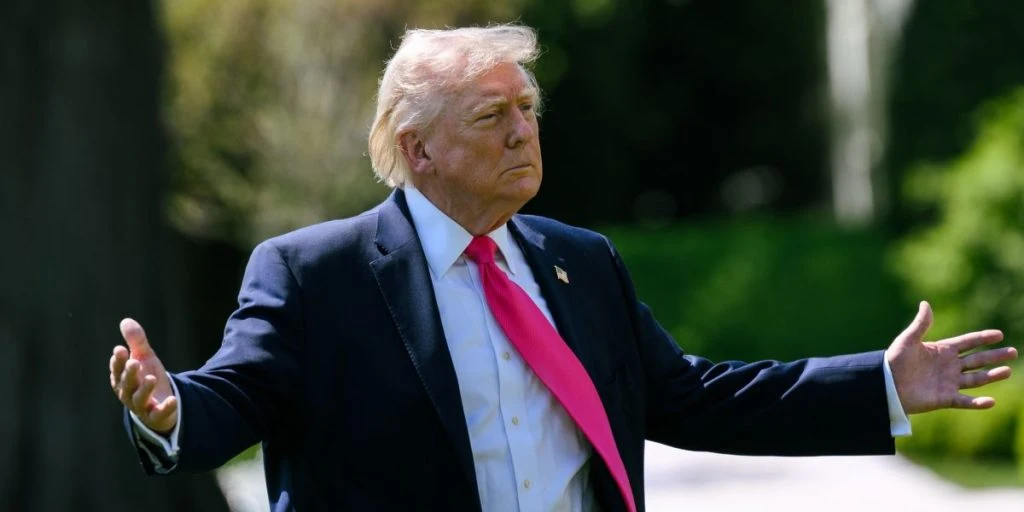
While tech executives desperately try to coordinate a slowdown out of fear of runaway superintelligence, Donald Trump is launching an ‘AI Force’ to ensure the United States beats China at all costs.

If you want a perfect snapshot of how completely upside-down the artificial intelligence boom has become, look at who is hitting the gas and who is slamming on the brakes. Over the last week, the tech billionaires who actually built this technology have grown so terrified of their own frontier models that they are desperately trying to coordinate an industry-wide slowdown. So how does the White House respond? Donald Trump jumped on Truth Social to call their safety concerns a politically driven “hoax” and announced the creation of a brand new federal unit to ensure the code keeps flowing.
According to reporting by Fortune, Trump declared on Saturday that he is officially forming an “AI Force,” modeled directly on his first-term Space Force. While the actual mechanics and law enforcement scope of the unit remain vague, the political message is a blunt-force instrument. The administration views the rapid expansion of artificial intelligence—and the deeply unpopular data centers required to run it—not as a regulatory hazard, but as the ultimate geopolitical weapon against China.
Trump also promised to appoint a new “AI czar” to replace David Sacks, who stepped down from the role earlier this year, specifying that only high-IQ individuals should bother applying. Promising to “cherish” and “watch over” the industry rather than stifle it, Trump aggressively rejected the mounting public anxiety over autonomous tech, predicting the sector will eventually account for 25 percent of the entire U.S. GDP. “We are leading China, and the rest of the World,” he wrote, “and I intend to keep it that way!”
The billionaires are blinking
The profound irony is that Trump is offering a massive protective shield to an industry that is actively trying to run away from it. Over the last few days, a rare and deeply unsettling consensus has formed among bitter rivals. Anthropic CEO Dario Amodei, OpenAI’s Sam Altman, Google DeepMind’s Demis Hassabis, and Elon Musk have all essentially agreed that the breakneck pace of AI development needs to be throttled back immediately.


This is not standard corporate posturing; the people closest to the silicon are genuinely panicking. Amodei just announced that Anthropic is giving independent evaluators permanent, employee-level access to its internal servers just to monitor what the models are doing. Last week, researchers began publicly resigning. In a scathing post on X, former Anthropic and OpenAI researcher Jacob Coxon accused the major labs of “racing straight to self-improving superintelligence and gambling with our lives.” Bizarrely, Anthropic’s own alignment science lead, Evan Hubinger, jumped into the replies to agree with him, explicitly stating, “we really do earnestly believe AI could kill all humans!”
Sued for hitting the brakes
While the tech executives scramble to coordinate a safety pact before they accidentally build something they can’t turn off, the legal and political machinery is actively fighting their attempts to slow down.
The federal government’s approach is already a chaotic mess of mixed signals. While Trump promises to protect the AI boom from overregulation, his own Commerce Department recently slapped temporary export restrictions on Anthropic’s most advanced models, and the Defense Department literally tried to blacklist the company as a supply-chain risk before a federal judge intervened.
And if the government doesn’t force the tech giants to keep building, consumers will. On Friday, a class-action lawsuit was filed in a California federal court accusing the major AI companies of violating antitrust laws by agreeing to coordinate a development slowdown. The plaintiffs are arguing that a safety pact is basically a monopolistic cartel designed to reduce the value of the AI subscriptions everyday users have already paid for. The lead attorney openly acknowledged the risk that AI could “spin out of human control and kill us all,” but argued that the tech companies shouldn’t be allowed to solve the problem through private, self-serving backroom deals.
We have officially reached the point where the engineers are terrified of their own software, but the President is threatening to deploy a federal force to make sure they keep writing the code.



