
 Kenneth Glad
Gold strikes, ancient curses, and secret digs under sacred ground sound like Hollywood inventions. Yet real history often outpaces cinema when ambition outweighs common sense. Over a century ago, a charismatic British aristocrat set out on a wild treasure hunt that would end in an international scandal.

It all started with a Finnish philosopher, surveyor, and poet named Valter Juvelius, who claimed to have cracked a secret code hidden inside the text of the Old Testament. He insisted that this cipher pinpointed the exact location of the Lost Ark of the Covenant, buried alongside vast heaps of King Solomon’s ancient gold.
Captain Montagu Parker, a young Eton-educated veteran of the Boer War suffering from a nervous condition after the fighting in South Africa, was completely hooked by the story. According to historical records detailing the 1909 expedition, Parker leveraged his elite social connections to raise roughly £30,000, a massive sum equivalent to over £2 million today. from wealthy British nobles and ambitious American investors.
The team Parker put together to hunt for the sacred relics was far from a traditional scientific crew. Rather than hiring trained archaeologists, writes HistorieNet, he recruited a Swiss psychic, a Congo River steamship captain, a famous English cricket star, and an Australian sheep farmer. Parker intentionally avoided real scholars, fearing they would impose rigid rules, slow down the treasure hunt, or leak his confidential plans to the public.
Secret late night digs
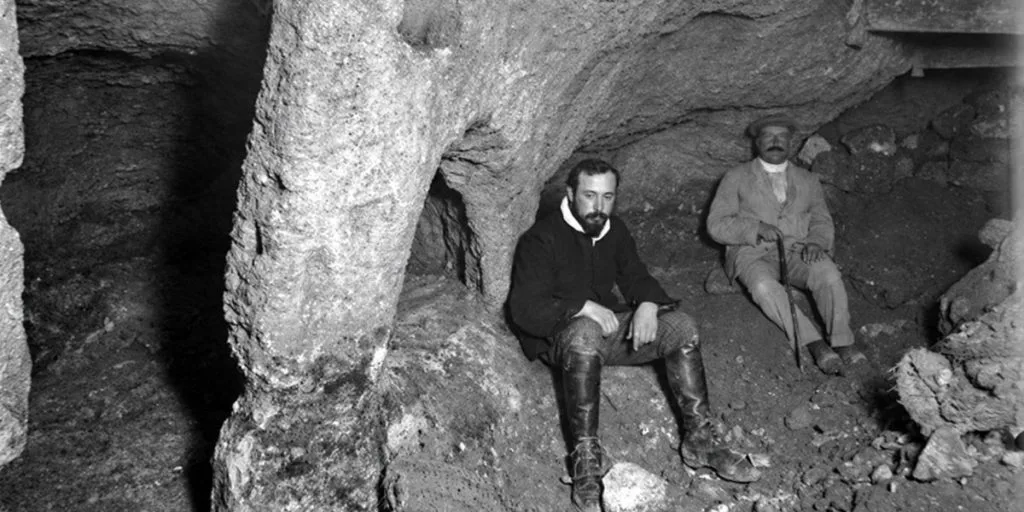
Underground work began in the autumn of 1909 along the steep southern slopes of the Temple Mount. For nearly two years, over a hundred local laborers worked round the clock, hacking through ancient subterranean tunnels, water conduits, and bedrock while Parker enjoyed a lavish high-society lifestyle at Jerusalem’s finest hotels.


By early 1911, according to HistorieNet, the venture was collapsing. Financial reserves were nearly exhausted, and the official digging permits were set to expire. Desperate for a final breakthrough, Parker paid massive cash bribes to the Ottoman governor, the chief of police, and the official guardian of the Noble Sanctuary to turn a blind eye. The payoff bought his amateur crew secret late-night access to dig directly beneath the floor of the Dome of the Rock, one of Islam’s holiest places.
For nine straight nights, handpicked workers dug under cover of darkness, smuggling excavated soil out in heavy sacks while armed police guarded locked gates. Then, on April 12, 1911, a mosque caretaker seeking a quiet spot to rest unexpectedly walked in and caught the men clearing away earth near the sacred rock. Outraged by the sight, the employee fled shouting into the dark streets, rousing the local population to defend their holy sanctuary against sacrilege.
Violent riots broke out overnight, with angry mobs surrounding government buildings and threatening to lynch the implicated officials. Realizing their lives were in immediate danger, Parker and his inner circle hastily packed their bags and slipped out of Jerusalem toward the coast.
The team reached the port of Jaffa, tricked local inspectors into letting them board their private steam yacht, and sailed away empty-handed just ahead of Ottoman arrest warrants.
Source: HistorieNet



