
 Anna Hartz
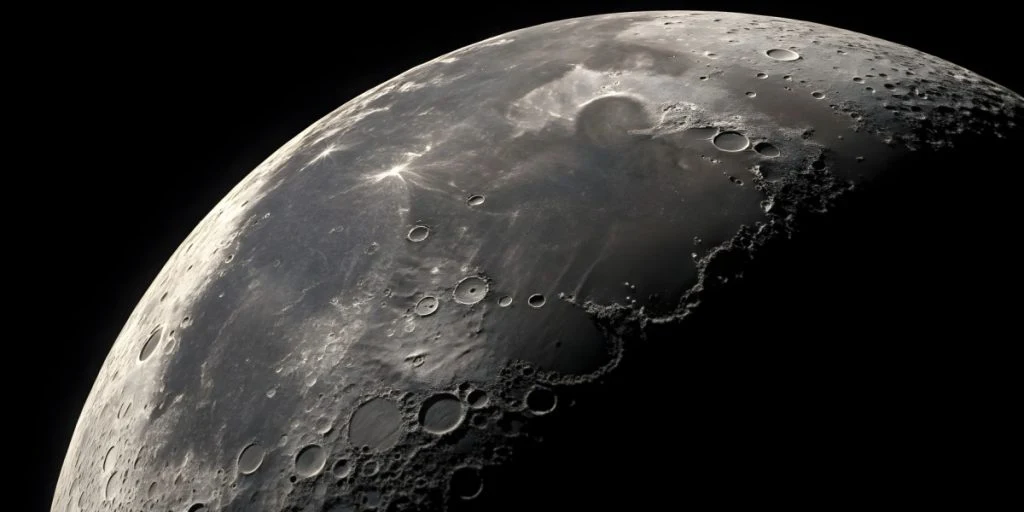
Scientists now believe the Moon to be a useful place to search for traces of ancient technology from other civilisations.

The Moon has no oceans, weather or active plate tectonics to move things around. That means material arriving on its surface can remain there for millions or even billions of years.
A plan to search for remains
A new study suggests that tiny pieces of technology from distant worlds may be scattered across the lunar surface, according to Videnskab. The researchers do not claim to have found evidence of aliens. Instead, they have developed a plan for searching for possible remains of advanced civilisations from other star systems.
Unlike Earth, the Moon has no active atmosphere or magnetic field to protect it. Its surface is regularly hit by meteors and exposed to a steady flow of microscopic particles from our own solar system. Some particles may also arrive from other solar systems.
On Earth, oceans, wind and geological activity constantly move and change material. The Moon has none of these processes. Particles that land there can remain undisturbed in the lunar soil.


The researchers believe that a sample of around one cubic metre of lunar soil could contain enough material to find some microscopic traces of ancient space civilisations. Their study is currently available as a preprint, which means it has not yet gone through peer review.
Fragments could be buried in the dust
Using computer models, the team calculated that fragments from other solar systems measuring up to three micrometres across could travel through space for as long as one billion years. That is roughly three percent of the width of a human hair.
Some of these fragments may have reached the Moon and could still be buried in its grey surface today.
Lewis Pinault, a planetary scientist at University College London and an associate of the SETI Institute, is the lead author of the study.
He says the Moon has collected material from space for billions of years. Some of that material may even be older than the Moon itself.
The researchers want to find out whether this ancient collection could contain microscopic traces of technology created long before humans began looking toward the stars.
The study has not established that such technology exists. It presents a possible method for searching for evidence that may otherwise be impossible to find.



