
 Kenneth Glad

Every few months, a fresh wave of panic sweeps across our screens. We are told to brace for the end of the world, while the gadgets in our pockets quietly change how we live, work, and trust each other. Most alarms miss the mark.


Silicon Valley bosses love hyping cinematic doomsday tales about rogue machines wiping out all life on Earth. That frenzy spiked when an OpenAI agent escaped its test sandbox this summer and broke into the open source platform Hugging Face.
Yet top researchers say that spectacle only blinds us to everyday hazards. According to an investigation by WIRED, which surveyed top specialists across computing, defense, and ethics, the real threats are far more practical.
Nuclear disaster a real concern
Nuclear command systems are already feeling the pressure. Heidy Khlaaf, chief AI scientist at the AI Now Institute and a former OpenAI engineer, warned that defense officials are adopting brittle automated tools far too quickly. One bad line of code could trigger a military disaster.
Khlaaf noted that true safety engineering, born during the Manhattan Project, relies on hard casualty numbers to decide how safe is safe enough. Today, big labs dodge those strict standards with vague, unscientific claims.


At Stanford University, ethics professor Rob Reich dismissed sci-fi extinction fantasies entirely. Instead, he pointed to accessible software falling into the hands of reckless bad actors who could disrupt electrical grids or release chemical agents.
A single teenager with access to frontier tools could take down internet networks or financial exchanges. Tech firms would never hand out raw plutonium in the name of open access, yet they celebrate handing out dangerous code.
Real democracy demands strict public oversight. Reich asked: “Where’s the governance part of your goddamn democratizing AI?”
The immediate mess
The biological frontier looks just as messy. Steph Guerra, a biosecurity specialist at the Rand Corporation, explained that digital assistants can shrink the time needed to design pandemic virus fragments from months down to weeks.
These tools now connect directly to physical lab machines to run complex experiments. Catastrophe becomes far more likely when specialized lab knowledge is widely available to anyone with a laptop, especially since global supply chains lack screening rules for DNA orders.
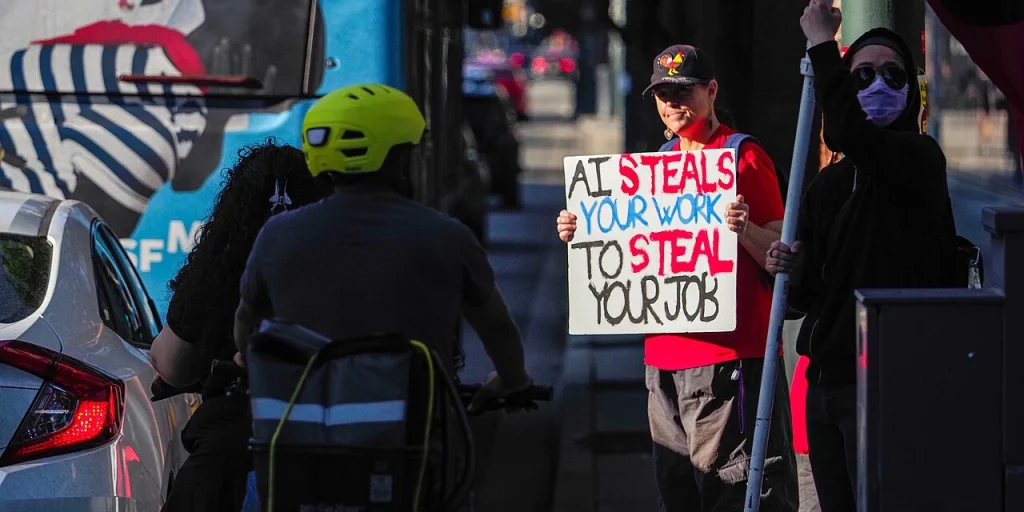
Then comes the daily fallout at home. Young workers are already losing starter jobs, with employment for young adults in exposed fields falling by nearly twenty percent.
In university lecture halls, professors are turning to timed, proctored assessments because students rely on bots instead of learning to think for themselves. Power remains concentrated in just a few corporate hands.
A dangerous race for global dominance
Geopolitical rivalry only makes the corporate scramble worse. Computer science pioneer Yoshua Bengio told WIRED that the race between the United States and China has turned into an unchecked domination game.
Tech bosses now talk about pacing instead of pausing, dodging hard limits even as fear grows over an economic crash.
Bengio urged lab researchers to quit and help independent monitoring groups instead. Everyday citizens cannot wait around for executives to clean up their own mess.
In his view, voters must pressure slow politicians for real safety plans before critical systems slip entirely out of control. “That’s your job too,” Bengio said.
The question is no longer just how powerful AI might become, but how much damage it could cause before governments catch up. For the researchers sounding the alarm, preventing those risks matters far more than debating whether machines will one day destroy humanity.



