
 Nicolai Haugsted
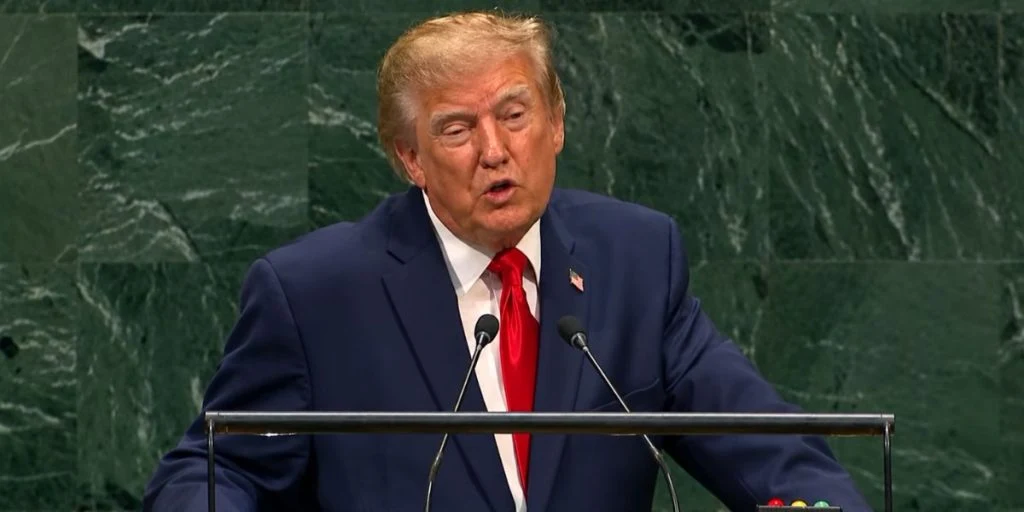
Trump issues extraordinary threat to Iran as diplomats work to bring seven-month war to an end.
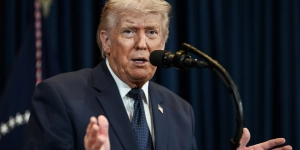
Donald Trump arrived at the United Nations with diplomacy happening behind the scenes and a considerably less diplomatic message ready for the microphone.
Nearly seven months into the war with Iran, negotiations are gathering pace in New York as mediators shuttle between Washington and Tehran in search of a possible way out.
Trump used his address to the UN General Assembly on Tuesday to make clear just how dramatically different the alternatives could be.
“I have a big decision to make,” the US president told world leaders according to Reuters.


Trump then presented Iran with two possible futures: an agreement that could allow the country to rebuild – or the destruction of the Islamic Republic.
“Will a deal be made with Iran that lets them rebuild and create a far greater country than it ever was before? … Or do I annihilate the Islamic Republic and do it quickly, never giving them a chance to kill and destroy people and countries again?”
Trump’s remarks came during the opening day of the UN General Assembly’s annual general debate in New York.
Iran answers Trump’s threat
Tehran did not leave the president’s language unanswered.
Iran’s Armed Forces dismissed Trump’s remarks as “propaganda” and said the country remained prepared to respond militarily.
Its answer, according to a statement cited by Reuters, would be “full readiness to inflict more severe, crushing, and unpredictable blows on the aggressors.”
Iranian Parliament Speaker Mohammad Baqer Qalibaf offered another blunt response.
“Trump must understand that he cannot impose his power on the Iranian people and its armed forces,” he said.
The public exchange hardly sounded like two governments preparing to shake hands.
Behind the rhetoric, however, negotiators were doing precisely what diplomats tend to do when the people above them are trading threats: talking.
US envoy Steve Witkoff said Washington and Tehran held lengthy indirect discussions Tuesday on the sidelines of the General Assembly.
Mediators moved between representatives of the two countries throughout the day because the American and Iranian delegations were not negotiating directly, according to Witkoff.
He said he hoped the discussions would prove “constructive and promising.”
Iranian Foreign Minister Abbas Araqchi also met Qatari Prime Minister Sheikh Mohammed bin Abdulrahman Al Thani. Qatar has spent months attempting to reduce tensions and has played a mediating role during the conflict.
Diplomacy therefore continued only a short distance from the hall where Trump had just publicly raised the possibility of annihilating the Iranian government.
Iran offers a route back through Hormuz
The Strait of Hormuz remains one of the biggest pieces on the negotiating table.
Before the war, roughly a fifth of global oil and gas shipments passed through the strategically vital waterway. Disruption there has contributed to higher energy prices and created serious problems for Gulf states dependent on uninterrupted shipping.
A senior Iranian official told Reuters that Tehran could reopen the strait to Gulf traffic within seven days if Washington eased military pressure and lifted its blockade of Iranian ports.
Tehran reportedly sent its latest proposal to the US through intermediaries last week.
Such a move could provide substantial relief for global energy markets, but the conditions attached to it leave Washington with difficult choices of its own.
Trump thinks the war could soon be over
Trump also met leaders from several Middle Eastern countries during his visit to New York.
Gulf governments have powerful reasons to push for an agreement. Several host major American military facilities that have repeatedly come under Iranian attack, while disrupted shipping has threatened some of the region’s most important exports.
“We think that the situation with Iran could end right after the November 3 midterm elections, maybe before,” Trump said during his meeting with regional leaders.
“I don’t know. You never know.”
A Qatari proposal for a broader security framework involving Iran and Arab Gulf states is also under discussion, according to regional sources cited by Reuters.
Iran is reviewing the proposal, one source said.
The war is becoming increasingly expensive
Pressure for a breakthrough extends far beyond the negotiating rooms in New York.
Higher oil and fuel prices have become an increasingly visible domestic problem for the Trump administration, while fighting has spread across the Middle East.
Saudi Arabia has been pulled deeper into the crisis as Iran-aligned Houthi forces advance in Yemen and threaten Saudi oil exports through the Red Sea.
Riyadh has sought renewed American military action against the Houthis, but Washington has so far resisted those requests.
Asked why the US had held back, Secretary of State Marco Rubio stressed American support for Saudi Arabia while acknowledging the risks.
“That said, that is a very dangerous and complex conflict that pre-exists,” Rubio said.
“We have a history with the Houthis as well, and that’s something we don’t want to see impacted either.”
Saudi Arabia provided markets with some relief Tuesday by restarting operations on its East-West Pipeline, according to Reuters sources. The route allows Saudi crude to reach the Red Sea without relying on the Strait of Hormuz.



