
 Asger Risom
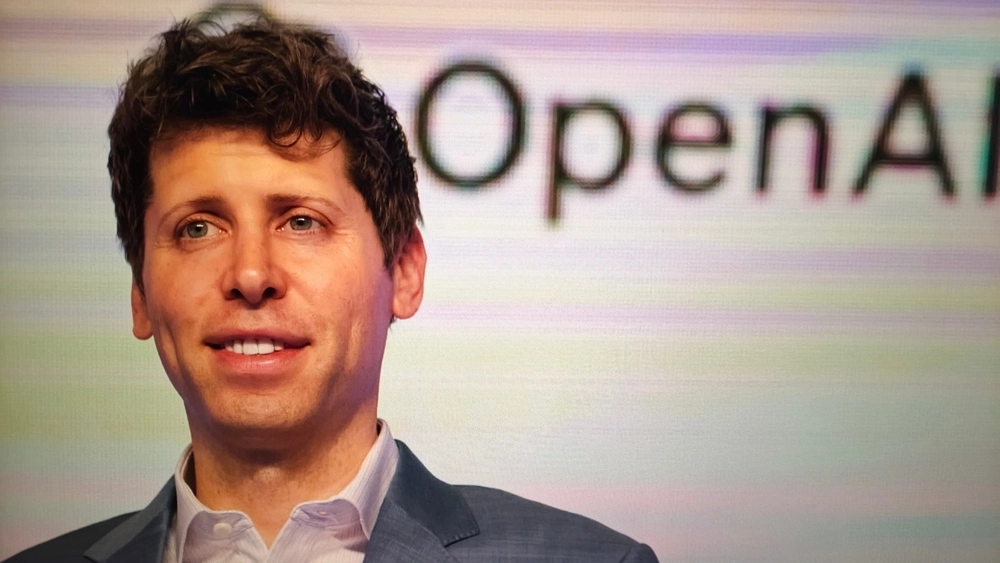
Just days after begging for a coordinated industry slowdown, OpenAI and Anthropic dropped competing models in a desperate price war to appease cost-conscious corporate executives.


Remember when OpenAI’s Sam Altman and Anthropic’s Dario Amodei publicly agreed that the tech industry desperately needed to “pace the frontier” and slow down artificial intelligence development before it destroyed humanity? That existential panic apparently doesn’t apply when enterprise market share is on the line.
In a move that completely obliterates their own doomsday posturing, both companies dropped highly competitive, deeply discounted AI models within hours of each other. The grand, philosophical push to save the world from superintelligence immediately devolved into a brutal, margin-crushing price war.
According to reporting by Fortune, Anthropic rolled out Claude Opus 5.5, a model that performs at the level of its flagship offering but costs 40 percent less to run. Almost simultaneously, OpenAI launched GPT-6 Sol and GPT-6 Luna, slashing API costs by 50 percent compared to its previous iteration.
The death of the premium AI narrative
This sudden generosity has absolutely nothing to do with democratizing technology. It is a desperate response to corporate sticker shock.


For the last three years, AI bulls on Wall Street assumed that as these models became more capable, the labs could charge massive, escalating premiums for access to them. Instead, the exact opposite is happening: the core technology is rapidly commoditizing. Chief Financial Officers are looking at their ballooning monthly API bills, realizing the promised utopian productivity gains are largely a mirage, and aggressively cutting budgets. OpenAI and Anthropic aren’t dropping their prices to be kind; they are slashing rates because they are terrified of losing their remaining enterprise clients to cheaper, open-weight competitors.
How to stop bleeding money on AI hype
If you manage a software budget, this price war is a massive signal to stop treating these vendors like partners and start treating them like commodities. The underlying models are officially interchangeable, which means your procurement strategy needs to shift immediately.
Tech analysts and cloud economists are actively telling enterprise clients to exploit this race to the bottom. According to a breakdown of LLM economics by cloud management firm DoiT, organizations need to completely abandon standardizing on a single vendor and instead implement dynamic routing by workload. That means sending basic data extraction and bulk generation to dirt-cheap models like GPT-6 Luna, and only waking up expensive flagship models for complex, high-stakes autonomous loops.
You also need to aggressively leverage prompt caching. As TechWire Asia notes in its coverage of the price cuts, both OpenAI and Anthropic are now heavily discounting cached inputs—by up to 90 percent in OpenAI’s case. By keeping your massive system prompts and tool schemas stable in the cache, you stop paying full price to read the same instructions millions of times a day.
Finally, shift your internal metrics strictly to “cost per task.” Stop accepting vague vendor claims about increased overall productivity. If an automated workflow triggers a chain of expensive flagship API calls that fail or require a human to clean up the hallucinations, the true cost of that task skyrockets. Force department heads to justify these tools based on verified, hourly time savings against the raw compute cost.
We have officially entered the phase where artificial intelligence is just another piece of enterprise SaaS software, and your billing strategy should reflect it.



