
 Nicolai Haugsted
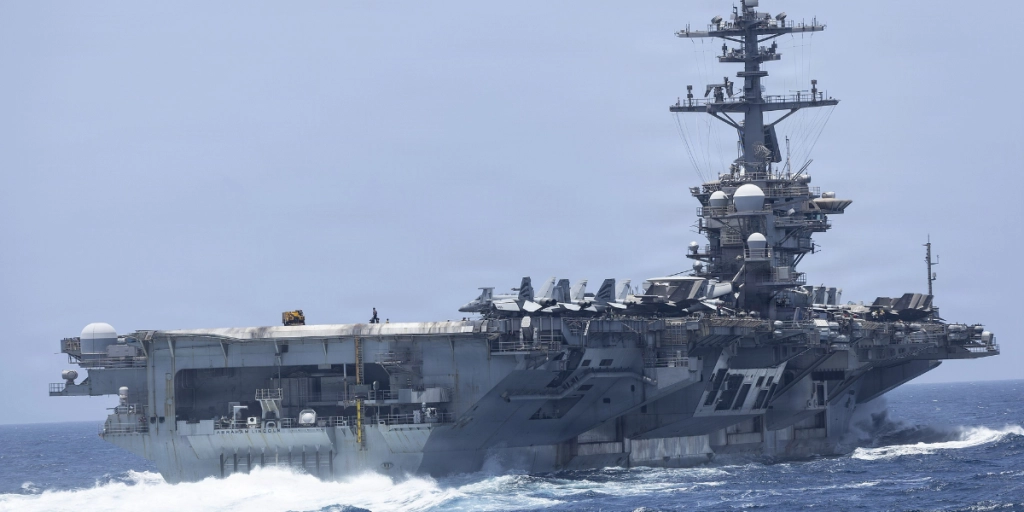
Trump administration confirms eight suicide attempts after months of concern over conditions aboard a US carrier strike group.


Questions about life aboard one of America’s most powerful naval strike groups have followed the USS Abraham Lincoln for months.
Families raised alarms. Lawmakers demanded answers. Reports described sailors struggling through an extraordinarily long stretch at sea while the carrier participated in combat operations against Iran.
Donald Trump and Defense Secretary Pete Hegseth pushed back when those concerns became public in August.
Now the Navy has supplied a number that puts the controversy back under an uncomfortable spotlight.


According to TV3, eight US Navy personnel attempted suicide during the USS Abraham Lincoln Carrier Strike Group’s extended deployment, according to Acting Navy Secretary Hung Cao.
No deaths by suicide were recorded during the deployment.
Eight attempts confirmed by the Navy
Cao disclosed the previously unreported figure in written answers sent Tuesday to Democratic Senator Kirsten Gillibrand, who had questioned the Pentagon about morale and conditions facing sailors.
“Since the beginning of Lincoln’s deployment, there have been a total of eight suicide attempts across the strike group,” Cao wrote.
His answer makes an important distinction.
“This number includes the Lincoln crew and Sailors from the carrier air wing, strike group and destroyer squadron staff, escorting destroyers, and all embarked aviation squadrons.”
Around 6,000 to 7,000 personnel served across roughly half a dozen ships in the wider strike group, according to reporting on the Navy’s disclosure.
Cao also addressed the most serious possible outcome directly.
“There have been no suicides onboard during this deployment,” he wrote.
Sailor went overboard and was rescued
Details provided by Cao shed more light on two of the incidents.
One sailor assigned to the carrier air wing went overboard in early August in what the Navy classified as a suicide attempt. Search-and-rescue personnel pulled the sailor from the water by helicopter before the individual was medically evacuated for additional care.
Another sailor attempted to go overboard during combat operations but was stopped by fellow service members and later returned to a permanent duty station, according to accounts of Cao’s response.
CBS News reported that a defense official said two of the eight attempts occurred while US forces were actively fighting Iran.
One military official quoted by CNN described the overall number as highly unusual compared with recent carrier deployments.
“Eight attempted suicides is incredibly high,” the official said, adding that recent carrier strike group deployments had typically recorded one or two attempts per year.
“The strain of combat ops is much higher than normal deployments. No port calls, constant alerts, etc.”
286 days at sea
Few people aboard the Lincoln expected the deployment to look quite like this when the carrier left California in November 2025.
Its original mission took the ship toward the Indo-Pacific and South China Sea before the Lincoln was redirected to the Middle East ahead of the US-Israeli war with Iran.
Combat operations and repeated extensions followed.
By the time the carrier finally reached Thailand on September 2, it had accumulated 286 days at sea during the deployment. Sailors had also endured more than 200 consecutive days without a regular port call.
Rear Adm. Robert Loughran acknowledged the need for a break as the carrier arrived at Laem Chabang.
“Our arrival in Laem Chabang provides a well-deserved opportunity for our Sailors and Marines to rest and recharge,” Loughran said.
For sailors who had spent months operating under combat conditions, Thailand offered something considerably more ordinary: restaurants, shopping, dry land and time away from the ship.
Families had already sounded the alarm
Warnings about conditions aboard the Lincoln had surfaced well before the Navy disclosed the eight attempts.
Military publications reported in August on worsening mental-health concerns, attempted jumps overboard and deteriorating living conditions.
Families and lawmakers also raised questions about food supplies, sanitation and the consequences of keeping thousands of personnel at sea for such an unusually long period.
Trump dismissed concerns about the length of the deployment when reporters questioned him in August, while Hegseth disputed portrayals of conditions aboard the carrier.
The administration’s newly released figures have now given Gillibrand ammunition to revisit those earlier assurances.
“What Trump and Secretary Hegseth dismissed as ‘fake news’ turned out to be serious and deteriorating conditions for our service members,” Gillibrand said after receiving Cao’s answers.
“Our troops and their families make immense sacrifices every single day, yet the president dismissed them with open disrespect.”
Gillibrand continued: “That this administration can find endless taxpayer dollars for bombs, ballrooms, and billionaires, but cannot take care of our service members, is completely unacceptable.”
Her characterization is a political criticism of the administration; Cao’s letter itself confirms the eight attempts but does not establish that deployment conditions or administration policy caused them.
Eight attempts during one deployment sound stark, but comparing the figure with broader Navy statistics requires care.
The active-duty Navy recorded 356 suicide attempts among approximately 337,000 sailors in 2024, according to figures cited in reporting on Cao’s letter. On a simple population basis, the Lincoln strike group’s figure is not dramatically different from that service-wide annual rate.



