
 Asger Risom
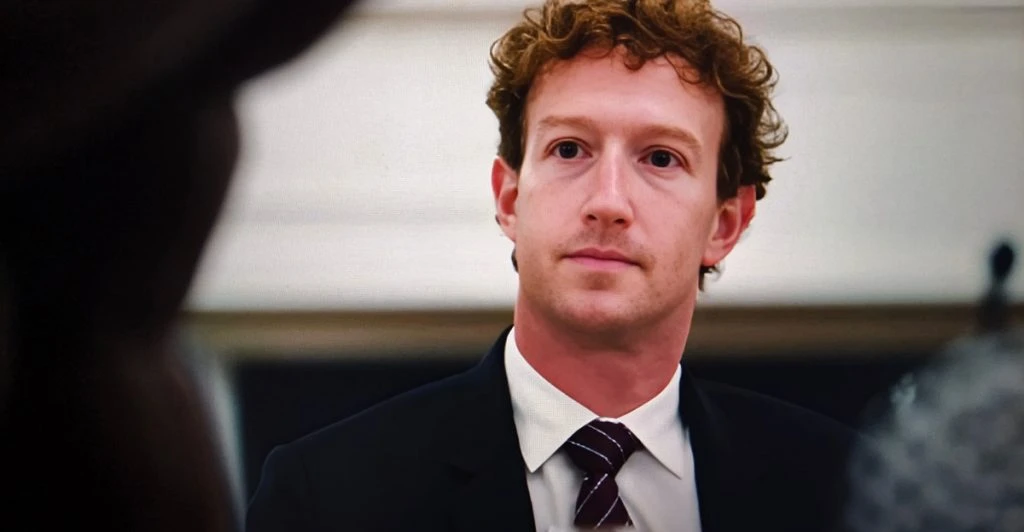
A New Mexico jury found Meta liable for over 43 million consumer protection violations, weaponizing state law against the company’s long history of privacy abuses to trigger a potential $200 billion penalty.


Meta’s endless track record of privacy violations was supposed to be a closed chapter, settled years ago with federal regulators for what amounted to pocket change. Instead, a jury in Santa Fe just weaponized state-level consumer protection laws to threaten the social media giant with a twelve-figure penalty.
According to a breakdown by Fortune, a New Mexico jury found Facebook liable for over 43 million individual violations of the state’s Unfair Practices Act.
The two-week trial proved that Meta systematically deceived the state’s entire population of two million residents about the safety of their personal data, and deliberately misled the public about its internal investigations into third-party app developers.
The compounding math of deception
The sheer scale of the potential fine is a product of basic, brutal arithmetic. State prosecutors successfully argued that every single time Facebook made a deceptive statement about data protection that reached a New Mexico resident, it constituted a separate legal violation.


With over 43 million distinct infractions on the books, and the state demanding the statutory maximum penalty of $5,000 per violation, Meta’s total exposure now exceeds $200 billion.
The trial specifically targeted Meta’s negligence during the infamous Cambridge Analytica scandal—a 2018 breach that exposed the data of 87 million profiles to political consultants.
While Meta previously paid a $5 billion federal fine to the FTC to make the issue go away, this new verdict highlights a massive shift in how individual states are hunting Silicon Valley.
In August, Meta agreed to an $18 billion settlement in a sweeping multistate lawsuit. Buried deep in that agreement was a quiet clause releasing the company from any future liability regarding the 2018 privacy breach.
New Mexico was the only state that refused to sign, choosing instead to drag Meta into an isolated, high-stakes trial.
As venture capital analysts at Value Add VC noted, that gamble proved that state-level consumer protection statutes can be far more dangerous to tech monopolies than broad federal settlements.
And New Mexico already has a proven track record against Mark Zuckerberg’s empire; earlier this year, the state won judgments totaling $942 million from Meta after proving the platform systematically failed to protect minors and prioritize child safety.
The limits of a twelve-figure threat
During the trial, Meta relied on its standard defensive playbook. The company’s legal team argued the state’s evidence was completely outdated, and played a deposition from Zuckerberg insisting the platform has robust safety systems.
Following the verdict, Meta confirmed it will appeal, with a spokesperson immediately invoking the First Amendment to claim the company has a constitutional right to manage its platforms as it sees fit.
Whether Meta actually pays anything close to $200 billion is now entirely up to presiding Judge Francis Mathew, who will determine the final penalty in the coming weeks.
Attorney General Raúl Torrez has stated he intends to funnel any awarded money directly into the state’s education system.
But Wall Street’s reaction to the verdict has been remarkably muted, mostly because investors understand that a jury verdict is a ceiling, not a finalized bill.
Meta operates with astronomical profit margins and has a long history of shrinking massive regulatory fines into minor operational expenses in appellate courts.
Even with a historic 43-million-count jury verdict on the books, it remains entirely unclear if the American legal system is actually capable of disciplining a company built entirely on the frictionless extraction of human data.



