
 Nicolai Haugsted
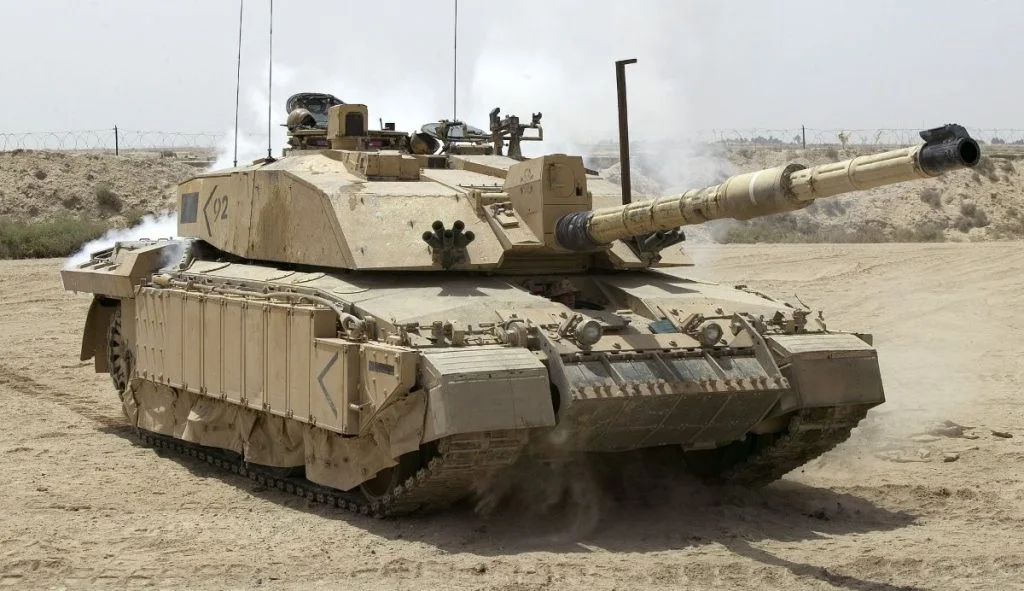
America is leaving Iraq behind as two very different security threats wait on the other side of the withdrawal.

America’s military chapter in Iraq is approaching another ending.
More than two decades after US forces invaded the country to overthrow Saddam Hussein, the remaining American troops are scheduled to leave their last Iraqi bases by September 30. Washington and Baghdad agreed on the withdrawal in 2024 under Joe Biden, while Donald Trump’s administration is now carrying it through. US and Iraqi officials have repeatedly confirmed the deadline.
For Baghdad, the departure offers the sovereignty successive governments have demanded. For Iran-backed armed groups, it offers something else entirely: a victory to celebrate.
Security officials and analysts are meanwhile warning that removing the American military presence could create opportunities for two very different forces — Tehran’s powerful Iraqi allies and the remnants of Islamic State.


Iran’s allies are already claiming victory
Washington’s departure removes a military force that has spent years acting as a counterweight to Iranian influence inside Iraq.
Jasim al-Bahadli, an Iraqi security analyst specializing in Iran-aligned Shiite armed groups, expects Tehran to emerge in a stronger position.
“Iran stands to benefit strategically from the coalition’s departure because it removes a military presence that for years acted as a counterweight to Tehran’s influence in Iraq,” he said according to Reuters.
Iran-backed groups could also “seek to translate that momentum into greater influence over security and political decision-making,” according to al-Bahadli.
Some militia leaders are considerably less cautious about describing what September 30 means to them.
Abu Mojtaba al-Yasiri, a commander in the Iran-backed Islamic Resistance in Iraq, called the withdrawal “a historic victory for the Iraqi Islamic resistance groups and honorable Iraqis, and a crushing defeat for the American project.”
“On September 30, we will celebrate the turning of a black page in Iraq’s history and the failure of the occupation to impose its will on our country,” al-Yasiri said. “Iraq has proven that its sovereignty cannot be secured by foreign forces, but by the resistance and the will of its people.”
Iraq’s government has a rather different vision for what should follow. Prime Minister Ali al-Zaidi has tied the foreign withdrawal to a demand that non-state armed groups give up their weapons, although several powerful militias have indicated they do not intend to disarm.
Some Iraqis think America is leaving too soon
Support for ending the foreign military presence does not necessarily translate into confidence about what comes next.
Abdulrahman al-Zobaie, a Sunni tribal leader in Fallujah, worries Iraqi institutions are not yet prepared to handle the security situation alone.
“We believe Iraq is still not fully ready to take over the security file at this time,” he said.
Sovereignty itself is not the problem, according to al-Zobaie.
“All Iraqis aspire to full sovereignty, and no Iraqi would dispute that. But I believe that the coalition leaving in this way and creating a vacuum is what all Iraqis fear.”
Similar concerns have emerged in Iraqi Kurdistan, where the remaining US presence has been concentrated and where American forces and equipment are now being withdrawn.
America has left before
History provides an uncomfortable reference point.
US forces invaded Iraq in March 2003 and eventually grew to more than 170,000 troops at the height of the war. Combat forces withdrew at the end of 2011, seemingly closing the military chapter.
Less than three years later, Islamic State swept through large parts of Iraq and Syria.
American forces returned at the Iraqi government’s invitation as part of an international coalition assembled to fight the jihadist organization. Iraqi and coalition forces eventually destroyed the group’s territorial caliphate, while a smaller US contingent remained to train and assist Iraqi forces and conduct counterterrorism operations.
September 30 is supposed to close that mission as well.
Trump said in July that Washington no longer believed troops were necessary in Iraq.
“We don’t think we need the military there anymore,” he said during al-Zaidi’s visit to Washington.
Islamic State may be watching the calendar too
Kurdish officials fear the deadline has attracted attention from more than politicians and militia commanders.
Islamic State no longer controls the vast territory it once held, but sleeper cells remain active.
Kurdish commander Sirwan Barzani said suspicious activity had already increased as the withdrawal approached.
“For more than two weeks, we have noticed movement by Islamic State sleeper cells, after it was announced in the general media that there will be an official withdrawal of the international coalition from Iraq by the end of September,” Barzani said.
News of the departure “has boosted, in my opinion, the morale” of the militants, he added.
Iraqi security forces have also uncovered what officials described as preparations by a suspected Islamic State cell for suicide attacks timed around the US withdrawal.
Colonel Khalid al-Bayati, a senior security official in Kirkuk, said the group was “seeking to send a message that the group is still powerful and capable of launching bloody attacks.”
Outside analysts have similarly warned that the end of the coalition mission raises questions about whether Islamic State could exploit future instability, although the withdrawal itself does not establish that such a resurgence will occur.



