
 Nicolai Haugsted

Mark Carney could beat Donald Trump to the prize the president has spent years saying he deserves.

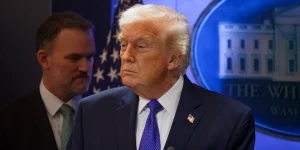
Donald Trump has collected plenty of trophies, awards and ceremonial honors during his political career, but one particular medal has remained stubbornly out of reach.
The Nobel Peace Prize has become a recurring subject for the US president, who has repeatedly argued that his diplomatic record deserves recognition from the Norwegian Nobel Committee.
October could finally bring another answer.
Yet with the 2026 winner due to be announced on October 9, an intriguing name has appeared near the top of one prediction market — and Trump probably knows him rather well.


Canadian Prime Minister Mark Carney briefly led the field on Kalshi over the weekend, creating the possibility of a particularly awkward outcome for a president who has spent much of the year fighting with Canada’s leader.
Carney suddenly appears near the top
Kalshi traders gave Carney an implied 14 percent chance of winning the Nobel Peace Prize on Sunday morning, according to data reported by Covers.
Sudan’s Emergency Response Rooms stood at 13 percent, while Doctors Without Borders was among the other prominent possibilities.
Trump was much further down the market, according to The Independent.
Carney’s position changed quickly, however. His implied probability had fallen sharply by later Monday, illustrating why prediction markets should not be confused with information from the Norwegian Nobel Committee.
Market prices reflect what traders are willing to buy and sell at a particular moment. They do not reveal how the committee is voting, and the committee does not publish a shortlist of finalists before announcing its decision.
Still, Carney’s sudden appearance above Trump adds a rather spicy ingredient to an already difficult relationship between Washington and Ottawa.
Trump has made no secret of wanting it
Trump rarely needs encouragement to discuss the Nobel.
Earlier this month, he once again complained that his efforts to resolve international conflicts had failed to produce the award.
“I ended eight wars. Did I get the Nobel Prize? No,” Trump said.
Trump then referred to María Corina Machado, the Venezuelan opposition leader who won the 2025 Nobel Peace Prize and later presented her medal to him.
“Although the person that got it was nice enough that she gave it to me. She said, nobody in the history of the Nobel Prize deserves it more than you. But in Norway, they don’t like me because I think they think I’m a little conservative,” Trump said.
Trump has repeatedly claimed credit for ending eight wars. His characterization of those conflicts and his role in resolving them has been disputed in several cases, so the claim should not be treated as an independently established tally.
His enthusiasm for the prize, though, requires considerably less interpretation.
Trump said in July that he “should have won that award more than anybody that ever received the Nobel Peace Prize.”
Carney has spent the year pushing back against Trump
Few potential outcomes would provide a sharper contrast than Carney receiving the medal.
Relations between Canada and the United States have been strained by tariffs, trade negotiations and Trump’s rhetoric toward his northern neighbor.
Carney has resisted US pressure while simultaneously arguing that Canada must reduce its economic vulnerability and work more closely with other middle powers.
His January speech at the World Economic Forum in Davos became one of the clearest expressions of that strategy.
“Canada strongly opposes tariffs over Greenland and calls for focused talks to achieve our shared objectives of security and prosperity in the Arctic,” Carney said.
His broader message went beyond Greenland.
Carney described a “rupture in the world order” and argued that countries such as Canada were far from helpless.
“Other countries, especially intermediate powers like Canada, are not powerless,” he said. “They have the capacity to build a new order that encompasses our values, such as respect for human rights, sustainable development, solidarity, sovereignty and territorial integrity of the various states.”
Carney also insisted that Greenland and Denmark should determine Greenland’s future themselves.
The neighbors are hardly enjoying a quiet year
Trade has provided another major source of friction.
Carney has accused Washington of trying to restrict Canada’s ability to pursue trade agreements with other countries, framing the issue as one of Canadian sovereignty.
Ottawa has meanwhile been working to deepen relationships beyond the United States as part of Carney’s strategy of reducing Canada’s economic dependence on its neighbor. Canada used last week’s United Nations General Assembly to promote its growing cooperation with other middle powers.
Despite those clashes, Carney has stopped short of arguing that Canada can simply ignore Washington.
“We continue to have to work with the United States. We can compartmentalize across this,” he said.
That pragmatic approach has allowed the Canadian leader to challenge Trump publicly while keeping other areas of cooperation alive.



