
 Jens Asbjørn Bøgen
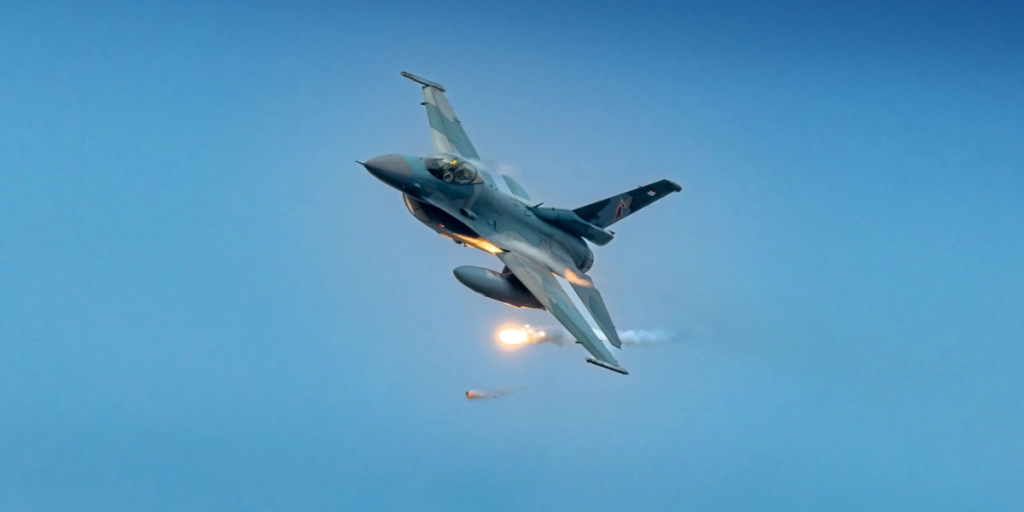
After weeks of drones and a Russian helicopter crossing its border, Warsaw is rewriting the rules its pilots fly by.


For years, Polish fighter pilots operating in peacetime have had to lay eyes on an intruder before they could open fire.
Warsaw now says the fast, low-flying drones and cruise missiles that Russia has honed against Ukraine leave no time for that step.
On Monday, September 28, Deputy Defense Minister Cezary Tomczyk said that standard is about to fall away. In an announcement carried by Polish broadcaster Polsat News, Tomczyk said the ministry would rewrite firing procedures “in the coming days,” swapping visual identification for what the military calls “positive identification.”
The shift means a pilot or the operational commander can decide to shoot down a foreign aircraft on the basis of radar readings, transponder responses, flight parameters and other sensor data, without first putting a set of eyes on it.


Why the change now
Tomczyk framed the move as a wartime authority being carried into peacetime out of necessity.
“Until now, we have not used such options, because they are usually reserved for a state of war or martial law,” he told reporters, adding that with drones entering Polish territory almost every day, Warsaw could not stand still.
The revision is based on recommendations from Major General Ireneusz Nowak, appointed Operational Commander of the Polish Armed Forces on June 11. Nowak is a career F-16 pilot with more than 3,500 flight hours on military jets, and one of the three most senior officers in the Polish military.
The immediate trigger is a run of provocations along the border. On September 23 at 11:08, a Russian Mi-8 helicopter crossed roughly 300 meters into Polish airspace north of Braniewo, coming out of Kaliningrad and remaining inside for 42 seconds before turning back. Polish fighters were scrambled but did not engage.
Revised for the jet-drone era
The bigger driver is the weapon Russia has been perfecting against Ukraine: jet-powered strike drones that fly too fast for a slow, visual intercept.
On September 28, a Russian Geran-5 jet drone struck near the Yahodyn border crossing in Ukraine’s Volyn region, about 1.5 kilometers from the Polish border, damaging the checkpoint building.
Cruise missiles and jet drones can cover the last miles to a border in a minute or two. Polish officials argue that a pilot who has to close to visual range before engaging has, in practice, already lost the race.
Under Article 5 of the North Atlantic Treaty, an attack on any NATO member, including Poland, obliges the United States and the alliance’s other members to come to its defense. The change in Polish firing rules raises the odds of a shoot-down over territory that carries that guarantee.



