
 Nicolai Haugsted
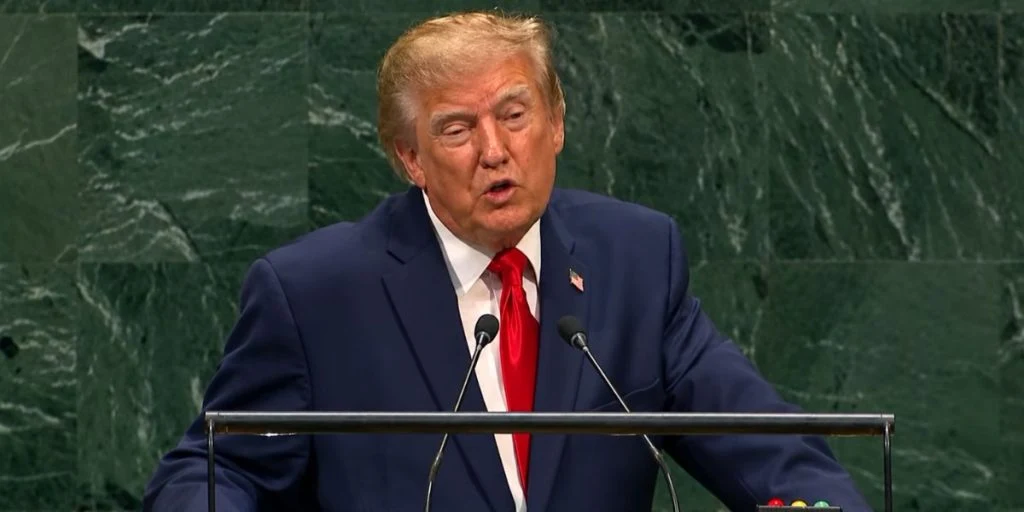
Trump celebrates a $200 billion investment package but South Korea has a rather important caveat.


Donald Trump had some very large numbers to show off from the Oval Office on Wednesday.
South Korea, he announced, was preparing to pour as much as $200 billion into American energy projects, with money heading toward nuclear power, a giant gas-fired plant in Texas and a long-discussed LNG pipeline stretching across Alaska.
Such an announcement gives the president a substantial economic talking point just weeks before November’s midterm elections.
Seoul, however, soon supplied an important footnote to the celebration.


South Korean officials confirmed the broader investment framework and the Texas project but said participation in the enormous Alaska LNG venture has not actually been decided. Further discussions are also required before the proposed nuclear projects receive a final investment decision.
Trump may therefore have unveiled a colossal package, but parts of it are still sitting on South Korea’s inspection table, according to Reuters.
Trump rolls out some very big numbers
South Korea agreed last year to a $350 billion US investment package as part of a broader trade agreement with Washington. Roughly $150 billion was earmarked for shipbuilding, leaving another $200 billion for strategic investments.
Wednesday finally brought a clearer picture of where Trump wants that second pot of money to go.
“Thanks to the agreements my administration has secured with the Republic of Korea, they will invest up to $200 billion,” Trump said.
Plans presented in Washington include eight large-scale nuclear reactors, a gas-fired power facility in Texas and the Alaska LNG project. Seoul has confirmed the $22.3 billion Texas project, which is expected to provide electricity for energy-hungry facilities including AI data centers.
South Korean investment connected to the proposed nuclear plants could reach $120 billion, while more than $50 billion has been associated with Alaska LNG.
Alaska comes with a rather large asterisk
Trump has championed Alaska LNG as part of his push to expand American energy exports, particularly toward Asian markets.
Plans call for an approximately 800-mile pipeline carrying natural gas from Alaska’s North Slope to the southern part of the state, where it could be liquefied and shipped overseas. The project has spent years wrestling with questions over financing, cost and commercial viability.
South Korea is not ready to write the check just yet.
“No decision has been made on whether to invest or on the size of the investment,” Seoul’s industry ministry said.
Officials said their review would consider whether the project makes commercial sense and complies with relevant legal procedures. South Korean President Lee Jae Myung has likewise stressed that commercial viability must be established before the Alaska and nuclear projects proceed.
Seoul’s position is consequently narrower than Trump’s announcement suggests: reviewing the Alaska project does not yet equal agreeing to finance it.
Texas is much closer to a done deal
Much less ambiguity surrounds the Texas portion of the package.
South Korea has selected a gas-fired power project in Encinal as the first confirmed investment under the $200 billion strategic program, putting approximately $22.3 billion behind the facility.
Demand for electricity from data centers, semiconductor production and other power-intensive industries has made new generation capacity increasingly valuable.
Trump can therefore point to at least one major project that has moved beyond the review stage.
Alaska remains a different animal.
The pipeline has been waiting a long time
Ambition has never been Alaska LNG’s problem.
The proposed system is designed to move roughly 3.9 billion cubic feet of natural gas per day and eventually produce as much as 20 million metric tons of LNG annually.
Finding enough customers and financial backing has proved more complicated.
Japanese energy companies JERA and Tokyo Gas have already signed preliminary agreements covering a combined 2 million metric tons of LNG annually if the project is built. Developer Glenfarne has previously said it had lined up commitments covering 13 million tons per year but still needed additional commitments to support financing.
South Korean money could therefore provide a significant boost.
“Could” remains the operative word.
Seoul has repeatedly insisted that projects financed through its American investment package must satisfy commercial viability requirements before money starts moving.
The timing is useful for Trump
Wednesday’s announcement also arrives at a politically convenient moment.
Trump has been highlighting large investment commitments while Republicans prepare for the November midterms and voters remain concerned about energy prices and the broader economy.
Alaska carries an additional political dimension. Republican Senator Dan Sullivan attended the Oval Office announcement while campaigning for reelection against Democrat Mary Peltola.
A multibillion-dollar energy project promising construction, investment and jobs naturally makes for an attractive message on the campaign trail.
South Korea’s caution makes the picture less tidy.
Trump can point to a $200 billion investment framework and a confirmed Texas power project. Seoul can point to the fine print surrounding two of the biggest pieces.
For the long-awaited Alaska pipeline, billions of dollars may finally be within sight.
South Korea just has not promised to send them there yet.



