
 Kenneth Glad
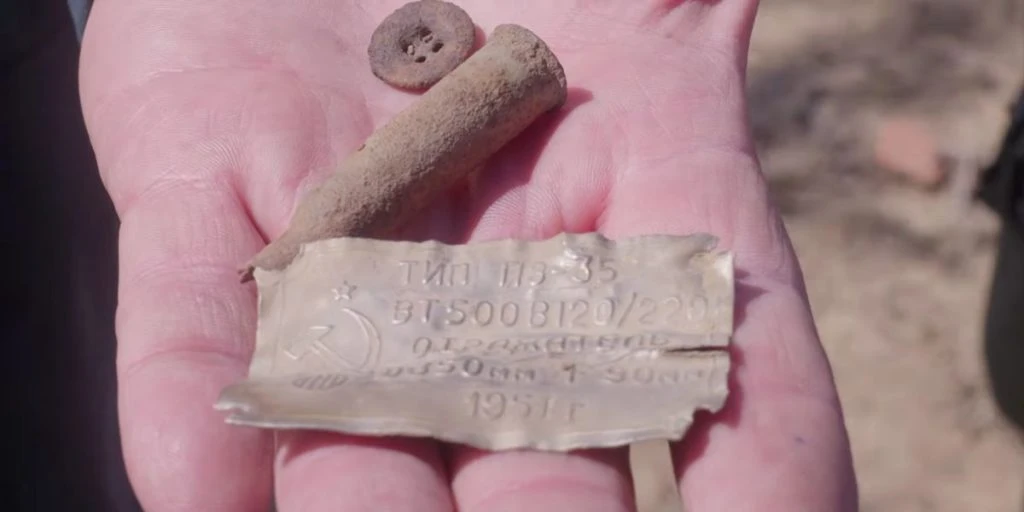
Governments often bury their darkest secrets in paper. They stamp documents, lock away files, and declare an ugly chapter officially closed. But the earth remembers, and sometimes, a few scattered objects are enough to rewrite a carefully crafted historical narrative.

Out on the dry plains of Kazakhstan, a recent discovery is challenging the official Soviet record.
For decades, government archives in Moscow insisted that a notorious political prison camp called Steplag shut its doors for good in 1956. No one questioned the paperwork. The story seemed settled.
Now, researchers from the University of West Bohemia and the charity group Gulag are digging through the dirt in the small town of Terekti. They found solid proof that the brutal facility kept running for years after its supposed closure.
Brutal daily life
The Soviet Union originally built Steplag in 1948, writes HistorieNet. It held more than 20,000 political prisoners from Ukraine, the Baltic states, and other regions just after the Second World War.


Men and women lived in strictly separated compounds. They endured extreme daily conditions, working as forced labor in local copper mines and stone quarries.
The remote site was widely known for torture and random executions. During their recent expedition, the Czech research team uncovered empty bullet casings that clearly point to this harsh camp discipline.
The timeline shifts
A major breakthrough came when the team spoke with a local resident named Mizambaj Bralin, who is 78.
He relocated to the area in 1959. He clearly remembers seeing the women’s camp operating. According to HistorieNet, he recalled watching Baltic prisoners work long after the facility was supposed to be empty.
The archaeologists backed up his memories by finding glass bottles dated between 1959 and 1961. This physical evidence proves the camp shifted to a new administration that Soviet officials left out of the archives.
Uncovering the past
Lead archaeologist Pavel Vareka explained the scale of the preserved site:
“We found the remains of a women’s camp, a men’s camp with both archaeological finds and preserved buildings, an entire settlement for guards and the headquarters, which was later inhabited by people from a nearby, now vanished village.”
He noted that the grim discoveries go far beyond just the living quarters.
“There are also preserved remains of the industrial area where imprisoned men and women performed slave labor, as well as a forgotten cemetery for the victims,” Vareka said.
Sources: HistorieNet, Gulag



