
 Jens Asbjørn Bøgen

Ukraine’s year-long campaign to pry open Russia’s air-defense umbrella is being measured in points, strikes and burning radar vans, and the September tally has reset the bar.

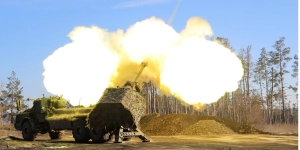
For months, Ukrainian strike units have worked their way down a target list that reads like a catalog of Russia’s layered air-defense network: Pantsir close-in guns, Tor and Buk medium-range batteries, S-300 and S-400 long-range systems, and the radars that feed them.
Each confirmed hit is logged on video, scored in the military’s e-points reward scheme, and traded for new drones and equipment.
September was the biggest month of that campaign so far.
Ukraine’s Defense Ministry said on October 6 that the country’s forces struck more Russian air-defense systems during September than in any month since the e-points program was launched, with one target hit at a range of 552 kilometers and strikes beyond 20 kilometers topping 11,000 for the first time.


Each result was recorded in the DELTA battle-management system and verified by the Brave1 defense innovation cluster.
A systematic campaign against the radars
Among the September targets was a Nebo-M radar struck near the Millerovo military airfield in Russia’s Rostov region, part of a network used to track high-altitude aircraft and missiles.
By late September, Ukrainian military analyst Oleksandr Kovalenko put the running count for the month at 76 destroyed Russian air-defense systems, already past the previous wartime monthly high of 73 set in July 2023, and warned on Telegram that “such a quantity of equipment Russia will never be able to restore and compensate.”
The ministry framed the record as a product of its e-points scheme, which awards virtual credits for video-verified kills that units then spend on drones, ground robots and electronic-warfare gear through the Brave1 Market platform.
Troops have ordered about $1 billion of equipment through that platform in its first year.
Clearing a path for the drones
Degrading Russia’s air defenses is the precondition for Ukraine’s deep-strike campaign, and the October numbers bore that out almost immediately.
On October 6, Russia’s Defense Ministry claimed it had shot down 1,750 Ukrainian drones and 17 Flamingo cruise missiles over 24 hours, which would be the largest combined aerial attack of the war if confirmed, with Moscow Mayor Sergei Sobyanin reporting that 650 drones were heading for the capital.
The strike wave hit a Transneft oil pumping station near Moscow and forced over 200 flights to be delayed or canceled at the capital’s airports, Kyiv Post reported.
Ukrainian forces also increased takedowns of Russian Shahed-type drones by 28 percent compared with August, the ministry said, even as Moscow sent more jet-powered variants into Ukrainian airspace.



