
 Nicolai Haugsted
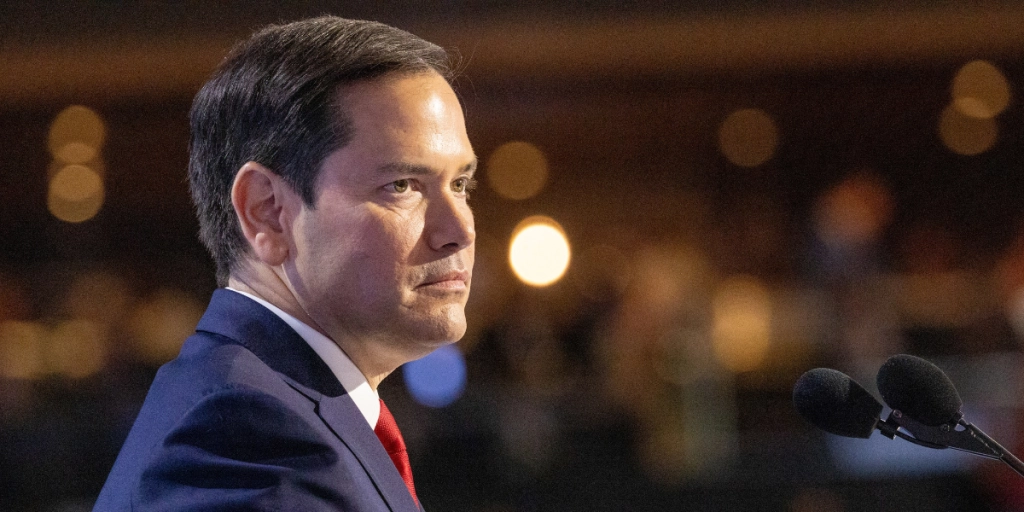
Marco Rubio raises concerns about the future of Western civilization and warns that Europe must reconsider its political priorities.


The balance of global power is becoming an increasingly urgent concern for Western governments, with growing competition from rival nations putting pressure on the political and military influence of the United States and Europe.
Washington has repeatedly called on its European allies to assume greater responsibility for their own security, particularly under President Donald Trump’s administration.
But America’s latest message goes considerably further than demanding higher defense spending.
US Secretary of State Marco Rubio believes the Western world faces a fundamental choice about its future, warning that the decisions made by today’s leaders could determine whether Europe and America retain their international influence.


Speaking in Athens, Greece, Rubio delivered a direct warning to European governments, arguing that the West can no longer afford to remain complacent.
Rubio warns of Western decline
According to German newspaper Bild, Rubio used his speech in the Greek capital to describe the West as standing at a historic crossroads.
The secretary of state argued that Europe and the United States risk surrendering their position as leading global powers unless they make significant political changes.
“The path we choose will determine whether the West retains its place at the top of the world or succumbs to a future of atrophy, dependence and decline. Either we act now, or we lose the chance to act at all,” Rubio said, according to the newspaper.
His message presented the coming years as a decisive period for Western governments.
Rather than treating the current international situation as a temporary challenge, Rubio suggested that the West’s long-term standing could depend on whether its leaders are prepared to reconsider their priorities.
Europe accused of neglecting its own interests
Rubio’s criticism focused heavily on what he considers a loss of national confidence among Western countries.
The secretary of state argued that rival powers have increasingly taken advantage of a vacuum created by negative attitudes toward nationalism.
According to Rubio, Western governments have spent years distancing themselves from their own history, weakening border controls and allowing military capabilities to deteriorate.
He suggested that these choices have contributed to a gradual reduction in Western influence.
His argument closely reflects Trump’s political philosophy of putting American national interests first.
Rubio defended that approach while indicating that European leaders have not consistently demonstrated the same commitment to their own countries’ interests.
The criticism reflects a broader disagreement over how Western nations should balance national sovereignty, international cooperation and security responsibilities.
Rubio’s assessment was presented as his political interpretation of Europe’s challenges, rather than an established measure of the continent’s overall decline.
A direct appeal for Europe to wake up
Despite his warnings, Rubio insisted that Europe’s future is not predetermined.
The secretary of state expressed confidence that European nations still possess the capacity to restore their strength and international influence.
He used the setting of Athens, a city closely associated with the foundations of Western political and intellectual history, to reinforce his argument.
“We believe that Europe can awaken from its long sleep and rekindle the fire that was lit here millennia ago,” Rubio said.
The imagery reflected his broader message that Western governments should rediscover the confidence and ambition he believes have weakened over recent decades.
Rather than abandoning the transatlantic relationship, Rubio portrayed a stronger Europe as an important part of preserving Western influence.
Military spending offers signs of change
Rubio also acknowledged developments that he considers encouraging.
The secretary of state pointed to Europe’s recent increases in military investment as evidence that governments are beginning to respond to changing security conditions.
European countries have devoted greater resources to defense in recent years, reflecting growing concerns about military threats and the continent’s security requirements.
Rubio suggested that such investments demonstrate a willingness to rebuild capabilities that he believes were neglected for too long.
However, his speech indicated that defense spending alone would not resolve the challenges he identified.
His wider argument concerned political priorities, national identity and the willingness of Western governments to protect their strategic interests.



