
 Nicolai Haugsted
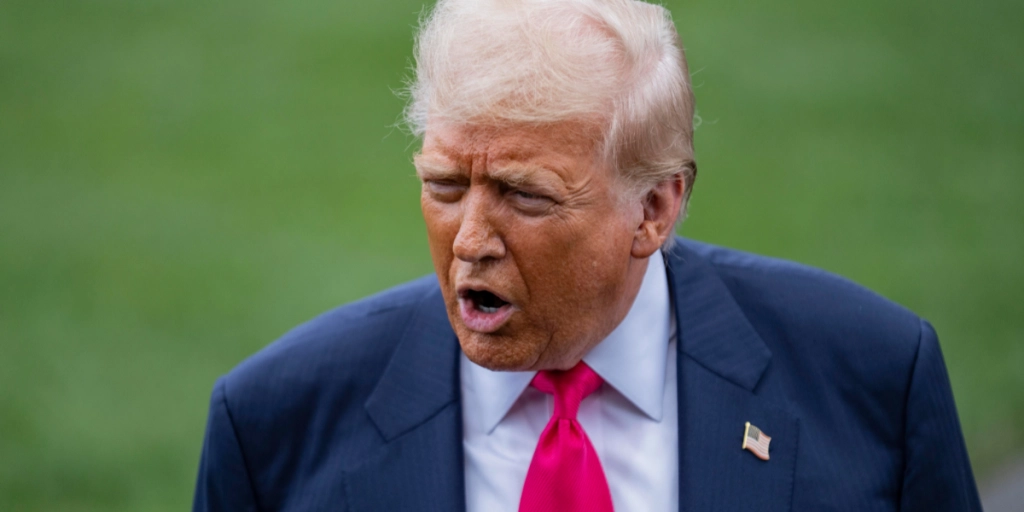
Trump faces a new legal challenge as Virginia officials demand an immediate halt to his controversial monument project.


President Donald Trump’s ambitious plans to reshape Washington have attracted considerable attention, with several high-profile projects promising to leave a lasting mark on the American capital.
From historic public buildings to recreational facilities, the president has shown a particular interest in changing the appearance of some of the city’s best-known locations.
But one of his most prominent architectural proposals is now encountering resistance from the people who would have to live closest to it.
According to The Independent, A planned 250-foot monument near Arlington, Virginia, has become the subject of a new federal lawsuit, with local officials accusing the administration of pushing ahead without properly examining the consequences.


Virginia county takes Trump to court
The Arlington County Board filed a lawsuit Thursday in the US District Court for the Eastern District of Virginia, seeking to stop progress on Trump’s proposed Triumphal Arch.
The legal action makes Arlington the first governmental body to formally challenge the monument in court.
The structure is planned for Memorial Circle, an area near the Potomac River that falls under the jurisdiction of the National Park Service.
According to the county, federal officials have been moving toward construction at an extraordinary pace despite significant questions about the project’s environmental and local impact.
The lawsuit alleges that the National Park Service has effectively treated the project as a foregone conclusion, even while publicly maintaining that no final construction decision has been made.
“The National Park Service, the agency responsible for projects on national park land such as Memorial Circle, is proceeding full-speed toward ground-disturbing construction,” the complaint states.
The county further argues that the review process is being used to justify a project already favored by the president.
“Although the agency has claimed that a final decision to construct the Arch has not yet been made and purports to be engaged in a routine decisional process, that rushed process appears to be a pretext designed to shore up justifications for building the Arch in accordance with the President’s repeated marching orders.”
Officials accuse administration of ignoring local concerns
Arlington officials are asking the court to halt further progress until the government completes the required environmental assessments.
Their complaint specifically invokes the National Environmental Policy Act, which establishes procedures for evaluating the environmental consequences of major federal projects.
The county argues that the proposed monument requires more thorough analysis and testing before construction can proceed.
Board Chair Matt de Ferranti accused federal officials of disregarding concerns raised by the community.
“The Arlington County Board has filed this lawsuit because our community has the most to lose from this egregious and unlawful proposed project,” he said in a statement.
According to de Ferranti, county representatives have participated in the review process in good faith, only to see their objections overlooked.
He pointed to what he described as “severe, unique, and wide-ranging negative impacts” on Arlington and its residents.
The county is being represented by Democracy Forward, a legal advocacy organization.
Neither the White House nor the Interior Department immediately responded to requests for comment on the lawsuit.
Monument raises concerns about aviation safety
The legal challenge follows separate warnings about the potential consequences of placing such a large structure near Washington’s busy airspace.
Sara Nelson, president of the Association of Flight Attendants-CWA, raised concerns Wednesday about the proposed arch’s height and its possible implications for aviation safety.
At approximately 250 feet, or 76 meters, the monument would be a substantial addition to the area surrounding Memorial Circle.
Nelson argued that the proposal could compound existing safety concerns that she believes have not been adequately addressed since the deadly January 2025 aviation disaster over the Potomac River.
That collision killed 67 people and prompted renewed scrutiny of aviation safety around Washington.
Her objections suggest that the monument’s potential impact extends beyond its appearance and the environmental questions raised by Arlington officials.
Nelson also criticized reported plans to equip the structure with military and security capabilities.
She described the proposal as turning the arch into “a top grade military complex” capable of accommodating drones and snipers while storing ammunition.
Those concerns reflect Nelson’s characterization of the project, rather than independently established details of its final design.
Another lawsuit challenges Trump’s authority
Arlington’s lawsuit is not the first legal challenge to the proposed monument.
Three military veterans and an architectural historian have already filed a separate case in federal court in Washington, D.C.
Their argument focuses on whether the administration has the legal authority to proceed without congressional approval.
The plaintiffs maintain that a project of this significance requires authorization from Congress.
The proposed arch has received preliminary approval from the US Commission of Fine Arts, a federal body involved in reviewing major architectural projects in the capital.
All members of the commission were appointed by Trump.
However, preliminary approval does not necessarily resolve the environmental, procedural or congressional authorization questions raised in the lawsuits.
The competing legal challenges could complicate the administration’s efforts to move forward with construction.
Trump’s plans for Washington face growing resistance
The Triumphal Arch is part of a broader series of projects through which Trump has sought to alter Washington’s physical appearance.
His administration has pursued changes to one of the capital’s historic public golf courses and raised the possibility of demolishing the John F. Kennedy Center for the Performing Arts.
The proposed monument stands out because of its size, prominent location and the legal questions surrounding its approval.
Supporters of grand public monuments often regard such structures as expressions of national history and identity, while critics of this particular project have focused on its planning process and potential consequences for nearby communities.
Arlington’s complaint now places those concerns before a federal judge.
The county is not simply asking officials to reconsider the arch’s design. It wants the court to intervene before construction advances further.



