
 Kenneth Glad
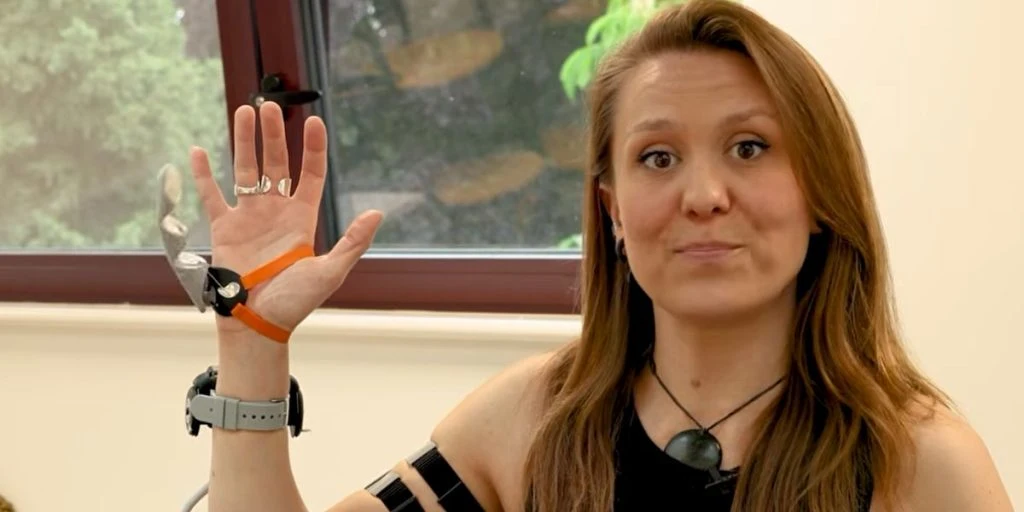
We all know the daily struggle of carrying heavy grocery bags while fumbling for house keys. An elbow nudge rarely holds the door. Fortunately, wearable technology may soon offer a surprisingly simple fix for these awkward moments.


Engineers and scientists are now building wearable robotic limbs designed to give humans extra physical abilities. Unlike traditional prosthetics that replace missing body parts, these devices add entirely new functionality to a fully working body.
According to The Conversation, researchers call this growing field human movement augmentation. The technology includes extra arms worn like backpacks, robotic legs attached to belts, and extra fingers fitted onto hands.
In laboratory tests, volunteers have already used these extra appendages to hold heavy ceiling panels, steady themselves on steep slopes, and open bottles with a single hand.
Researchers envision widespread future applications in surgery, emergency rescue, and manufacturing. A surgeon could operate four tools at once, or a rescue worker could lift heavy rubble while freeing a survivor.


Feet over brain
Controlling an extra limb is harder than it looks. Designers usually avoid using hands or arms for controls, because that would defeat the whole purpose of gaining extra hands.
Today, most working prototypes rely on foot pedals or custom shoes fitted with motion sensors. Other experimental rigs track micro-movements in the subtle muscles surrounding human ears.
Direct brain control remains out of reach for now. When the brain sends electrical signals through nerves to muscles, only specific frequencies carry movement commands. This leaves unused capacity in the nervous system.
Scientists tried tapping into these spare signals without invasive surgery, but low success rates, complex calibration, and long training periods made it unworkable.
The physical devices also remain heavy, clumsy, and uncomfortable to wear. Safety limits currently restrict their movement speed to prevent accidental injury during operation.
Learning to feel
Despite these physical constraints and the complex, non-intuitive nature of current control systems, human brains adapt to extra limbs remarkably fast. Study participants routinely master basic controls for a third arm or a sixth finger in less than an hour.
Sensory feedback plays a central role in this fast learning curve. Just as the sense of touch guides motor learning when someone plays tennis or piano, small vibration motors and gentle electrical pulses allow users to feel what the robotic limb touches. This real-time tactile feedback is essential for training the brain to process the mechanical appendage like a true body part rather than an external tool.
With time and practice, users grow far more proficient, and the brain adapts so thoroughly that wearing the extra limbs begins to feel entirely natural. Researchers emphasize that raising public awareness is vital, as most people still do not know human movement augmentation exists.
While commercial models remain several years away, these wearable devices could ultimately change how humans interact with the physical world.
Source: The Conversation



