
 Kenneth Glad
Gender roles often feel permanent. But turn back the clock, and history tells a completely different story. What seemed strictly masculine in one century frequently turned feminine in the next.


During the 1700s, young men routinely strolled in bright pink silk suits embellished with floral embroidery. Pink was viewed as an offshoot of red, a color associated with warfare and passion.
Both sexes actually wore the hue, which dress historian Jo B. Paoletti links to the phrase “in the pink,” signaling peak health. It was not until the 1940s that retailers aggressively marketed light blue for boys and pink for girls, locking in modern stereotypes.
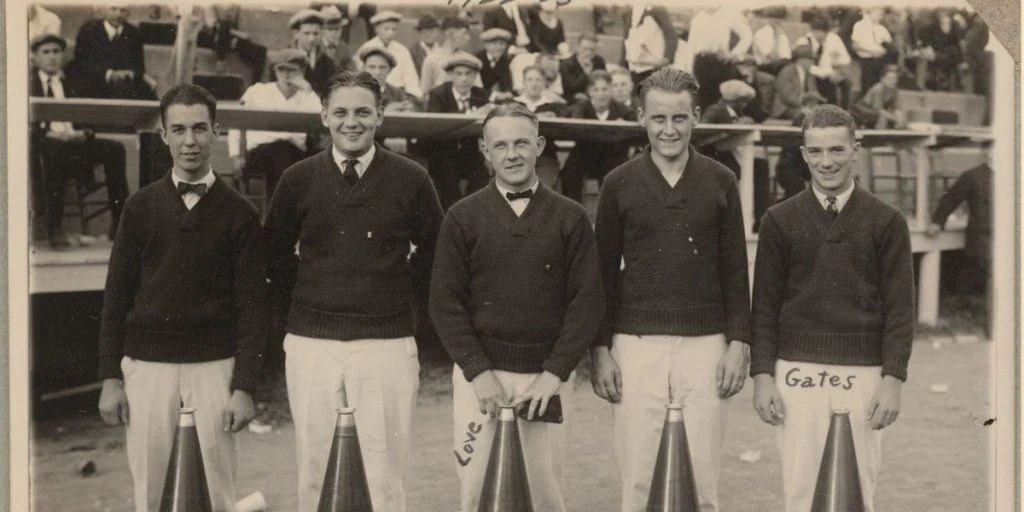
Sports saw similar reversals. In the late 1800s, young college men competed fiercely for spots on cheerleading squads. According to HistorieNet, they viewed gymnastic cheer routines as a display of raw, masculine athleticism that matched the violence of football.
World War II changed everything. With male athletes deployed overseas, women stepped onto the sidelines. After the war, pompons and shorter skirts permanently cemented cheerleading as a female tradition.


Needles and code
Crafts underwent dramatic shifts as well. In the Middle Ages, knitting was a strictly regulated male trade run by guilds whose members enjoyed high prestige alongside tailors and blacksmiths. When industrial machines took over during the 1800s, men lost interest in knitting needles, transforming the field into a women’s hobby.
Computing flipped in the opposite direction. Male physicists built ENIAC, the world’s first electronic computer, at the University of Pennsylvania in the 1940s. University leaders viewed software creation as a light task suitable for female hands, leading them to hire six women as the initial programmers.
These female coders dominated the field for decades. Computer scientist and U.S. Navy Admiral Grace Hopper reinforced this dynamic in a 1967 Cosmopolitan Magazine interview, stating:
“Programming is like preparing a dinner. You have to think ahead and plan so that everything is ready when you need it.”
Women remained the preferred choice until the 1960s. As the industry began to recognize the strategic value and deep technical complexity of software development, hiring practices shifted toward men, who gradually took over the field.
Stepping in style
Footwear tells another surprising story. Persian cavalry riders had worn high heels since the 800s to anchor their boots in stirrups. When the trend reached Western Europe in the late 1500s, aristocrats seized upon heels to add height and display status.
Seeking to emulate masculine power, high-society women copied the fashion in the 1600s. As middle-class women adopted the look, noblewomen demanded even taller heels, driving men to abandon high-heeled shoes entirely by the 1700s.
Similar reversals reshaped medicine and office work. Female healers thrived from ancient Egypt through medieval Europe, where nuns regularly treated the sick. That ended in 1487, when the Catholic Church declared uneducated female healers to be witches subject to execution, effectively locking out women as they were not allowed to attend university.
Centuries later, secretarial roles inverted. Once reserved for male scribes, desk work moved to women in the late 1800s as commercial trade grew and employers decided slender fingers were ideal for operating the newly invented typewriters.



