
 Kenneth Glad
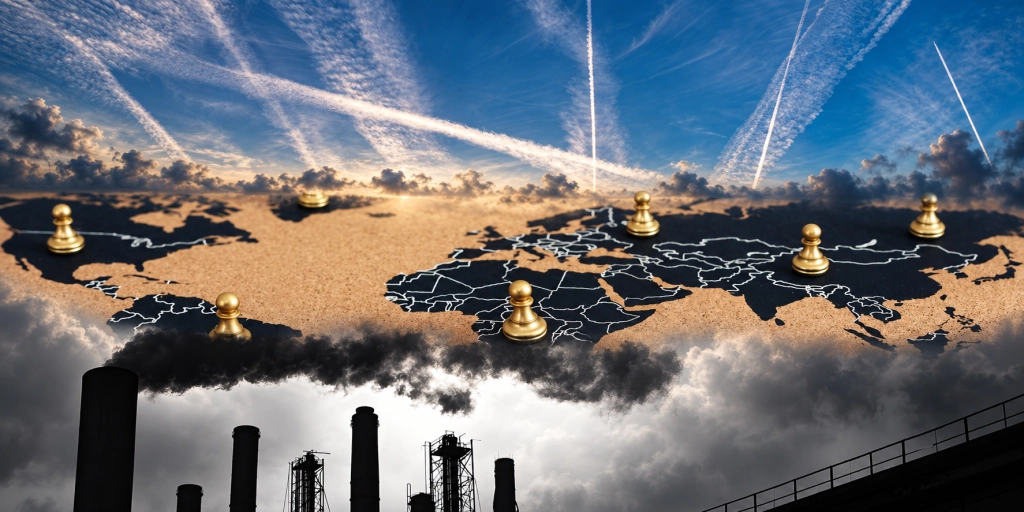
An international exercise was recently conducted to test worldwide responses to emerging environmental technologies. The results demonstrated severe diplomatic challenges and a significant disregard for academic input during crisis management.


Climate researcher Colleen Golja entered her field believing that empirical data would naturally dictate global ecological decisions. She assumed logic would remain paramount when dealing with the Earth’s delicate climate systems.
This assumption was shattered during a recent policy exercise held in London, where participants gathered to model responses to planetary cooling systems. The primary objective was establishing unified governance over methods designed to lower global temperatures by reflecting sunlight back into space.
Instead of harmonious collaboration, the gathering quickly highlighted the dark potential of these atmospheric interventions to spark unprecedented diplomatic conflicts. As detailed by Wired, the experimental sessions assembled foreign relations specialists, military figures, and former state officials to navigate this complex scenario.
Attendees were tasked with portraying a wide array of global stakeholders. These roles spanned from corporate tech giants and ecological charities to native advocacy groups and major world governments. Technical advisors were explicitly planted within these factions to ensure that simulated geopolitical maneuvers remained rooted in factual, physical realities.


Superpower rivalries dominated
Organized by Danielle Young, an academic from Leeds University, the scenario functioned as a fictional emergency committee operating on a global stage. The exercise spanned three distinct time jumps to artificially force the participants into high-stakes decision-making as organizers introduced new theoretical breakthroughs in solar radiation management.
According to Wired, Players navigated an environment characterized by incomplete information, paranoia, and the looming threat of unilateral atmospheric deployment. Almost immediately, the sessions were consumed by rampant distrust, as representatives from major global superpowers refused to compromise their strategic dominance.
Fictionalized versions of Washington and Beijing quickly reached a stalemate, with neither side willing to sign international agreements that could limit their scientific autonomy or restrict experiments deemed crucial to national defense. A military participant portraying a national security attaché, army major Jeffrey Nielsen, noted that preventing a rival from achieving technological supremacy became the primary objective.
Tensions skyrocketed further when fabricated intelligence reports suggested unauthorized aerial research missions were actively occurring near sensitive international borders.
Suspicion eclipsed any hope
Accusations flew across the room as simulated nations suspected one another of conducting covert development programs to control the planetary thermostat. One faction even approached a commercial space exploration entity to propose a clandestine technology-sharing arrangement, which was immediately leaked to rivals.
This betrayal triggered demands for international investigations, prompting massive walkouts and leaving cooperative efforts completely devastated, reported Wired. Despite lacking actual evidence of covert testing within the game’s mechanics, mutual paranoia convinced everyone that their adversaries were mobilizing rapidly.
Experts note that this dynamic perfectly mirrors the historical escalation of nuclear arsenals, driven fiercely by the underlying terror of falling behind. Modifying the atmosphere differs significantly from traditional atomic warfare scenarios because the technology actually offers profound, albeit chaotic, environmental advantages.
These potential climate fixes introduce a complex web of unknown meteorological consequences rather than simple mutual destruction. Such high-stakes competition drastically increases the likelihood of devastating miscommunications, where defensive preparations are inevitably misinterpreted as deeply aggressive acts.
Evidence marginalized by corporate efforts
Throughout the intense negotiations, scientific specialists found themselves entirely sidelined while delegates engaged in aggressive political grandstanding. Despite regular simulated updates detailing catastrophic weather emergencies across the globe, the policymakers virtually ignored the objective climate data provided.
Whenever representatives did consult the designated technical experts, it was solely to weaponize data against their political opponents. The situation deteriorated further when a seemingly benevolent environmental cooperative offered substantial funding to establish an independent atmospheric monitoring network.
It was soon revealed that this philanthropic entity was actually a front for fossil fuel conglomerates seeking to delay emissions reductions. These corporate saboteurs successfully fragmented the remaining scientific voices, causing immense frustration for the professionals genuinely trying to inform policy.
By purposefully wrecking the diplomatic atmosphere, they preserved a status quo where profitable industrial emissions could theoretically continue unabated.
Desperate need for environmental resilience
Ultimately, the comprehensive war game concluded without any successful international agreements, as sovereign interests constantly overwhelmed ecological concerns. The organizers noted that delaying tactics and strategic standoffs completely neutralized attempts by smaller nations to implement vital safety safeguards.
Meanwhile, real-world private enterprises, led by figures like tech executive Yanai Yedvab, are already raising millions to develop commercial atmospheric cooling mechanisms. While these startups promise to delay deployment until governance is established, history suggests that powerful national interests will inevitably intervene.
Wired highlights how actual government defense departments and conservative think tanks are already framing weather manipulation as a strategic security asset. For the scientific advisors who witnessed the simulated diplomatic collapse, the entire experience proved completely demoralizing regarding international climate cooperation.
Rather than relying on global treaties, many are now pivoting to assist localized community efforts in constructing physical defenses against impending environmental shifts.



