
 Asger Risom
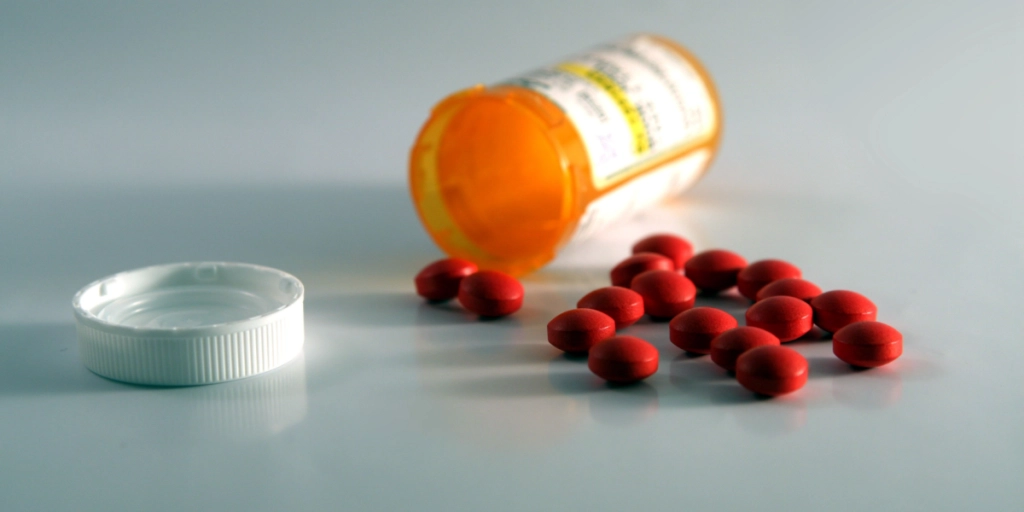
For decades, treating severe acute pain meant prescribing opioids, which carry a massive risk of addiction because they interact directly with the brain’s reward centers. Now, a new class of non-opioid drugs is poised to change post-surgical recovery by blocking pain signals in the peripheral nerves before they ever reach the brain.


If you undergo a major surgery tomorrow, your doctor will likely send you home with a prescription for an opioid like Vicodin or OxyContin. For decades, the medical establishment has been trapped in a brutal compromise: opioids are incredibly effective at shutting down severe acute pain, but they do it by hijacking the brain’s reward centers, carrying a massive and well-documented risk of addiction.
For a long time, the pharmaceutical industry struggled to find an alternative that was actually strong enough to replace them. But that alternative has finally arrived. After years of clinical trials, a new class of drugs has cracked the code, and it works by fundamentally changing where the pain is stopped.
Instead of treating the pain in your brain, researchers have figured out how to cut the signal before it ever leaves the injury site.
The peripheral roadblock
To understand how these new drugs work, you have to look at the physical mechanics of pain. When you touch a hot stove or recover from an incision, your peripheral nerves send an electrical signal up your spinal cord and into your brain. That electrical signal is powered by sodium rushing into the nerve cells through tiny gates called sodium channels.


Scientists have known for years that one specific gate, the NaV1.8 sodium channel, is the primary pathway for transmitting pain signals. If you can block that specific channel, the pain signal simply stops. The electrical impulse never makes it to the brain.
The problem was that building a drug to block NaV1.8 without accidentally blocking the sodium channels that keep your heart beating or your lungs expanding was incredibly difficult.
Zero addiction risk
That engineering problem has officially been solved. Biotechnology companies successfully developed highly selective NaV1.8 inhibitors, culminating in a compound called suzetrigine, developed by Vertex Pharmaceuticals.
Because the drug specifically targets the peripheral nervous system, it doesn’t cross the blood-brain barrier. In January 2025, the US Food and Drug Administration officially approved the drug under the brand name Journavx. As detailed in a comprehensive pharmacological review published via the National Institutes of Health, and highlighted by the American Hospital Association, the drug provides intense pain relief for acute post-surgical pain without interacting with the brain’s central nervous system.
In plain English: the patient gets the pain-numbing benefits of a heavy-duty narcotic, but with absolutely zero chemical risk of addiction. Now that the drug is actively rolling out to hospitals in 2026, the real-world results are incredibly promising. According to a March 2026 data update from Vertex, a new clinical study showed that over 90 percent of patients who used the drug after reconstructive procedures remained entirely opioid-free through the end of their treatment.
We are finally living in a reality where a routine tooth extraction or knee surgery doesn’t require sending patients home with a bottle of highly addictive narcotics.



