
 Christine Drews Sieger
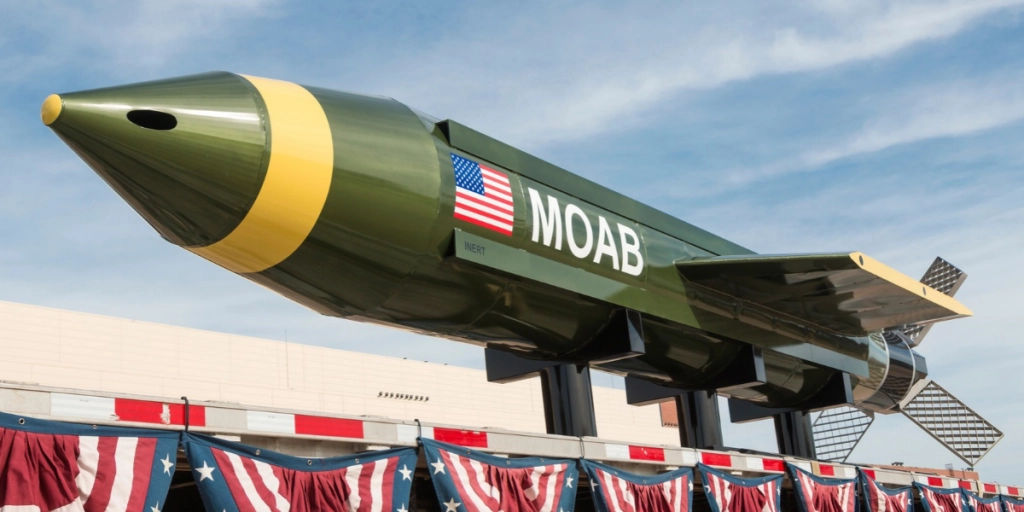
The Pentagon is considering using America’s largest non-nuclear bomb against Iranian targets as pressure grows to end the six-month war.


As pressure grows to end a six-month war, strategic planners are weighing choices that could either reshape the conflict or simply increase the stakes.
The Pentagon has developed new strike options targeting major Iranian energy grids alongside fortified sites like the Pickaxe Mountain complex, according to CNN, cited by the Daily Mail.
President Donald Trump is considering authorizing these strikes in Iran to force Tehran into submission as political pressure mounts to bring the six-month war to a close.
Military planners have raised the possibility of deploying America’s largest non-nuclear weapon directly against Iranian nuclear facilities and power networks.


The 21,600-pound GBU-43/B Massive Ordnance Air Blast, also known as “mother of all bombs,” but officially known as the MOAB, has a blast radius capable of devastating an area comparable to several city blocks.
Timing for any potential operations remains tied to political developments, with strikes potentially occurring either before or after November’s midterm elections if active combat resumes.
Behind closed doors, White House advisers are searching for a dramatic final blow that would allow the administration to declare victory and withdraw American forces without appearing defeated.
Hidden limits
Defense experts doubt the heavy munition will achieve its primary military objective despite its immense destructive power.
The MOAB detonates above ground to maximize surface shockwaves, meaning it lacks the dense casing required to drill deep into subterranean rock.
“The MOAB is a massive information operation type weapon that is great for huge area clearance but not much else,” a source familiar with Pentagon planning told CNN.
“It is definitely not designed as a deep penetration warhead.”
Granite layers shield Iran’s key nuclear installations deep underground, meaning a surface blast leaves those hidden bunkers largely intact while causing severe damage above ground.
The weapon originally entered service in 2003 as an air-dropped deterrent, making its combat debut in 2017 when US forces used it against an ISIS tunnel network in Afghanistan.
Trump now faces growing frustration from voters who want a swift end to the conflict, presenting the administration with limited tactical alternatives amid mounting political pressure.
Political pressure and strategic dilemmas
The debate over strike options comes as the administration faces mounting pressure from lawmakers and voters to end the conflict ahead of the midterm elections, according to the reporting by CNN.
Officials told the network that advisers are seeking ways for the president to declare victory and withdraw American forces without appearing to back down.
While some proposed strikes are intended to create a dramatic finale, insiders acknowledge that airstrikes alone may not force Iran to surrender or abandon its nuclear ambitions.



