Nicolai Haugsted

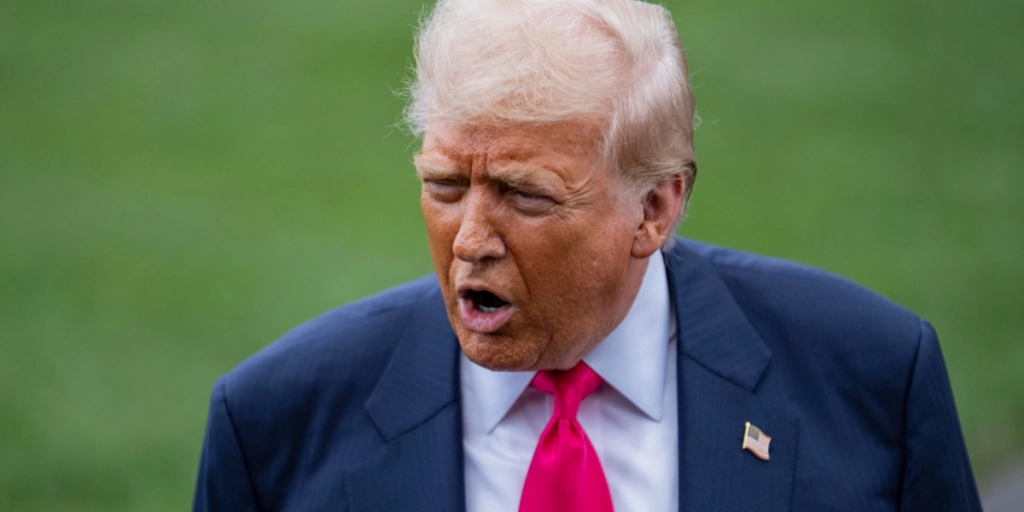
A critical examination of Trump’s record raises doubts about whether his policies are delivering the prosperity he promised.


President Donald Trump has built much of his political identity around a simple promise that has resonated with millions of Americans: restoring the United States to what he describes as its former greatness.
At campaign rallies and public appearances, Trump frequently credits his administration with reversing the damage he attributes to former President Joe Biden.
But beyond the political slogans, a more complicated picture emerges from international rankings and economic data.
A critical analysis published by Raw Story challenges the president’s claims of national renewal, arguing that several measures of American prosperity and democratic health tell a very different story.


The article points to widening economic disparities, pressure on public assistance programs and concerns about democratic institutions as evidence that the benefits of Trump’s policies have not been shared equally.
America’s democratic standing raises concerns
One of the most significant criticisms concerns the state of American democracy.
According to data highlighted by the Pew Research Center, the United States has recorded its lowest-ever score on the Economist Intelligence Unit’s Democracy Index.
While more than 20 countries qualify as full democracies under that assessment, the United States remains classified as a flawed democracy.
Freedom House, which evaluates political rights and civil liberties worldwide, also places the country outside the highest-ranking democracies.
The Raw Story analysis cites a ranking of 59th among 208 countries and territories.
Such assessments reflect concerns extending beyond any single presidency, including political polarization and declining confidence in democratic institutions.
However, the article argues that Trump has intensified those problems through his approach to executive authority and political opposition.
His refusal to accept the results of the 2020 presidential election remains a central part of that criticism.
The president has also faced accusations of weakening institutional oversight and challenging the independence of the judiciary.
Trump and his supporters have defended many of his actions as efforts to confront entrenched bureaucracy and restore accountability to elected leadership.
Critics, meanwhile, argue that concentrating more power in the White House risks undermining the checks and balances that are supposed to constrain presidential authority.
Economic prosperity comes with a catch
The United States remains one of the world’s largest and wealthiest economies.
Yet national wealth does not necessarily translate into financial security for ordinary households.
Among the 38 members of the Organisation for Economic Co-operation and Development, the United States has one of the highest levels of income inequality.
The analysis places America second only to Chile on one measure of income inequality.
It also points to relatively high poverty rates and a smaller middle class than the OECD average.
According to the figures cited, approximately 51 percent of Americans belong to the middle class, compared with an average of around 61 to 62 percent across OECD countries.
Those differences reflect longstanding structural challenges rather than developments attributable solely to the current administration.
Nevertheless, Trump’s tax policies have renewed debate over who benefits most from federal economic decisions.
Tax cuts favor higher-income households
The president’s One Big Beautiful Bill Act is among the policies attracting particular scrutiny.
According to estimates from the Institute on Taxation and Economic Policy cited in the article, the wealthiest 20 percent of Americans receive approximately 73 percent of the legislation’s total tax benefits.
That distribution has prompted criticism that the package disproportionately rewards households already enjoying substantial financial advantages.
Trump and Republican supporters have argued that lower taxes can encourage investment, stimulate business activity and strengthen economic growth.
Opponents counter that the immediate benefits are heavily concentrated among wealthier Americans, while the financial advantages for lower-income families are comparatively limited.
The dispute becomes particularly significant against a backdrop of rising living costs.
The Raw Story commentary also links higher consumer prices to Trump’s tariffs and the economic consequences of the war with Iran.
Tariffs can increase costs for businesses importing goods, with some of those expenses potentially passed on to consumers.
Meanwhile, geopolitical disruption involving major oil-producing regions can place upward pressure on energy prices.
The extent to which individual households experience those effects depends on several factors, including market conditions and how businesses respond.
Safety-net programs face major changes
Another major area of concern involves federal assistance for low-income Americans.
Compared with many other wealthy democracies, the United States provides a less comprehensive range of universal social benefits.
Programs such as guaranteed paid parental leave and universal health coverage are common in numerous OECD countries but are not available to all Americans through equivalent nationwide systems.
Trump’s administration has pursued additional changes to existing federal support programs.
According to the analysis, stricter work requirements for Supplemental Nutrition Assistance Program recipients are accompanied by projected federal spending reductions of approximately $187 billion over a decade.
Medicaid, which provides healthcare coverage to millions of lower-income Americans, faces even larger reductions relative to previous spending projections.
The article cites estimates suggesting federal Medicaid spending could fall by more than $1 trillion over ten years.
Research referenced in the piece projects that millions of Americans could lose coverage as a consequence of the changes, although estimates vary depending on the methodology and provisions considered.
Supporters of the administration’s approach argue that tighter eligibility requirements and spending controls can reduce waste and improve the long-term sustainability of public programs.
Critics warn that the same measures could leave vulnerable households facing higher medical costs or losing access to essential services.
The administration has also proposed reductions to housing assistance, homelessness programs and other federal initiatives aimed at supporting disadvantaged families.
Critics argue that the combined effect could increase financial pressure on households already struggling with basic expenses.
Climate policy becomes another dividing line
The president’s approach to climate change has also attracted criticism.
Trump has consistently promoted American oil and gas production while seeking to roll back policies intended to accelerate the transition toward renewable energy.
His administration argues that expanding domestic energy production strengthens national security, supports employment and helps keep energy affordable.
Environmental organizations, however, warn that greater reliance on fossil fuels risks increasing greenhouse gas emissions and weakening American leadership on climate policy.
The Raw Story analysis points to international climate performance rankings in which the United States trails numerous other developed countries.
Those comparisons raise broader questions about how the country balances short-term energy priorities with long-term environmental commitments.
Gun violence remains an American exception
Gun violence represents another area where the United States differs sharply from many wealthy democracies.
Research comparing firearm deaths across developed countries has repeatedly found substantially higher gun homicide rates in America.
The article highlights research showing that the American gun homicide rate has been approximately 25 times that of other high-income nations in an earlier comparative study.
Such figures have fueled longstanding disagreements over the country’s gun laws.
Gun-control advocates argue that stronger background checks and restrictions on certain firearms could help reduce deaths.
Trump and many Republican lawmakers favor protecting gun ownership rights and have challenged regulations they consider excessive.
The administration has also sought to reconsider restrictions introduced during Biden’s presidency.
The relationship between firearm availability, gun laws and violence remains a major subject of public policy debate, although international comparisons demonstrate the scale of America’s gun violence problem.
Education and reproductive rights enter the debate
The Raw Story commentary extends its criticism to student financing and reproductive healthcare.
Changes to federal student loan programs have raised concerns about whether some students, particularly those pursuing graduate degrees, will face greater difficulties financing their education.
Supporters of tighter lending limits argue that the changes could restrain borrowing and encourage universities to control tuition costs.
Opponents warn that restricting federal loans without addressing educational expenses could place additional pressure on students with limited financial resources.
Abortion rights remain another major point of disagreement.
Trump’s appointment of three Supreme Court justices during his first presidency contributed to the conservative majority that overturned Roe v. Wade in 2022.
That ruling removed the federal constitutional protection for abortion that had existed for nearly five decades, allowing individual states to establish substantially different restrictions.
Trump has generally argued that abortion policy should be determined at the state level, while abortion-rights advocates contend that the resulting differences have undermined access to reproductive healthcare.
The numbers complicate the political message
The debate over Trump’s record ultimately centers on competing definitions of national success.
His administration emphasizes economic growth, domestic energy production, immigration enforcement and reductions in federal spending as important elements of its agenda.
Critics focus instead on the distribution of economic benefits, the accessibility of essential services and the condition of democratic institutions.
Some of the concerns highlighted in the Raw Story analysis are supported by independent research.
For example, Pew Research Center reported in April 2026 that three major international assessments recorded a decline in American democratic health during 2025. The Economist Intelligence Unit gave the country a score of 7.65, its lowest since the index began in 2006.
Fiscal projections also confirm substantial changes to federal assistance programs. The Congressional Budget Office estimates that the 2025 reconciliation law will reduce projected Medicaid spending by approximately $1.2 trillion between 2026 and 2035.
However, the broader argument that Trump alone is responsible for America’s economic and social difficulties goes beyond what those figures establish. Income inequality, healthcare costs and political polarization have developed over decades under administrations from both parties.
The upcoming midterm elections will give voters an opportunity to assess the administration’s direction and determine the composition of Congress for the remainder of Trump’s term.
For a president whose political brand rests so heavily on restoring American greatness, the growing debate over what that promise actually delivers is likely to remain a central issue.