
 Nicolai Haugsted

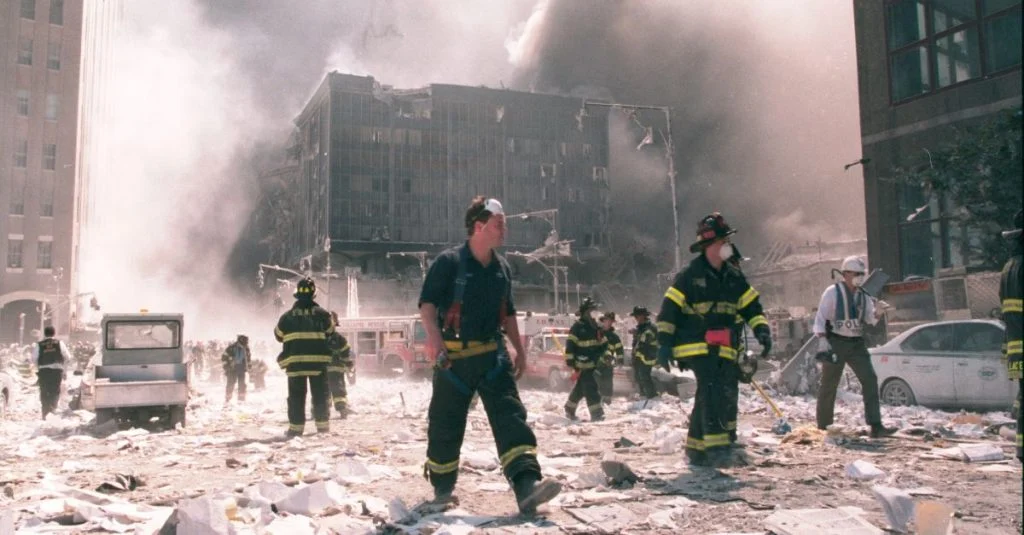
The accused mastermind behind the September 11 attacks has suffered a significant legal setback as the Supreme Court refuses to intervene.


More than a quarter of a century after the September 11 terrorist attacks, the American justice system is still struggling to bring one of its most consequential criminal cases to trial.
Years of legal disputes, contested evidence and disagreements over how the defendants should be prosecuted have repeatedly delayed proceedings against the men accused of organizing the attacks.
For families who have waited decades for a resolution, the case has become a painful reminder of just how slowly the wheels of justice can turn.
Now, the US Supreme Court, according to Reuters, has made a significant decision that could shape the final chapter of the long-running prosecution.


On Monday, the justices refused to intervene on behalf of Khalid Sheikh Mohammed, the alleged architect of the September 11 attacks, leaving him without the protection of a previously negotiated agreement that would have spared him the death penalty.
Supreme Court refuses to revive controversial deal
Mohammed and two co-defendants, Mustafa al Hawsawi and Walid bin ‘Atash, had asked the nation’s highest court to reinstate plea agreements reached in 2024.
Under those arrangements, the three men would have pleaded guilty in exchange for avoiding possible execution.
The agreements appeared to offer a way to resolve a prosecution that has remained entangled in legal proceedings for more than two decades.
However, the deals were abruptly revoked by then-Defense Secretary Lloyd Austin, who served under President Joe Biden.
Mohammed and his co-defendants challenged that decision, arguing that Austin had intervened too late and lacked the authority to cancel agreements that had already been accepted.
Their efforts ultimately reached the Supreme Court.
By declining to hear their appeals, the justices allowed an earlier federal appeals court ruling supporting Austin’s intervention to remain in place.
The decision does not establish the defendants’ guilt, but it means the prosecution can proceed without the abandoned plea arrangements.
Pentagon reversed course within days
The dispute began in the summer of 2024, when the Pentagon official responsible for overseeing the military commission at Guantanamo Bay approved plea agreements involving the three defendants.
The arrangements immediately attracted criticism from Republican lawmakers, who objected to removing the possibility of capital punishment.
Just two days after the agreements were announced, Austin stepped in and revoked them.
His decision triggered another prolonged legal battle.
Initially, a military judge ruled that Austin did not have the authority to invalidate the agreements.
The US Court of Military Commission Review upheld that interpretation in December 2024, allowing preparations for guilty plea hearings to move forward.
But the federal appeals court in Washington intervened and suspended those proceedings.
In July 2025, a divided three-judge panel ruled by a 2-1 majority that Austin had acted within his powers.
The judges concluded that the former defense secretary “indisputably had legal authority to withdraw from the agreements.”
Monday’s Supreme Court decision leaves that ruling intact.
Justice Department welcomes the decision
Federal authorities welcomed the Supreme Court’s refusal to reopen the dispute, describing it as an important development in the effort to prosecute those accused of responsibility for the attacks.
A Justice Department spokesperson said the decision “clears the path for holding those responsible for the September 11 attacks accountable.”
The spokesperson continued:
“This is a critical step toward delivering justice for the victims and families on one of the darkest days in American history.”
Defense attorneys, however, have argued that abandoning the agreements has only added to the delays.
Lawyers representing Mohammed and al Hawsawi, including attorneys affiliated with the American Civil Liberties Union, had urged the Supreme Court to take up the case.
They maintained that Austin’s intervention violated military law and “prolonged the best chance for finality in the September 11 case in a quarter century.”
The competing arguments reflect a fundamental disagreement over whether the original plea agreements offered a long-awaited resolution or an unacceptable compromise in a case involving thousands of deaths.
Trial now scheduled more than 26 years after the attacks
Khalid Sheikh Mohammed remains one of the most prominent prisoners at the US detention facility in Guantanamo Bay, Cuba.
The facility was established in 2002 under President George W. Bush to hold foreign terrorism suspects following the September 11 attacks, which killed nearly 3,000 people.
Mohammed is accused of helping plan and direct the operation in which hijackers flew passenger aircraft into the World Trade Center in New York and the Pentagon outside Washington.
Another hijacked aircraft crashed in Pennsylvania.
The military prosecution has faced repeated setbacks, including disputes over the treatment of detainees and the admissibility of evidence obtained during CIA interrogations.
Those complications have contributed to years of delays, leaving the defendants without a completed trial more than 25 years after the attacks.
In August 2026, a US Air Force judge scheduled the trial for June 2028.



