
 Nicolai Haugsted

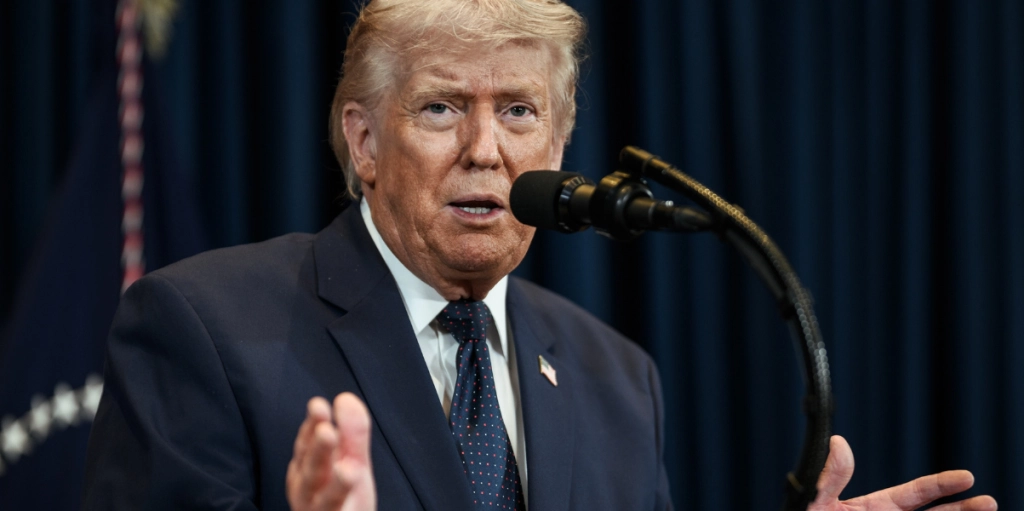
A journalist refused to back down after Trump launched a series of personal insults during an Oval Office confrontation.

Donald Trump’s relationship with the White House press corps has rarely been free of confrontation. Questions about his administration’s decisions have repeatedly led to tense exchanges, particularly when reporters challenge the reasoning behind new policies.
But a recent appearance in the Oval Office produced an especially personal confrontation, with the president directing a series of insults at a journalist who questioned his latest initiative.
The exchange occurred during an event introducing a government program designed to reward Americans who report suspected fraud.
Rather than ending with an explanation of the program, the encounter left a White House correspondent defending himself against accusations from the president.


Now, Andrew Feinberg of The Independent has responded in a first-person account, disputing Trump’s remarks and making clear that the confrontation will not prevent him from continuing his work.
A question about an existing law
Trump and Vice President JD Vance were presenting a new initiative intended to encourage Americans to report suspected fraud involving government funds.
Under the proposal, whistleblowers could receive rewards of up to $30,000, or a payment equivalent to 1 percent of recovered funds.
The administration presented the program as a new way to uncover wrongdoing and provide financial incentives for those who help expose it.
Feinberg, however, wanted to know what made the initiative more attractive than an existing legal mechanism.
The False Claims Act, a federal law dating back to the American Civil War, already allows eligible whistleblowers to bring fraud cases on behalf of the government and potentially receive a share of the money recovered.
Under certain provisions, those rewards can reach between 10 and 25 percent of the proceeds, depending on the circumstances.
That raised an obvious question about why someone would choose a program offering a considerably smaller percentage.
Writing about the exchange afterward, Feinberg questioned the administration’s presentation of the initiative.
“Who could have guessed that Trump would get so spun up over a law that’s been on the books since Abraham Lincoln was president?” he wrote.
Trump offers a brief explanation
Feinberg said he asked the president why whistleblowers should use the new reporting system instead of pursuing rewards through the existing law.
According to his account, Trump responded with a short explanation.
“Because it’s a lot of money,” the president said.
The answer did not address the difference between the potential rewards available through the two systems.
Feinberg subsequently suggested that Trump had either misunderstood the question or failed to appreciate the significance of the percentages involved.
In his article, he wrote that the president “may not have understood the question or was unable to fathom that ten to 25 percent is far more than one percent.”
The journalist’s criticism focused on the financial rationale behind the proposal rather than the administration’s stated objective of combating fraud.
The president turns on the reporter
The exchange became more confrontational after Vice President Vance intervened.
According to Feinberg, Vance described his question as “dishonest.”
Trump then directed his attention toward the reporter.
“Who are you?” the president demanded.
Feinberg found the question particularly strange.
He said Trump had acknowledged him with a wink earlier during the event and that the two had encountered each other numerous times over the previous decade.
Their interactions, according to the journalist, had even included telephone conversations.
As Feinberg attempted to continue asking questions, the president issued a warning.
“I don’t know who the hell you are, but you better be careful,” Trump told him.
The confrontation subsequently became more personal.
Trump described the journalist as a “sick person” and added:
“I actually think there’s something wrong with you.”
Feinberg disputes Trump’s account
Following the incident, footage of the exchange circulated on social media.
Feinberg responded on X, challenging the president’s suggestion that he did not know who the reporter was.
“I had told him exactly who I was not five minutes before this exchange,” he wrote.
The journalist also addressed Trump’s comments about his health in the first-person article published by The Independent.
Rather than responding with another personal insult, Feinberg chose a dry, factual rebuttal.
“For the record, I had an annual physical earlier this month, and I can report I’m in perfect health,” he wrote.
His response drew attention back to the original question about the administration’s whistleblower initiative, which had prompted the confrontation.
Click to display external content from x,
- You can always enable and disable third-party content.

You agree to display external third-party content. Personal data may be sent to the provider of the content and other third-party services.
An unanswered question about whistleblower rewards
The dispute also highlighted an important distinction between Trump’s proposed reporting program and the False Claims Act.
The older law, originally enacted in 1863, allows private individuals with knowledge of certain types of fraud to pursue legal action on behalf of the federal government.
Successful whistleblowers can receive a percentage of the government’s recovery, although the precise amount depends on the type of case and the government’s involvement.
The administration’s newly announced program, by contrast, offers a different reporting route with a stated reward structure that includes payments of up to $30,000 or 1 percent of recovered funds.
The two mechanisms are not necessarily interchangeable, since eligibility requirements and enforcement procedures can differ.
Nevertheless, Feinberg’s question concerned why a potential whistleblower would find the new option preferable when existing legislation can provide substantially larger percentage-based awards.
The president’s response did not offer a detailed comparison.
Reporter refuses to back down
Despite the personal nature of the confrontation, Feinberg made clear that he does not intend to change his approach to covering the White House.
His article described the exchange as part of his responsibility to question government officials about the policies they introduce.
He ended with a straightforward response to the president’s criticism.
“I was doing my job, and I’ll be right back at it tomorrow,” Feinberg wrote.



