Nicolai Haugsted

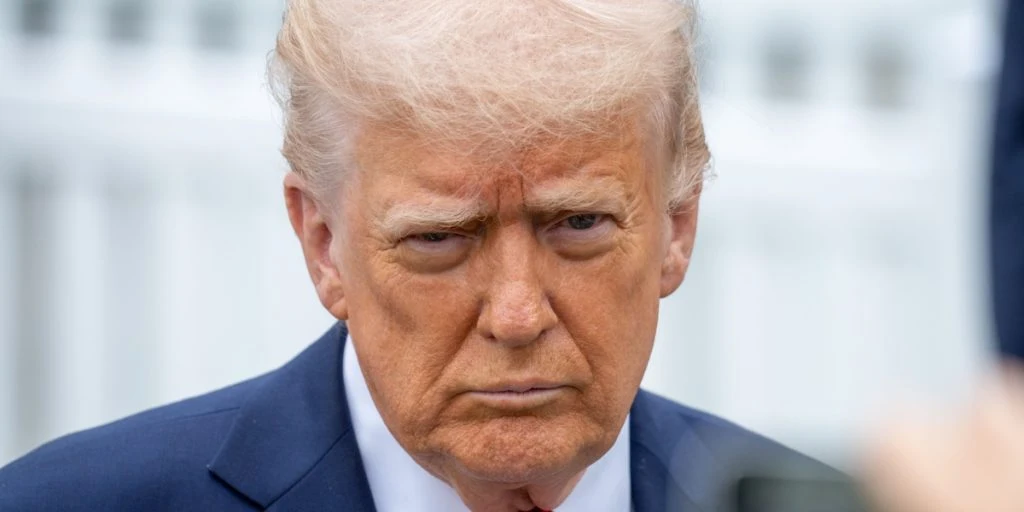
Trump loses a crucial courtroom battle after trying to avoid a seven-hour deposition.


Donald Trump has never been particularly reluctant to take his disputes to court. Whether challenging political opponents or confronting major media organizations, the American president has repeatedly turned to the legal system when he believes he has been treated unfairly.
But launching a lawsuit also means accepting certain obligations, including the possibility of having to answer questions under oath.
And that particular requirement has now become a serious problem for the president, according to The Daily Beast.
Trump’s $10 billion defamation lawsuit against the BBC has produced an unwelcome development after a federal judge rejected his attempt to postpone a lengthy deposition.


According to the court ruling described in the case, Trump must submit to questioning by December 11 or risk sanctions, potentially including the dismissal of the lawsuit he initiated himself.
Trump’s busy schedule failed to convince the judge
The dispute concerns a seven-hour deposition that was originally scheduled for October 16.
Trump’s legal team canceled the appointment, arguing that the president’s official responsibilities prevented him from participating.
His attorneys sought to postpone the questioning until January, citing a “matter of national importance” as justification for the delay.
However, lawyers representing the BBC challenged that explanation.
They argued that the president had chosen to attend a political campaign event and fundraiser rather than fulfill his obligations in the civil proceedings.
“He was participating in party politics and prioritized that over sitting for the deposition,” BBC attorney Charles Tobin told the court.
US Magistrate Judge Enjoliqué Lett was not persuaded that the circumstances justified postponing the testimony for several months.
Instead, the judge imposed a new deadline of December 11 and warned Trump’s attorneys that continued failure to comply with court orders could have serious consequences.
The ruling represents a procedural defeat for the president, although it does not determine whether his underlying defamation allegations have merit.
Trump could lose the lawsuit without getting his day in court
The financial stakes are considerable.
Trump is seeking $10 billion in damages from the British broadcaster, making the case one of his most substantial legal confrontations with a media organization.
Yet the president’s position as the person bringing the lawsuit does not exempt him from the ordinary requirements of civil litigation.
Depositions allow opposing attorneys to question parties and witnesses under oath before a case proceeds further.
Such testimony can help establish the facts, clarify disputed claims and identify evidence relevant to the proceedings.
Judge Lett warned that failure to cooperate could result in sanctions, with dismissal of the entire case among the possible consequences.
That would mean Trump’s own lawsuit could end because of his failure to comply with the court’s instructions, rather than because a judge had ruled against the substance of his defamation claim.
For a president demanding billions in compensation, the procedural requirements have become an obstacle he cannot simply ignore.
The judge also rejected Trump’s request about video recordings
The date of the deposition was not the only issue contested by the president’s attorneys.
Trump’s legal team also sought to prevent the questioning from being recorded on video.
That request was unsuccessful.
Judge Lett permitted the deposition to be filmed, while placing restrictions on access to the footage.
Under the ruling, only attorneys directly involved in the proceedings may view the recording for the time being.
The arrangement means that the president’s testimony can be preserved on video without automatically becoming available to the public.
Although the restrictions provide some protection against wider distribution, they fall short of the prohibition Trump’s lawyers had requested.
The controversy began with a documentary about January 6
The legal battle dates back to a BBC documentary examining the January 6, 2021, attack on the US Capitol.
The program, broadcast in Britain in 2024, included edited footage of Trump’s speech to supporters before the attack.
Trump subsequently accused the broadcaster of manipulating his remarks in a way that damaged his reputation.
His lawsuit alleges that the editing was carried out “intentionally, maliciously, and deceptively.”
The dispute centers on how the BBC assembled separate portions of Trump’s speech.
During his remarks, Trump encouraged supporters to travel to the Capitol.
“I’ll be there with you, we’re going to walk down, we’re going to walk down,” he said.
“We’re going to walk down to the Capitol,” he added.
The BBC’s documentary presented the statements together as:
“We’re going to walk down to the Capitol, and I’ll be there with you.”
The program also included a separate passage from later in Trump’s speech, in which he urged supporters to fight.
“We fight like hell. And if you don’t fight like hell, you’re not going to have a country anymore,” Trump said.
Trump argues that the documentary’s editing created a misleading impression of his remarks.
The BBC has acknowledged problems with the editing but disputes the claim that its conduct provides sufficient grounds for a successful defamation lawsuit.
The BBC apologized but refused to accept Trump’s legal claims
The broadcaster’s apology has become an important distinction in the case.
Acknowledging that an editorial decision was inappropriate is not the same as admitting legal liability for defamation.
The BBC has apologized for the way the speech was edited while maintaining that the disputed material does not justify Trump’s demand for damages.
The president, meanwhile, contends that the documentary presented his words in a misleading manner and caused reputational harm.
Whether the editing meets the legal requirements for defamation remains a separate question from the dispute over his deposition.
The judge’s latest order concerns Trump’s obligation to participate in the evidence-gathering process, not the ultimate accuracy or lawfulness of the documentary.
The next major development in the case will depend on whether Trump complies with the court’s instructions.
His attorneys have been told that the president must make himself available for questioning by December 11.
Should he fail to do so, the court could impose penalties, including potentially dismissing the proceedings.