Nicolai Haugsted

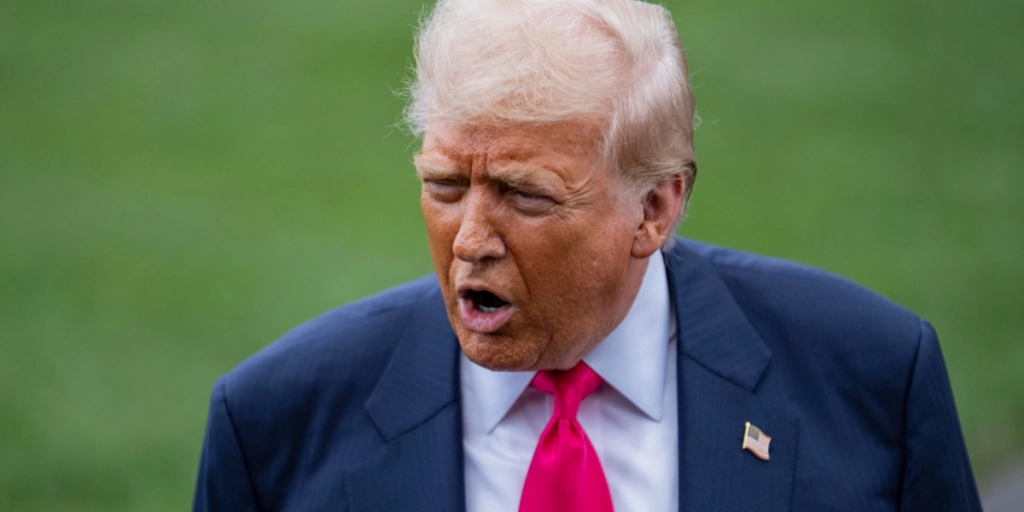
Trump uses one of America’s darkest tragedies to target a political opponent.

The battle for control of the US Senate is entering its final stretch, and Michigan has become one of the most closely watched states ahead of the November 3 midterm elections.
Republicans are fighting to defend their majority, while Democrats are hoping to gain enough seats to change the balance of power in Washington.
With so much at stake, the campaign has become increasingly personal. But President Donald Trump’s latest appearance in Michigan has introduced a particularly contentious element into the race.
According to Reuters, during a Sunday rally in Port Huron, the 80-year-old president invoked the September 11 terrorist attacks while urging voters to reject Democratic Senate candidate Abdul El-Sayed, a Muslim American who was born in Michigan.


Trump compared the election to the actions of passengers who fought back against terrorists aboard United Airlines Flight 93 in 2001.
His remarks drew enthusiastic reactions from supporters but also intensified scrutiny of the Republican campaign’s accusations against El-Sayed.
Trump invokes one of America’s darkest days
Speaking to supporters in Port Huron, Trump made his opposition to El-Sayed unmistakably clear.
“I’m here to keep a jihadist, Muslim Brotherhood member from becoming a United States senator,” the president declared.
The accusation echoed claims made during the campaign about El-Sayed’s alleged connections to Islamist organizations.
El-Sayed has denied having any affiliation with the Muslim Brotherhood, and the allegations cited in the campaign have not been substantiated with evidence.
Trump then invoked Todd Beamer, a Michigan native remembered for helping lead resistance against the hijackers aboard Flight 93 during the September 11 attacks.
“Twenty-five years later, Michigan needs to stand up and fight, just like Todd did, to stop a jihadist from walking into the Capitol,” Trump told the crowd.
The comparison linked the act of voting against a political candidate to the actions of passengers confronting terrorists during a national tragedy.
Trump continued with another remark directed at El-Sayed.
If the Democrat wins, “he would be the only senator that will have to go through a metal detector before he’s allowed to go in the Senate,” the president claimed.
There is no evidence presented in the report that El-Sayed has participated in terrorism or poses a security threat.
Supporters shout for the Michigan-born candidate to be deported
The rally took place in a strongly Republican part of Michigan, where Trump received approximately 66 percent of the presidential vote in 2024.
According to Reuters, the predominantly white audience responded enthusiastically to the president’s comments.
Some attendees shouted “traitor,” while others called for El-Sayed to be deported.
The latter demand overlooked an important fact.
El-Sayed was born in Michigan and is an American citizen.
His religious identity has nevertheless become a recurring theme in attacks against him during the Senate campaign.
Among the rally attendees was Terrance Camburn, a 52-year-old disabled Army veteran from Sandusky, Michigan.
Camburn told Reuters that he supported Trump’s criticism because of El-Sayed’s “political beliefs.”
“I’ve been down to Dearborn and I’ve seen many of the things he agrees with,” Camburn said when asked about the president’s references to September 11.
Dearborn has one of the largest Muslim populations relative to its size among American cities.
The city’s religious demographics, however, do not establish anything about El-Sayed’s political affiliations or the allegations directed at him.
El-Sayed responds with a pointed reference to Trump’s wealthy allies
El-Sayed addressed the attacks during a Sunday evening event in Grand Rapids.
Rather than focusing solely on the allegations, the Democratic candidate questioned why Trump appeared so concerned about his Muslim name while maintaining relationships with wealthy figures from Muslim-majority countries.
“I get that the president of the United States takes personal offense to my first name,” El-Sayed told supporters.
“He doesn’t mind as much when it’s a shared name from the Saudis who are funding his son-in-law’s private equity, doesn’t seem to mind as much when it’s the Qataris who are giving him a $400 million private jet.”
The remarks referred to two separate financial relationships involving Trump’s family and administration.
Affinity Partners, the investment firm founded by Trump’s son-in-law Jared Kushner, has received substantial financial backing from a Saudi government-linked entity.
Qatar has also provided a Boeing 747 aircraft intended for use in connection with the American presidential fleet.
El-Sayed’s criticism was that Trump appeared willing to maintain important financial and diplomatic relationships with Muslim-majority countries while using his opponent’s Muslim identity as a campaign issue.
The comments did not directly resolve the allegations concerning the Muslim Brotherhood, which El-Sayed has separately denied.
Even Trump’s Republican candidate draws a distinction
Former Republican congressman Mike Rogers is competing against El-Sayed for Michigan’s open Senate seat.
Rogers has also criticized his Democratic opponent and alleged connections to the Muslim Brotherhood without presenting substantiating evidence.
However, during an appearance on NBC’s Meet the Press earlier on Sunday, Rogers drew a distinction between his own accusations and claims that El-Sayed was a terrorist.
“I’ve never called him a terrorist,” Rogers said.
The Republican candidate nevertheless maintained that El-Sayed had not adequately addressed questions about his alleged associations.
“He’s a Democrat Socialist of America-aligned candidate who has these pretty radical support groups that don’t like America,” Rogers said.
El-Sayed has rejected the accusations and described questions about his loyalty to the United States as “shameful.”
After Trump’s rally, Reuters attempted to question Rogers about the president’s use of September 11 in his campaign remarks.
The Republican candidate did not respond as he left the venue.
Obama draws a parallel with attacks against his own identity
Trump’s appearance came just one day after former President Barack Obama campaigned for Democrats in Detroit.
Obama addressed the attacks against El-Sayed during his Saturday rally, suggesting that Republicans were attempting to portray the Democratic candidate as less American because of his background.
The former president drew a comparison with false allegations about his own birthplace during his political career.
Obama, who was born in Hawaii, faced years of baseless claims that he had been born in Kenya and was therefore ineligible to serve as president.
“This stuff didn’t work on me,” Obama told the audience.
“Not in Michigan. It’s not going to work on Abdul.”
His remarks highlighted the role that questions about identity and national belonging have played in American political campaigns.
El-Sayed would become the first Muslim elected to the US Senate if he wins the Michigan contest.
That prospect has made his religious identity particularly prominent in the campaign, although his eligibility for office does not depend on his faith.
The confrontation comes as both major parties prepare for an election that could significantly alter the balance of power in Congress.
Republicans currently hold a 53–47 majority in the Senate and a narrower 218–214 advantage in the House of Representatives, according to the figures cited in the report.
Democrats are attempting to gain enough seats to overturn those majorities.